By Flordeliz Agra, UPRI Education Divison

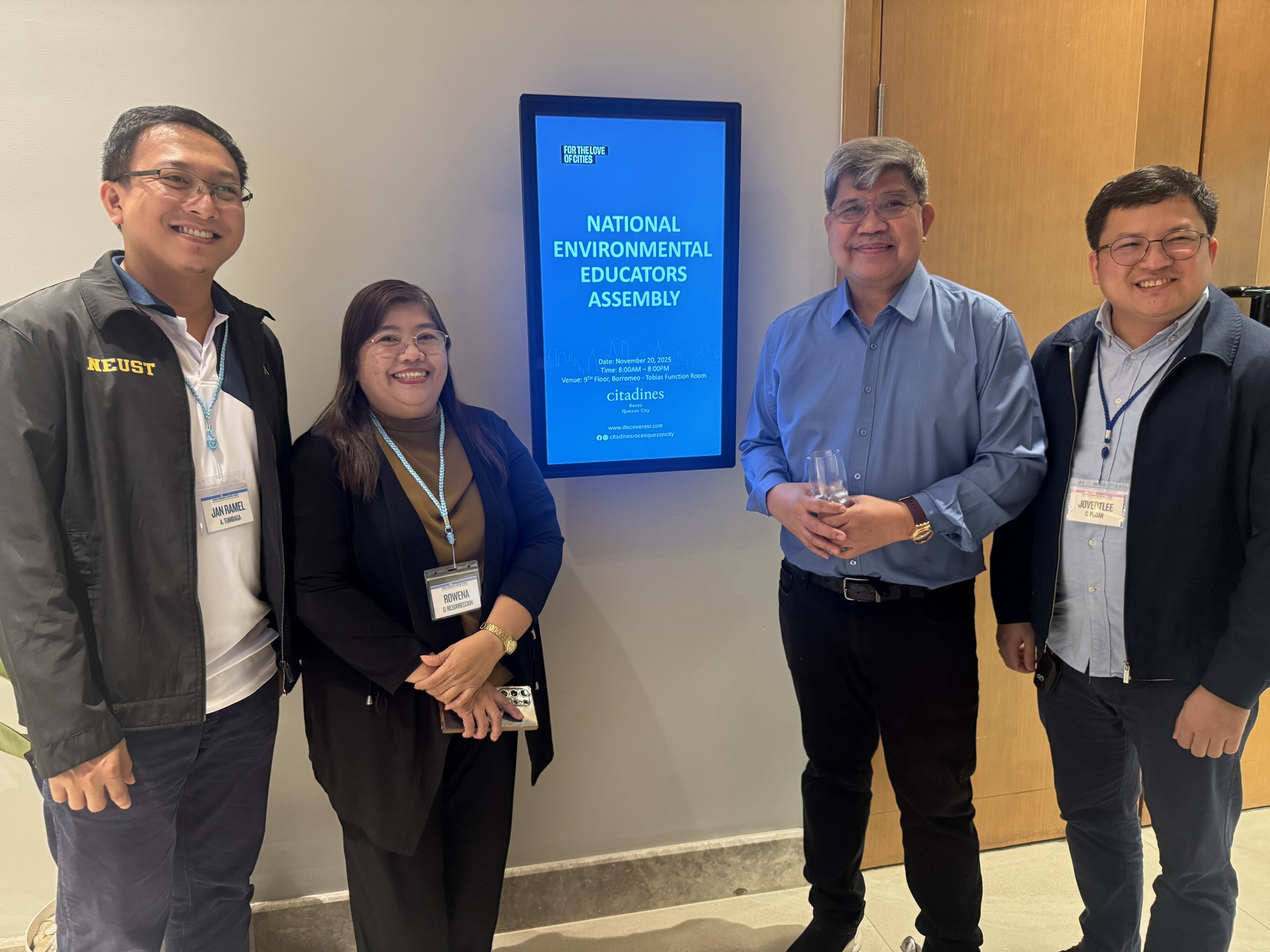
Quezon City, Philippines — The Environmental Education and Information Division of the Environmental Management Bureau (EMB) successfully conducted the 2025 National Environmental Educators’ Assembly on 20–21 November 2025 at Citadines Hotel, Quezon City. The event was organized in partnership with the DENR Climate Change Service and the Philippine Association of Tertiary Level Educational Institutions in Environmental Protection and Management (PATLEPAM).
The Assembly coincided with the observance of National Clean Air Month, National Environmental Awareness Month, and National Climate Consciousness Week, reinforcing the government’s commitment to promoting environmental education and climate action. With the theme “Strategic Integration: Linking Higher Education Institutions to Accelerate Environment and Climate Resiliency,” the gathering underscored the expanding role of Higher Education Institutions (HEIs) as catalysts for environmental protection, climate adaptation, and disaster resilience.
Participants, composed of faculty members and academic administrators from across the country, engaged in policy discussions and technical sessions aimed at strengthening the integration of environmental and climate resilience into higher education systems. OIC Assistant Secretary for Environment and concurrent EMB Director Jacqueline A. Caancan emphasized the importance of positioning HEIs as “laboratories of change” capable of responding to urgent environmental challenges, including climate extremes and resource security.
DENR Undersecretary Atty. Analiza Teh presented the National Adaptation Plan (NAP) 2023–2050, a science-based framework designed to enhance national resilience and guide sustainable development amid increasing threats from climate change, biodiversity loss, and pollution. The Assembly also featured technical discussions on priority national initiatives, including the draft Nationally Determined Contributions (NDCs) for 2025–2035, climate-vulnerable sectors identified under the NAP, and strategies for strengthening academic research and disaster risk communication. Climate Change Service Director Elenita Basug further highlighted how HEIs can contribute to achieving the country’s NDC targets and support local-level climate adaptation efforts.
Invited as resource speakers were Dr. Emmanuel M. Luna, President, and Ms. Flordeliz Abanto, Auditor, of the Philippine Academic Society for Climate and Disaster Resilience (PASCDR). Both speakers emphasized the vital role of higher education institutions in curriculum integration, research collaboration, student-led initiatives, and cross-sectoral partnerships to advance climate action and disaster preparedness.
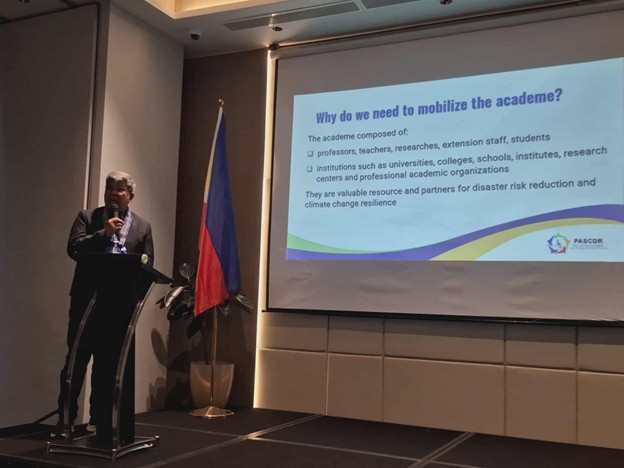
Dr. Luna delivered a presentation entitled “Mobilizing the Academe and Translating Research into Actionable Steps for Climate and Disaster Resiliency,” highlighting how academic research can be transformed into practical solutions that contribute to building resilient communities. He also underscored the value of PASCDR membership in supporting HEIs and researchers engaged in climate and disaster resilience initiatives.
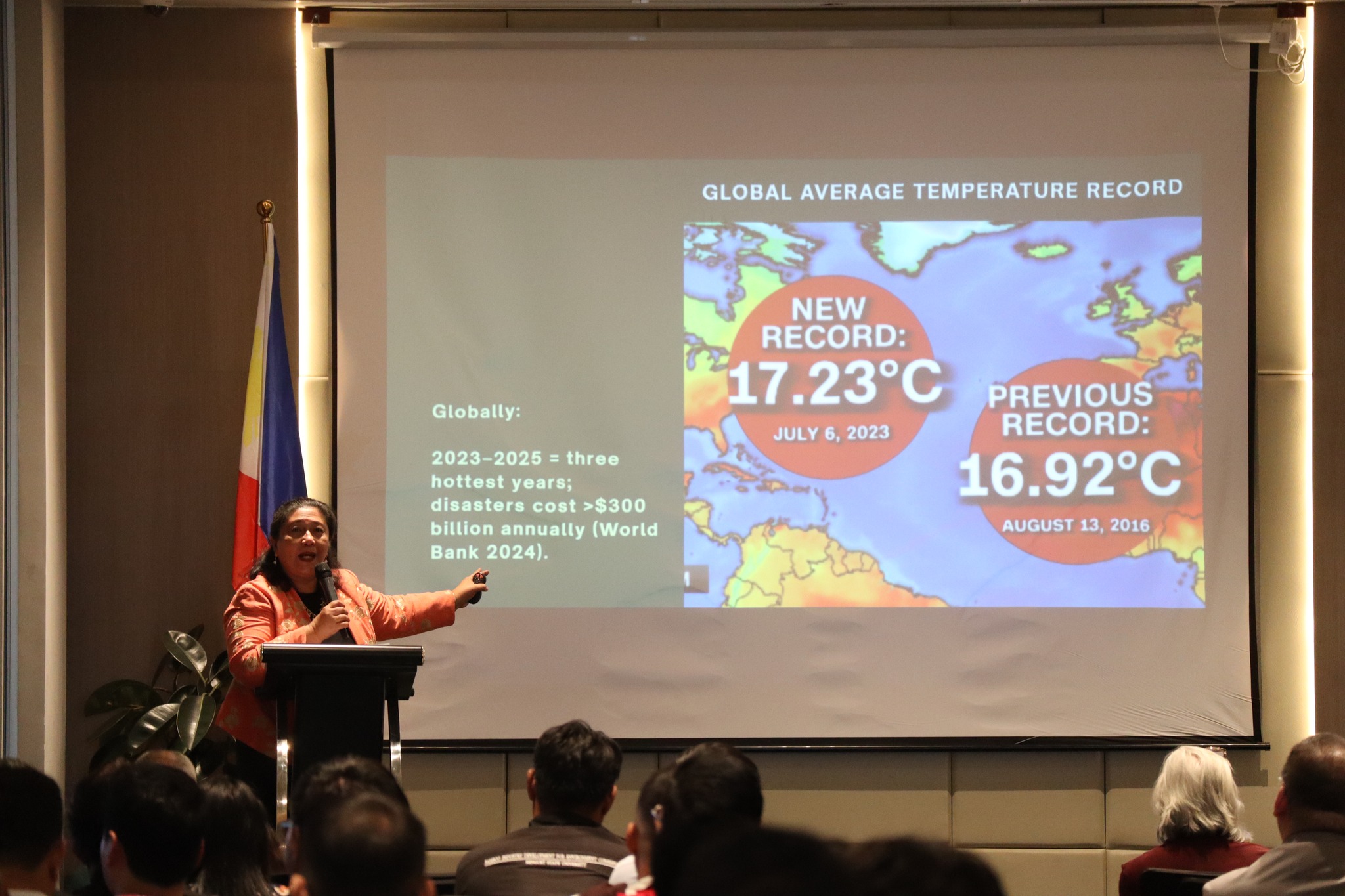
Ms. Abanto discussed the critical role of the academe in effective climate and disaster risk communication, identifying cultural and communication barriers such as the “bahala na” mindset, prioritization of material possessions over safety, and the use of highly technical jargon without vernacular translation. She emphasized that HEIs can help address these challenges through curriculum integration, research collaboration, capacity-building programs, student engagement, public awareness campaigns, and strengthened cross-sectoral and international cooperation.
The 2025 National Environmental Educators’ Assembly reaffirmed the crucial role of higher education institutions in advancing environmental sustainability, climate resilience, and disaster preparedness through education, research, and multi-sectoral collaboration.