
The University of the Philippines Resilience Institute (UP RI), represented by EnP. Jericho Mendoza, EnP. Arge Louise Joy Esquivel, and Mr. Gifford Agudo, together with Dr. Jesús Garrido Manrique of Universidad de Granada, recently met with Laura Antelo (Project Manager) and Francisco Quesada (Program Manager) of the Spanish Agency for International Development Cooperation (AECID) for an exploratory discussion on potential areas of collaboration in disaster risk reduction (DRR). The meeting, held at the AECID office in Makati City, provided an opportunity to present UP RI’s ongoing initiatives while learning more about AECID’s priorities for the coming years.
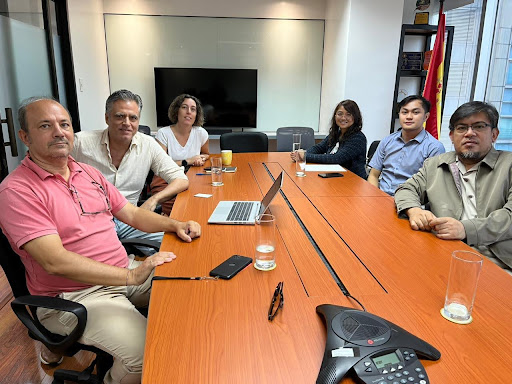
During the visit, the UP RI team presented an overview of its history, mandate, and previous collaborative works. The presentation underscored the institute’s work in climate and disaster resilience, including hazard assessments, risk-sensitive planning, web-based knowledge products, research and creative works, resilience educational programs, and institutional engagements. AECID recognized UP RI’s approach and portfolio as timely and essential in the current climate of risk mismanagement in the country.
Two proposal concepts were shared during the meeting. The first focused on enhancing barangay-level resilience through science-based risk assessment, planning, capacity-building activities, and stronger community engagement. This proposal builds on the principle that combining scientific methods and participatory processes is most effective in understanding and addressing local flood risks. Through collaborative flood risk assessment and community capacity-building activities, the proposed project aims to strengthen local stakeholders’ ability to manage flood events effectively and reduce their vulnerability.
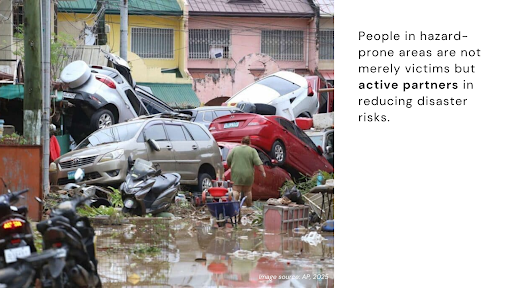
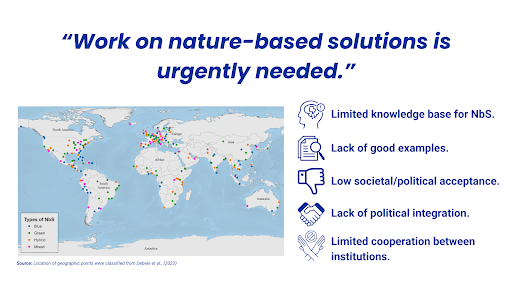
The second proposal explored opportunities for broader DRR collaboration, emphasizing hazard assessment and the use of nature-based Solutions (NbS) to support community-level planning. The project seeks to assess flood hazards while examining the biophysical and land-use factors influencing flood risks in selected pilot areas. It also involves co-designing potential nature-based and hybrid green–gray interventions as locally appropriate flood mitigation solutions, followed by simulating and evaluating the effectiveness of these interventions in reducing flood risks. This approach ensures that DRR strategies are grounded in scientific evidence while remaining context-appropriate, participatory, and ecologically sustainable.
The AECID noted that DRR has been identified as a priority area for AECID in the Philippines over the next three years. This alignment between UP RI’s resilience-focused programs and AECID’s development priorities reinforces the potential for a meaningful partnership. The collaboration also aligns with the University of Granada’s growing engagement in international cooperation, research exchange, and capacity-building efforts in climate action and disaster preparedness. The AECID pointed out that the Spanish non-government organization Geólogos del Mundo, for which Dr. Jesús Garrido Manrique serves as the delegate in Andalusia, could be a potential partner in the implementation of the proposal.
The meeting emphasized the shared advocacies of the three institutions, advancing science-based solutions, strengthening local capacities, and promoting sustainable and climate-resilient development. With this strong alignment, UP RI looks forward to further refining the proposal concepts and developing pathways for collaboration with AECID and the University of Granada.