
by Gereka Marie Garcia and Aira Joy Delos Angeles
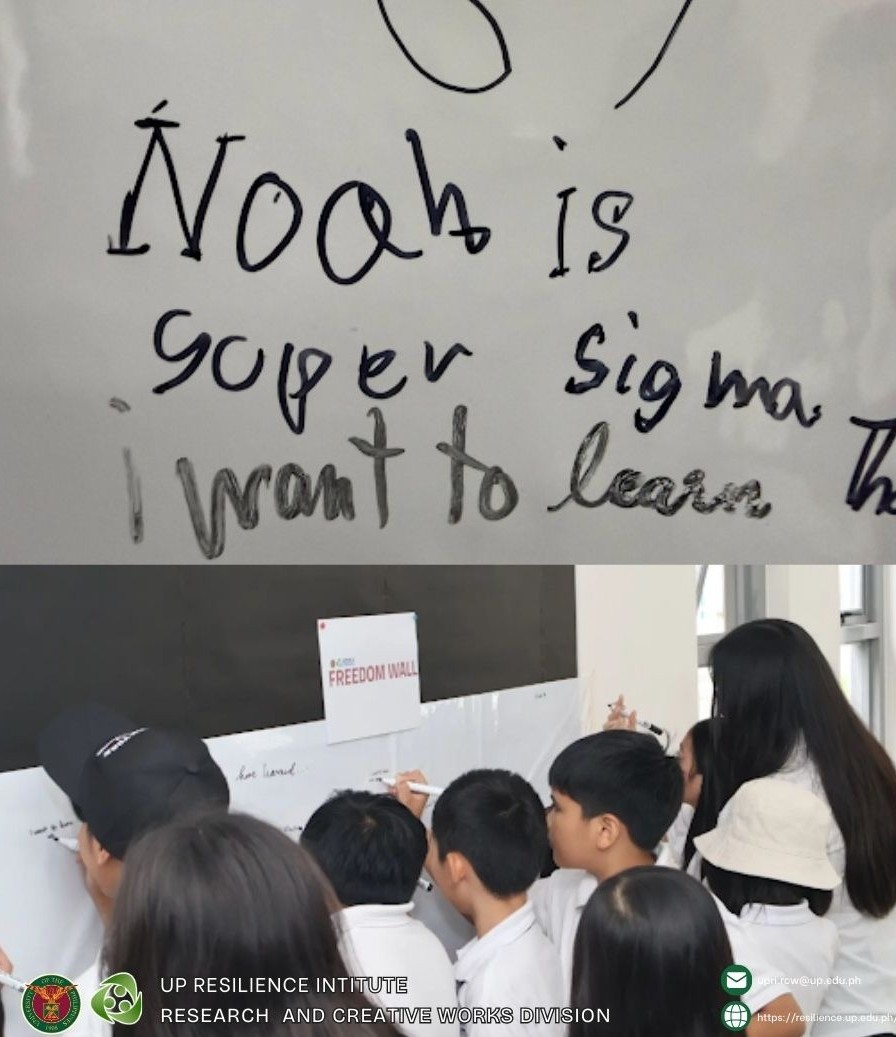
January 15, 2026 — Bright young minds from Centro Montessori recently visited the UP Resilience Institute-NOAH, exploring science, disasters, and community resilience in a hands-on, playful environment. One student summed up: “Noah is super sigma!”, a testament to the bold, independent, and clever way NOAH researchers tackle complex challenges.
Engaging Gen Alpha, children born into a digital, fast-paced world, requires more than lectures and charts. The UPRI-RCW’s approach emphasizes learning through play, utilizing interactive tools that make complex concepts, such as flooding, dengue, and disaster risk management, accessible and engaging. Games, simulations, and hands-on activities allow children to explore, experiment, and make decisions in safe, imaginative environments, stimulating curiosity and critical thinking from an early age.
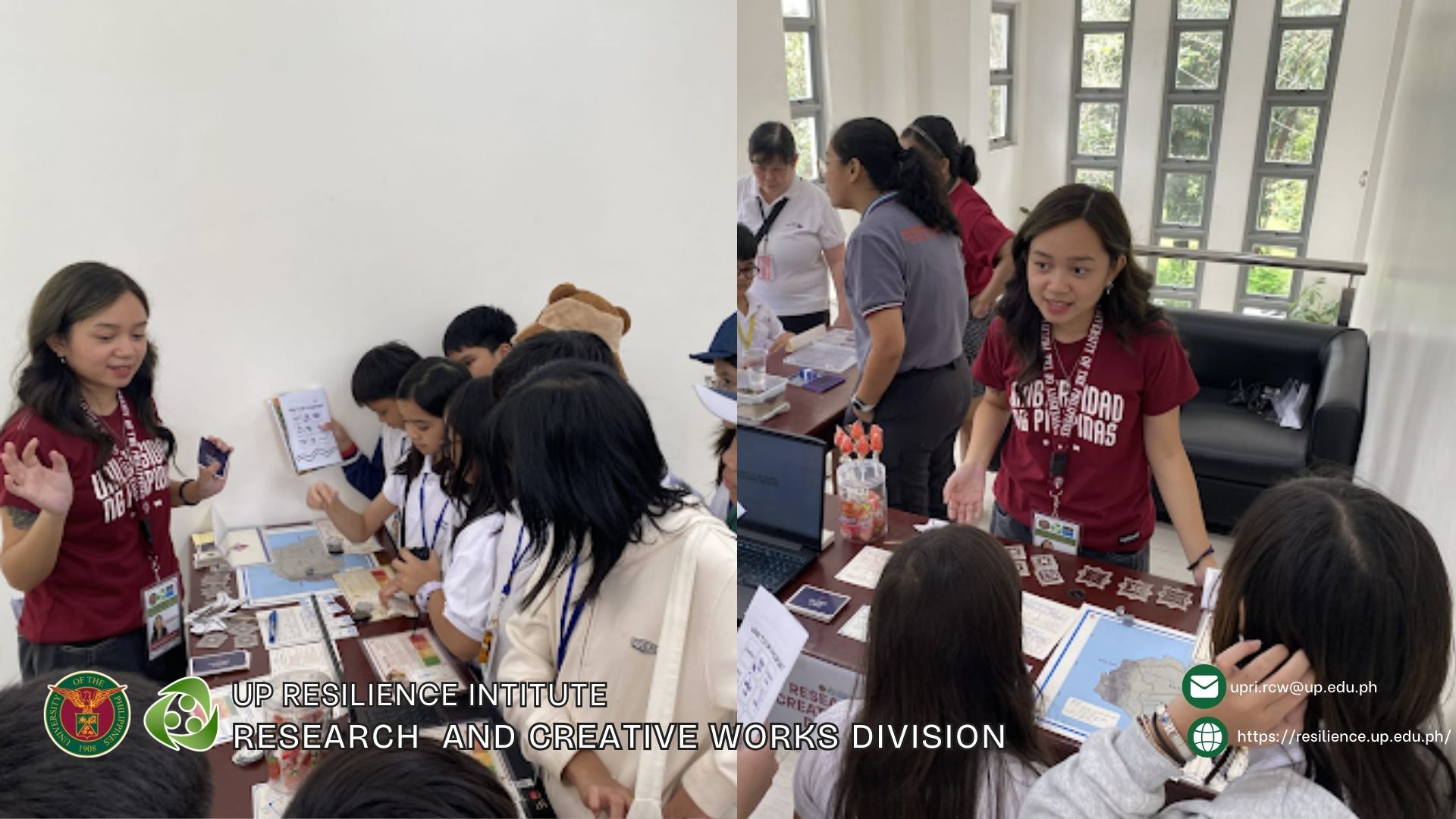
One standout example is Sakunwari, UPRI’s disaster resilience board game. By simulating cascading disasters, resource management, and decision-making, Sakunwari teaches players how to respond, adapt, and protect communities, all in a playful, engaging format. It shows that even complex systems can be understood when learning is hands-on and interactive.
Looking ahead, the UPRI Research and Creative Work Division (UPRI-RCW) continues to create tools for Gen Alpha. The upcoming MoskiToks project—an educational children’s television initiative focused on dengue awareness—will combine storytelling, performance, and play to teach kids about public health, climate change, and science in ways they can relate to and enjoy.
Through playful learning experiences, UPRI-RCW demonstrates that science isn’t just for adults; children can explore, experiment, and develop the skills to understand risks, make informed decisions, and contribute to resilient communities.