
by: UPRI-Education and NOAH WebGIS
The University of the Philippines Resilience Institute joined student leaders and changemakers at the first UP Youth Summit on Sustainable Development Goals (SDGs) on March 12-13, 2026, at the GT Toyota Asian Cultural Center in Quezon City. The two-day event gathered student leaders from across the University of the Philippines system to enhance their understanding of sustainable development, equip them with actionable skills, and foster collaboration for grassroots initiatives aligned with the SDGs
Organized by the UP Asian Center, University of the Philippines (UP) Office of the President, through the UP Office of the Vice President for Academic Affairs—Office of Student Development Services (OVPAA-OSDS), and UP CIFAL Philippines, the event aimed to deepen the participants’ understanding of the SDGs, foster cross-campus collaboration among UP student leaders, and highlight the role of arts and culture in sustainable development. Activities included workshops, discussions, and collaborative sessions aimed at translating SDG principles into concrete initiatives that participants could implement in their respective communities.

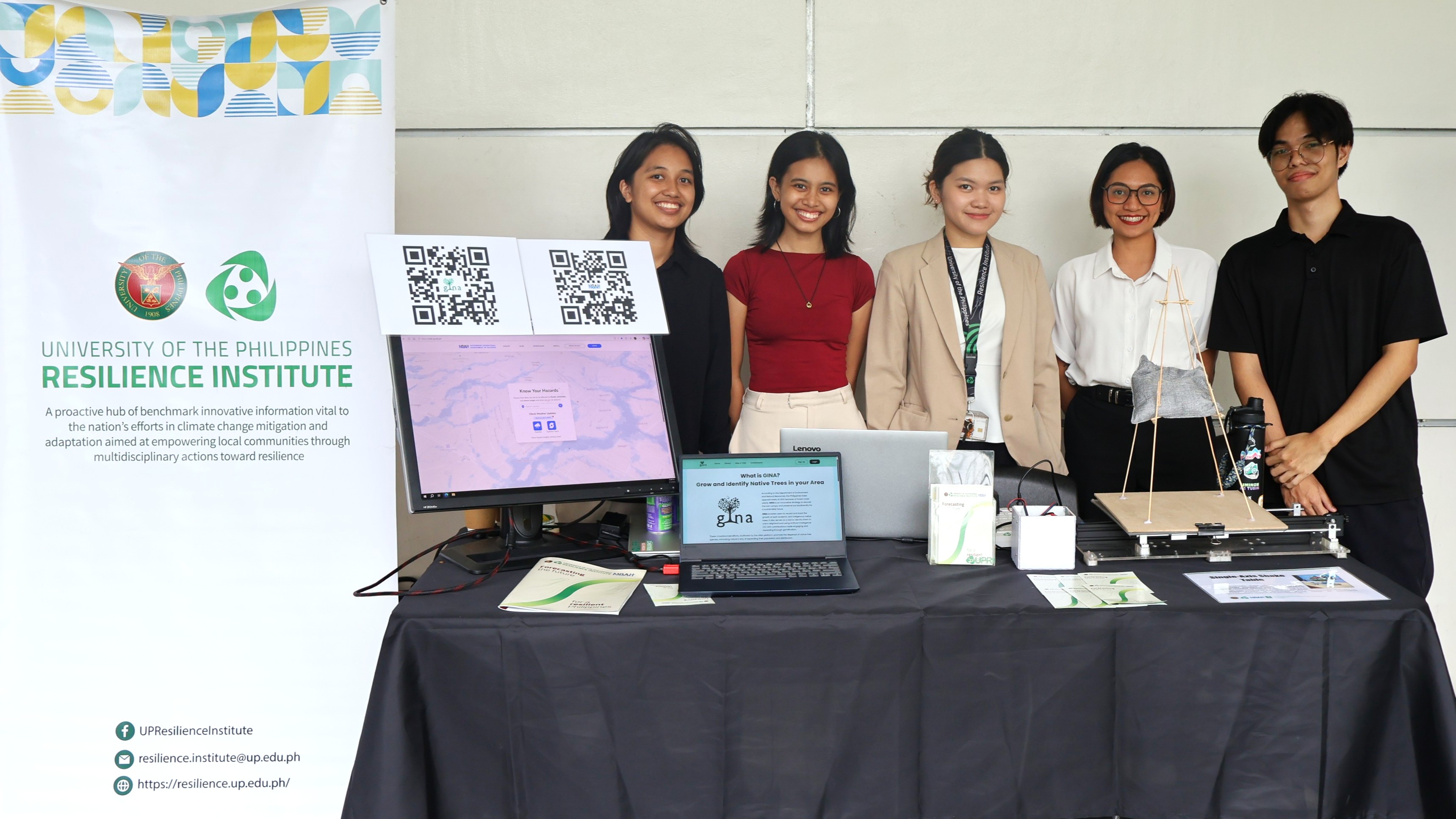
As part of the summit’s exhibition component, the UPRI NOAH showcased its programs, tools, and initiatives on disaster risk reduction and management (DRRM), climate change adaptation, and resilience-building. These included decision-support platforms such as the UP NOAH, which provides accessible and near real-time weather information and hazard maps, and GINA (Grow and Identify Native trees in your Area), a citizen-science initiative that engages communities in biodiversity mapping, alongside other programs and informational materials that reflect the Institute’s work across research, education, and community engagement.


Participants exploring UPRI’s programs, tools, and initiatives showcased at the exhibit
In addition to its participation as an exhibitor, UPRI Executive Director Mahar Lagmay joined the event through a lecture titled “Building Skills for Climate Action.” His session emphasized the importance of science-based approaches to disaster risk reduction and climate action, highlighting how data and research can support more effective decision-making to build resilient communities.
Durrng his talk, Dr. Lagmay stated that disaster awareness is the foundation of preparedness, emphasizing that understanding risks is a necessary first step toward reducing their impacts. He also highlighted the need to bridge science and communication, noting that making technical knowledge accessible is critical to empowering communities. Initiatives such as UPRI’s online courses on the Fundamentals of Resilience were cited as examples of how digital platforms can help expand public access to disaster education.
Dr. Lagmay also called on the University community to move beyond knowledge production toward public service, encouraging student leaders to collaborate, share expertise, and translate what they learn into concrete action. He concluded by stressing that excellence must be used not for prestige, but to contribute to meaningful and collective change.

UPRI’s participation in the summit provided an opportunity to situate disaster resilience within the broader SDG agenda discussed throughout the event. By engaging directly with student leaders, the Institute underscored the role of science-based tools and interdisciplinary approaches in supporting youth-led initiatives on climate action, sustainable communities, and environmental protection.