
”Unconditional belonging is an important principle for climate justice.”
Paul Daniel Serrano, Resilience Live Episode 22 Guest Speaker
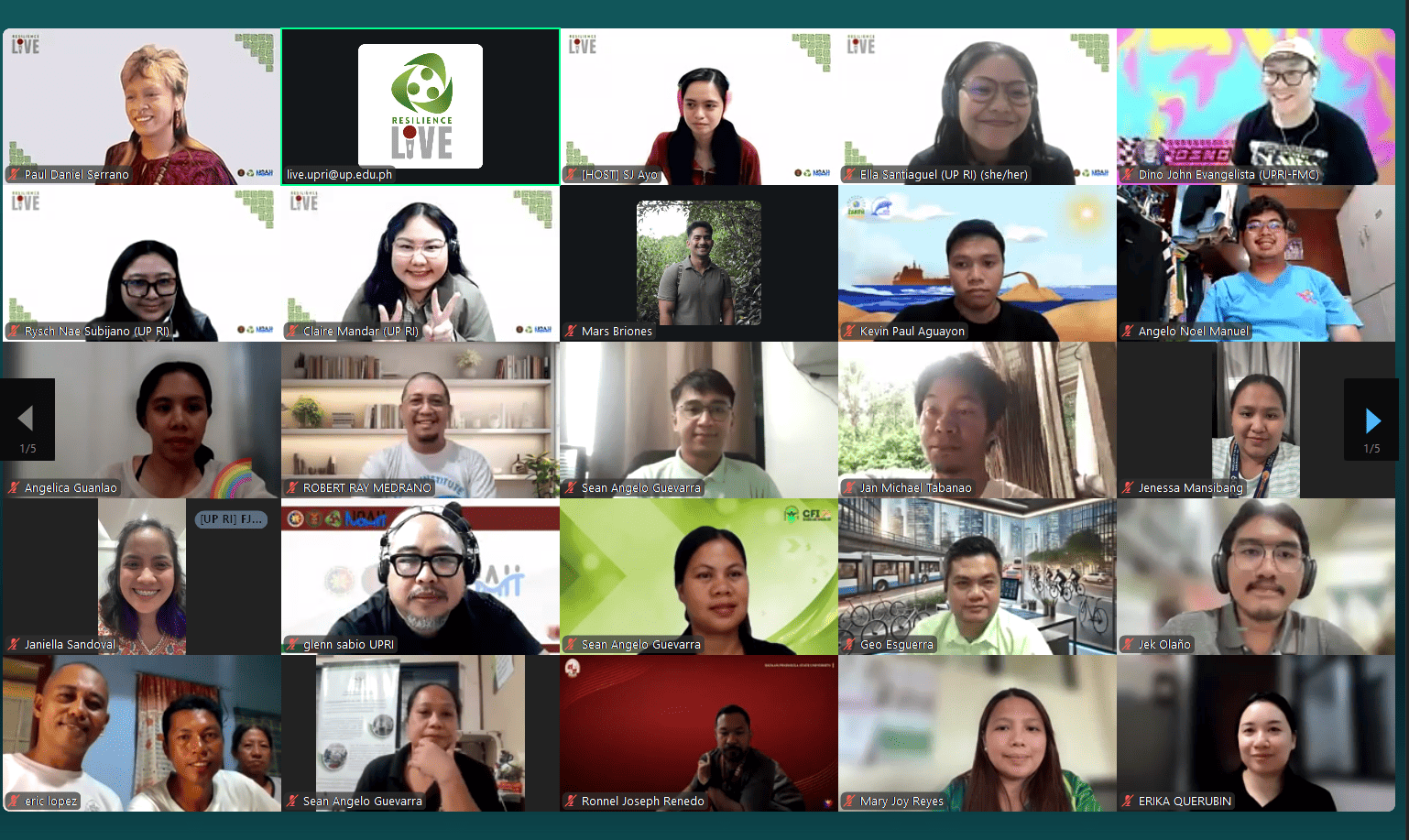
The 22nd episode of the Resilience Live webinar series was held on June 26, featuring Paul Daniel Serrano and their talk, “What Climate Justice Can Learn from Queer Life in the Purok.” Serrano is the founder of The Orchard and currently serves as a climate campaigner for the Negrosanon Initiative for Climate and the Environment (NICE). Their advocacy has reached both regional and international platforms, including the Global Youth Summit and the ASEAN Children and Youth Climate Summit.
Held in celebration of Pride Month, the webinar examined the intersections of queer lived experiences and climate justice, highlighting how everyday experiences of queer communities in the purok can offer important lessons for building more inclusive and equitable approaches to climate resilience.
Anchoring the discussion was the question, “What can climate justice learn from queer life in a purok?” Serrano drew from their undergraduate thesis, “Beyond Tomboy and Agi (Hiligaynon term for bakla): Mapping Queerness in a Purok through Focused Ethnography,” which was conducted in their own community in Bacolod City. Through the study, they explored how queer identities are lived, negotiated, and expressed in everyday community life, using these experiences as a lens for rethinking participation, belonging, and justice in climate action.
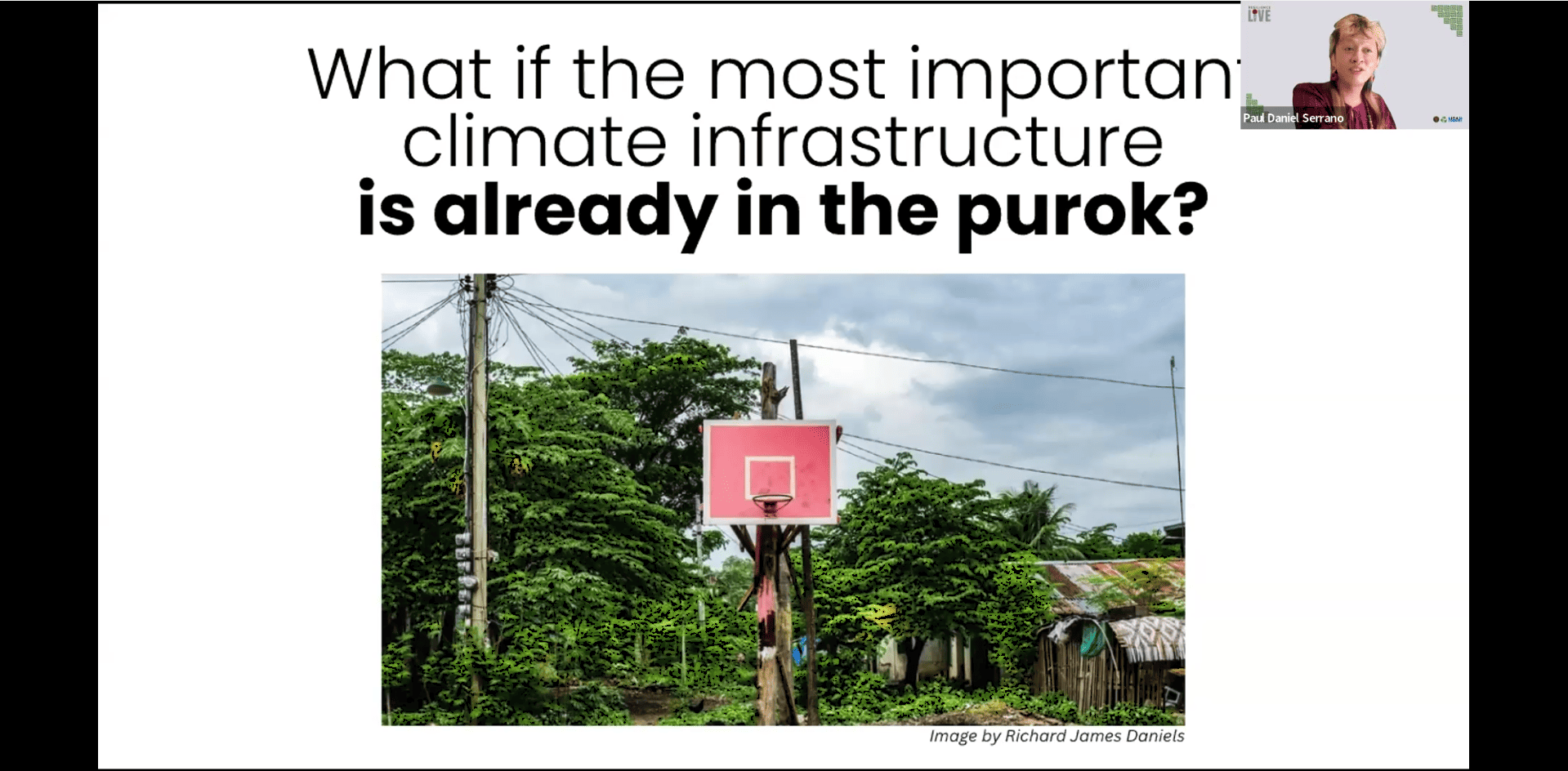
One of the key symbols highlighted during the talk was the neighborhood basketball court. Beyond being a venue for sports, Serrano described it as a community plaza, gathering space, and site of social interaction where relationships are built and maintained. For many queer individuals, these spaces can serve as places of belonging and self-expression, while also functioning as sites of visibility, surveillance, and social negotiation.
Building from these observations, the discussion shifted toward broader questions of care—specifically, how communities can foster more inclusive and non-transactional forms of support that strengthen resilience and advance climate justice.
While such transactional forms of care are common in everyday life, Serrano emphasized that they should not be replicated within communities, organizations or social movements working toward justice. It was further acknowledged that practicing unconditional care is an ongoing journey where people find it easier to care for those who are constantly present, active or visibly contributing, while overlooking those who participate less.
Serrano’s take on belonging being often conditional rather than guaranteed was quite striking as they explained that social acceptance can be influenced by factors such as gender expression, economic contribution, and social standing, creating additional challenges for queer individuals, particularly during times of crisis.
They also examined how these inequalities manifest during disasters and climate emergencies. Access to information, relief assistance, and support systems often depends on existing social networks and recognition within communities. As a result, marginalized groups, including LGBTQIA+ individuals, may face barriers in receiving timely assistance and inclusion in response efforts.
At the same time, Serrano emphasized that communities already possess important sources of resilience. Central to their presentation was the idea of “relational infrastructure”—the networks of trust, communication, care, and mutual support that exist within neighborhoods and puroks. These relationships, though often overlooked, can be just as critical as physical infrastructure in helping communities prepare for and recover from disasters.
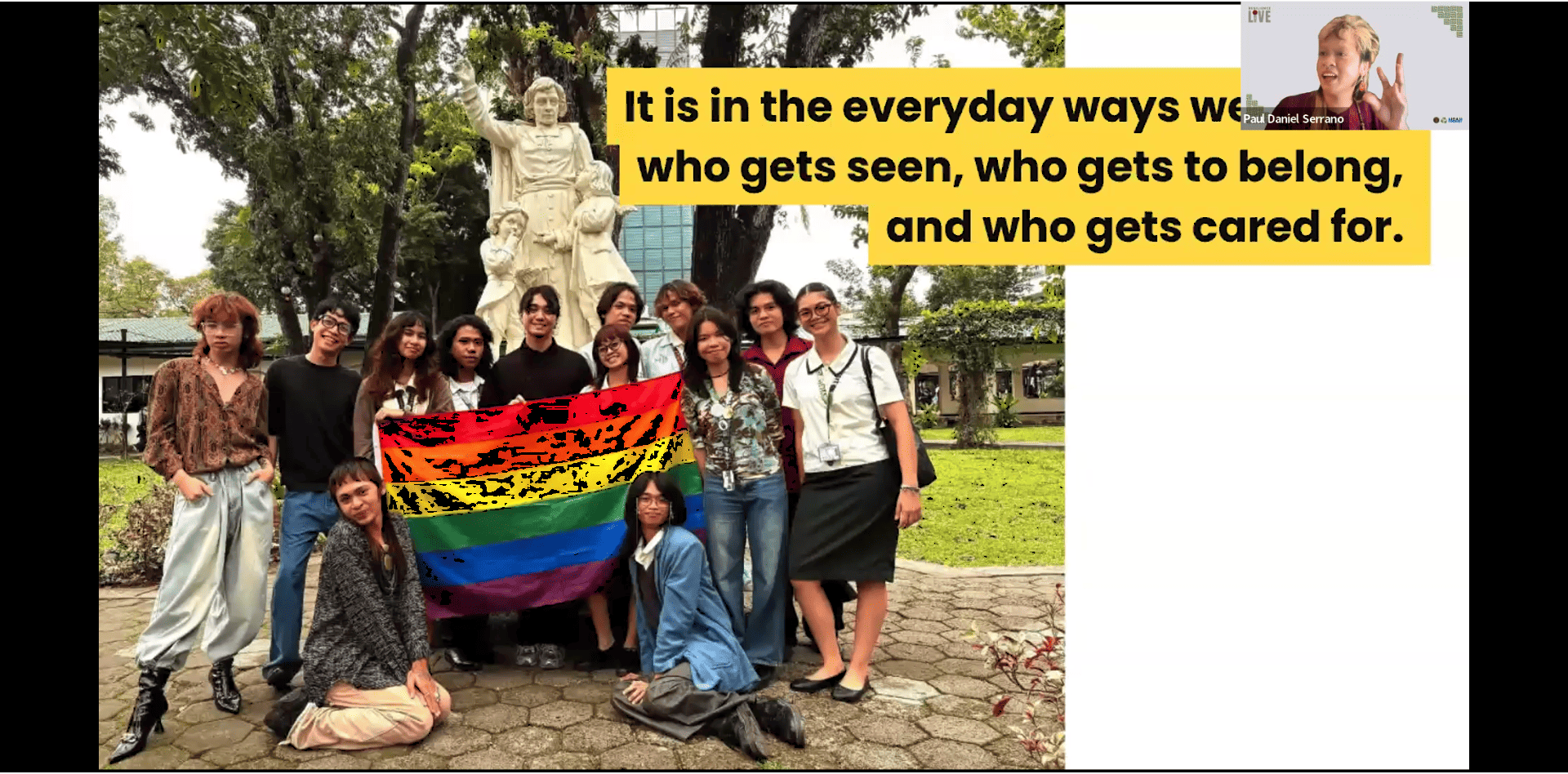
Participants further reflected on how climate justice can learn from queer experiences. Serrano encouraged a shift in perspective, highlighting the leadership, organizing capacity, and care networks that already exist within queer communities. From student organizations and advocacy campaigns to neighborhood initiatives, queer individuals are actively contributing to community resilience, even if their efforts are not always recognized.
As the discussion drew to a close, a clear message emerged: resilience is not built only through infrastructure, plans, or emergency response mechanisms. It is cultivated through relationships, inclusive communities, and systems that recognize and value diverse experiences. By learning from the existing practices of care and solidarity within queer communities, climate justice efforts can become more equitable, inclusive, and effective. In the spirit of Pride Month, the discussion underscored that resilience is not only about preparing for disasters—it is about fostering communities where everyone is seen, valued, cared for, and empowered to thrive, ensuring that no one is left behind.
Resilience Live will return in August to celebrate its 3rd anniversary. In the meantime, you can watch Episode 22 here: https://www.youtube.com/live/_LnsDfIFqD4?si=s2vFTXaxThs-CDsk