
by: Aira Joy C. Delos Angeles
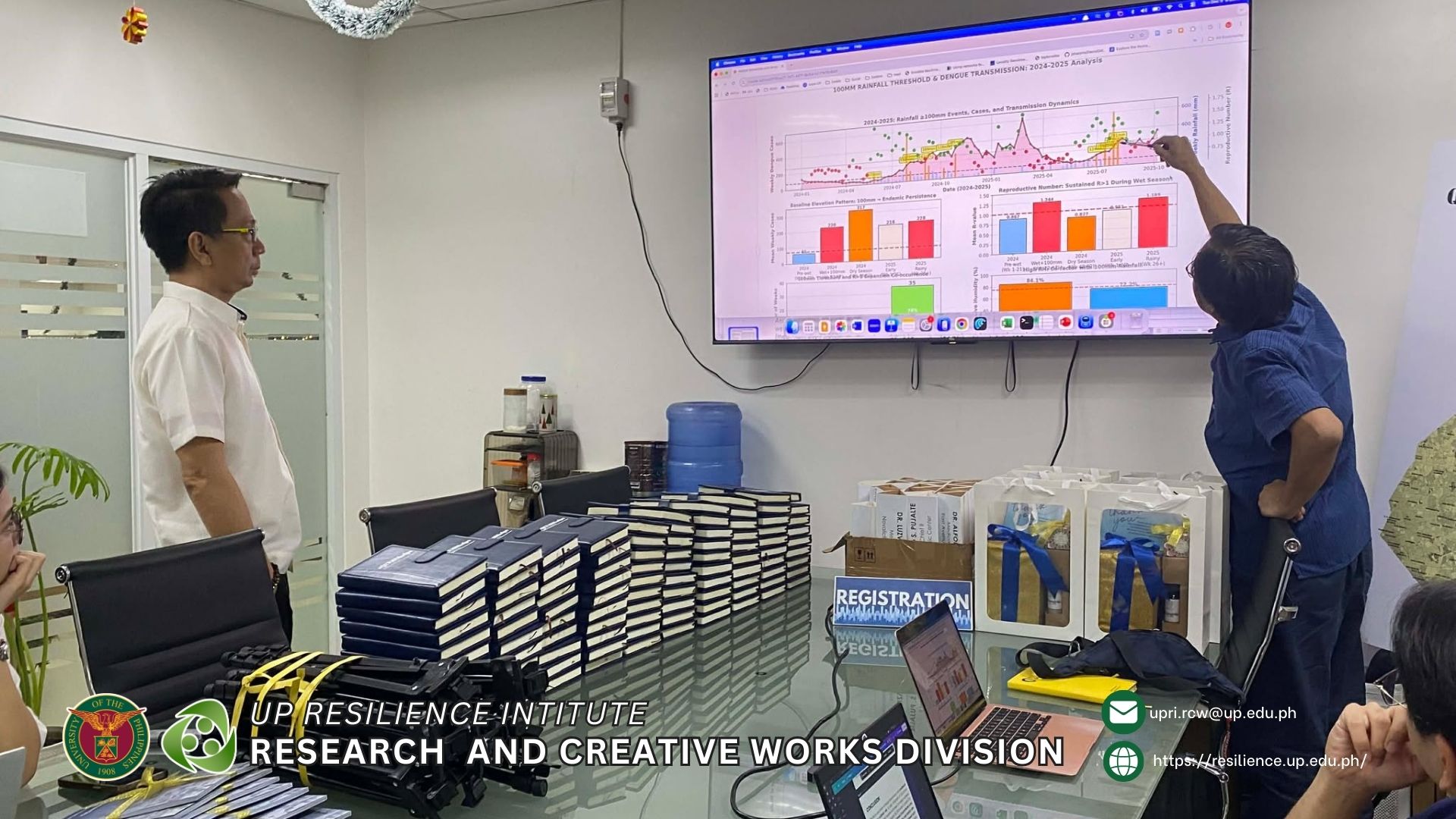
December 9, 2025 – The Research and Creative Work Division of the UP Resilience Institute (UPRI-RCW) convened a meeting with Dr. Rolando Cruz, the City Epidemiologist of the Epidemiology and Surveillance Division of the Quezon City Health Department. The focus of the discussion was on new findings concerning dengue outbreaks, particularly regarding rainfall thresholds that could function as early warning indicators. These findings and the meeting itself are part of UPRI’s ongoing work under the CORD Project, demonstrating how the initiative directly informs local public health strategies through science-based, anticipatory approaches.
The UPRI-RCW is one of the consortium members of the Center for Climate and Health glObal Research on Disasters (CORD), a collaborative initiative of seven universities from climate-vulnerable regions in Africa and Asia, coordinated by Tufts University in the United States. The CORD Project aims to build research infrastructure and develop case studies that improve anticipatory action before disasters, with a focus on protecting health and enhancing health equity in affected communities. Ultimately, the project seeks to devise action-oriented strategies that bolster health and resilience in the face of climate-related disasters. The CORD Project collaborates with practitioners, policymakers, and local community members to mitigate the health impacts of climate-related events, particularly in under-researched areas of the Global South.
Beyond its research mandate, the CORD Project plays a crucial role in advancing anticipatory action as a core strategy for disaster resilience by analyzing climate-sensitive health risks, such as dengue, and developing early warning thresholds. The CORD Project supports local governments and institutions in shifting from reactive to proactive disaster management. This approach aligns strongly with the UP Resilience Institute’s commitment to strengthening community resilience through science-based, forward-looking interventions. Through its collaboration with UPRI, the CORD Project enables the co-production of knowledge, integrating global expertise with local insights to create actionable, context-specific solutions. Together, these efforts reinforce a shared vision: empowering vulnerable communities to anticipate hazards, act before impacts escalate, and ultimately reduce the health burdens arising from climate-related disasters.
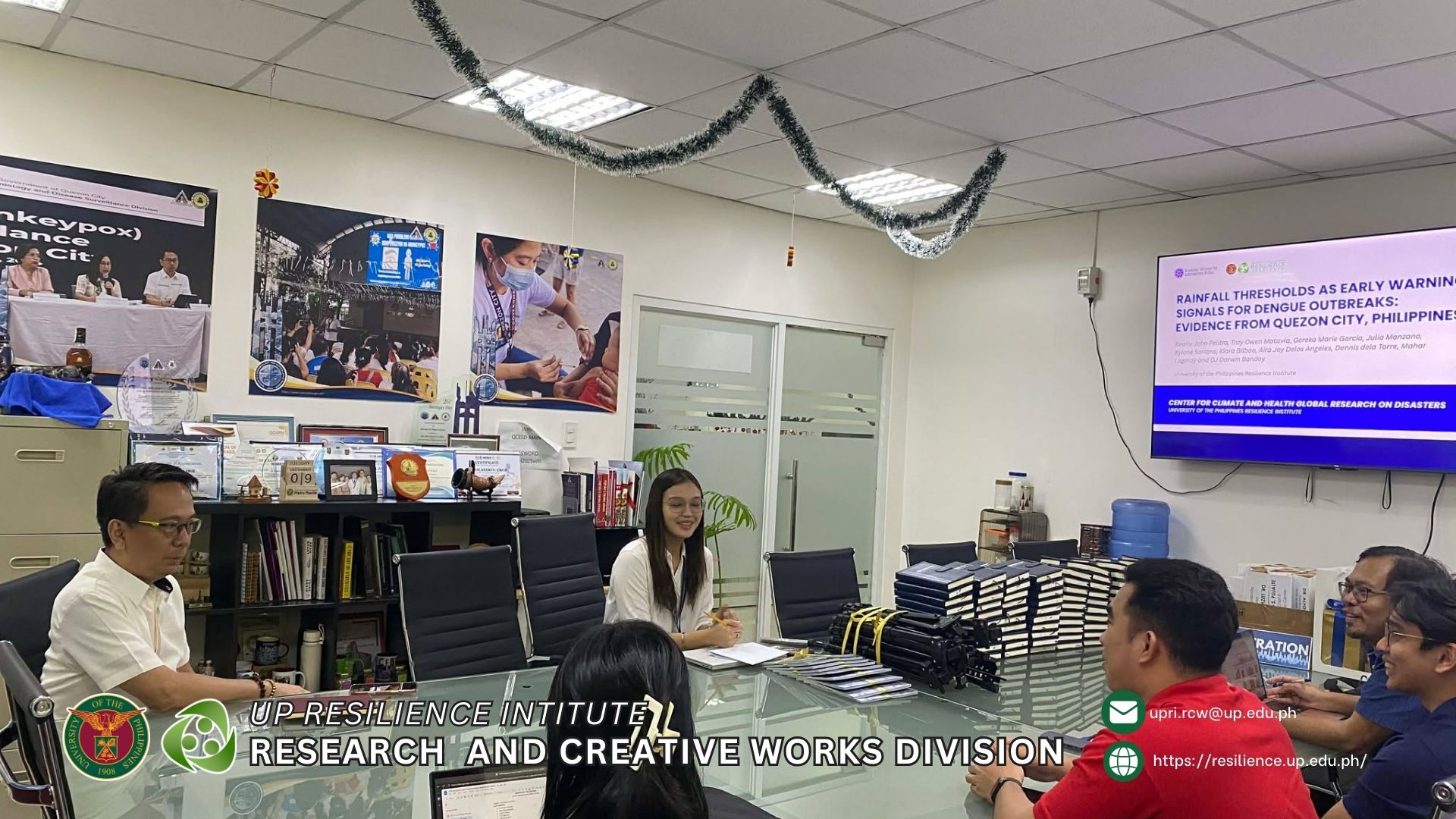
During the meeting, Dr. Darwin Bandoy, the Director of RCW, led a presentation showcasing evidence obtained from data shared by the Quezon City Health Department, along with inputs from other relevant local and national agencies. The team highlighted the correlation between specific rainfall patterns and the incidence of dengue, stressing the importance of utilizing this data to improve public health responses and early detection systems. Key discussion points included the research methodology employed, implications for public health policy, and potential strategies for raising community awareness and education about dengue prevention. The ultimate goal of these findings is to enhance preparedness and response strategies for dengue outbreaks, thereby safeguarding community health in Quezon City.