
Complex scientific concepts should be grounded in the lived realities of communities entailing translation into local languages and culturally-responsive warning systems. These would ensure that science is not detached from the communities it must serve. Rather, it would emphasize that they are at the frontlines with preparedness as a priority.
The Knowledge Sharing Division led ‘Klima at Kultura: Pre-conference of the 2026 International Sanrokan Festival on the Diversity of Cultural Expression through Inclusive Governance and Education’ last March 11 to 12, 2026 in Romblon West Central School with teachers from the Department of Education, representatives from the Disaster Risk Reduction and Management Office, and Sangguniang Kabataan.
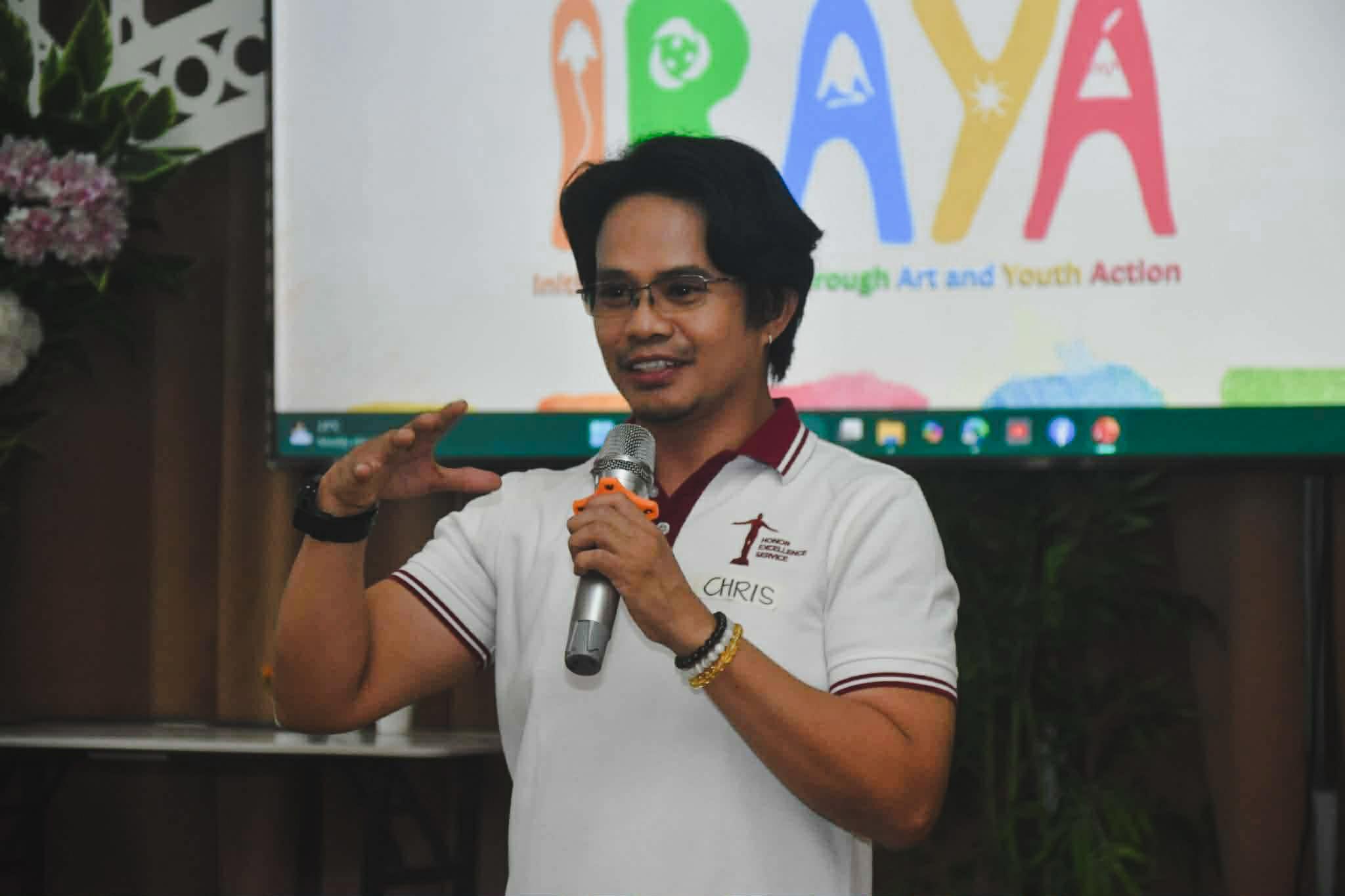
Chris Sanchez led the opening activity on the Disaster Timeline
The first day started with the Disaster Timeline facilitated by Supervising Researcher Chris Sanchez where participants had to plot disaster events from the 1950s to present. The disaster highlighted by participants was Typhoon Frank (Fengshen) that hit Romblon in 2006. Dr. Likha Minimo, Director of the Knowledge Sharing Division, then discussed the disaster timeline of the whole nation. She then delved deeper into disaster risk reduction and climate change concepts, as well as global, regional and national trends of the climate crisis.
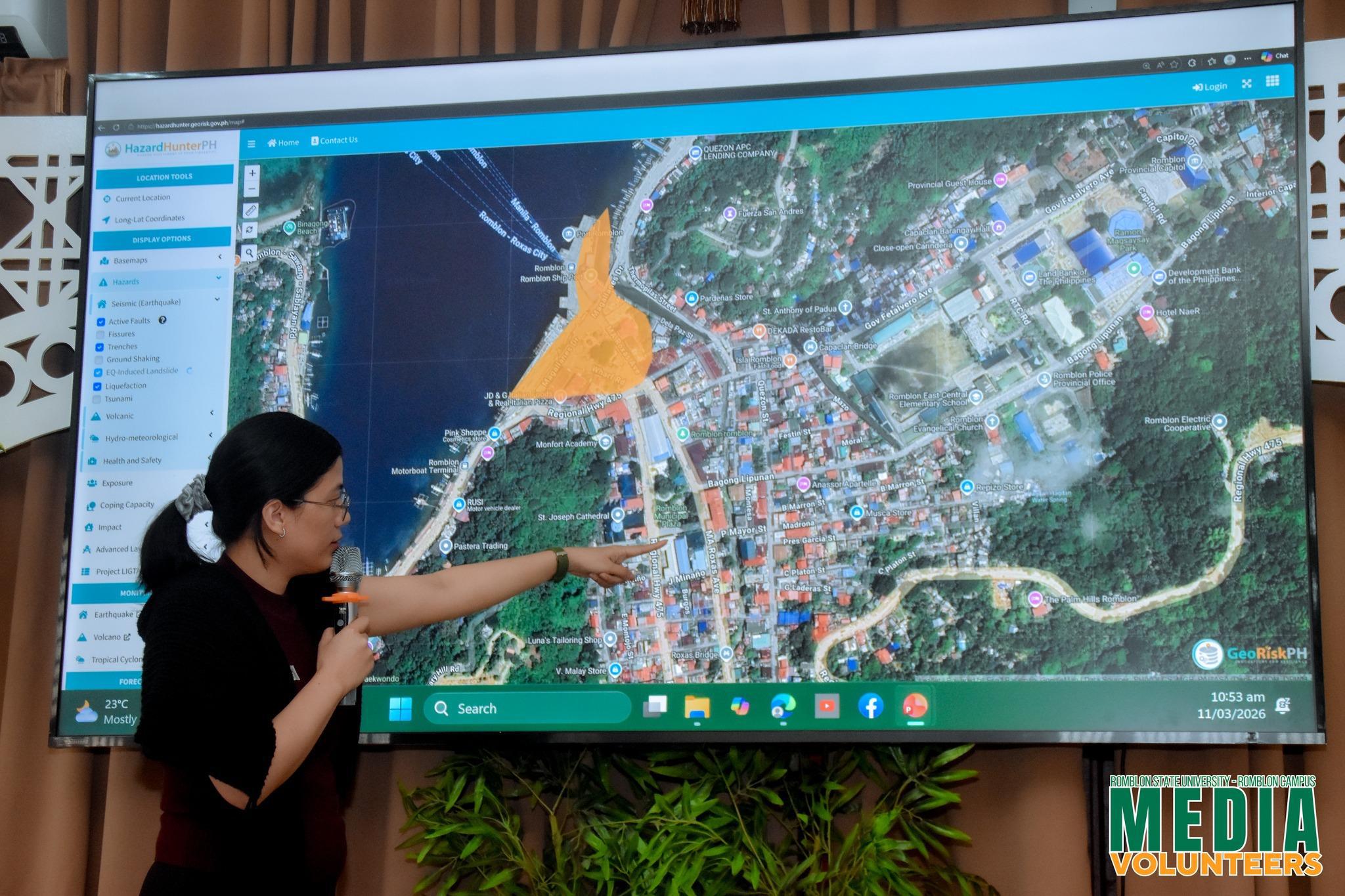
Dr. Likha Minimo discussing the local hazards in Romblon using hazard assessment applications
Hazards in Romblon were identified by using the NOAH Application and Hazard Hunter. The participants were also asked to make a mental map of their community. The Sustainable Development Goals were also enumerated to stress the interconnectedness of each goal in the context of disasters and climate change. The participants applied what they learned by creating an Impact Chain Analysis.
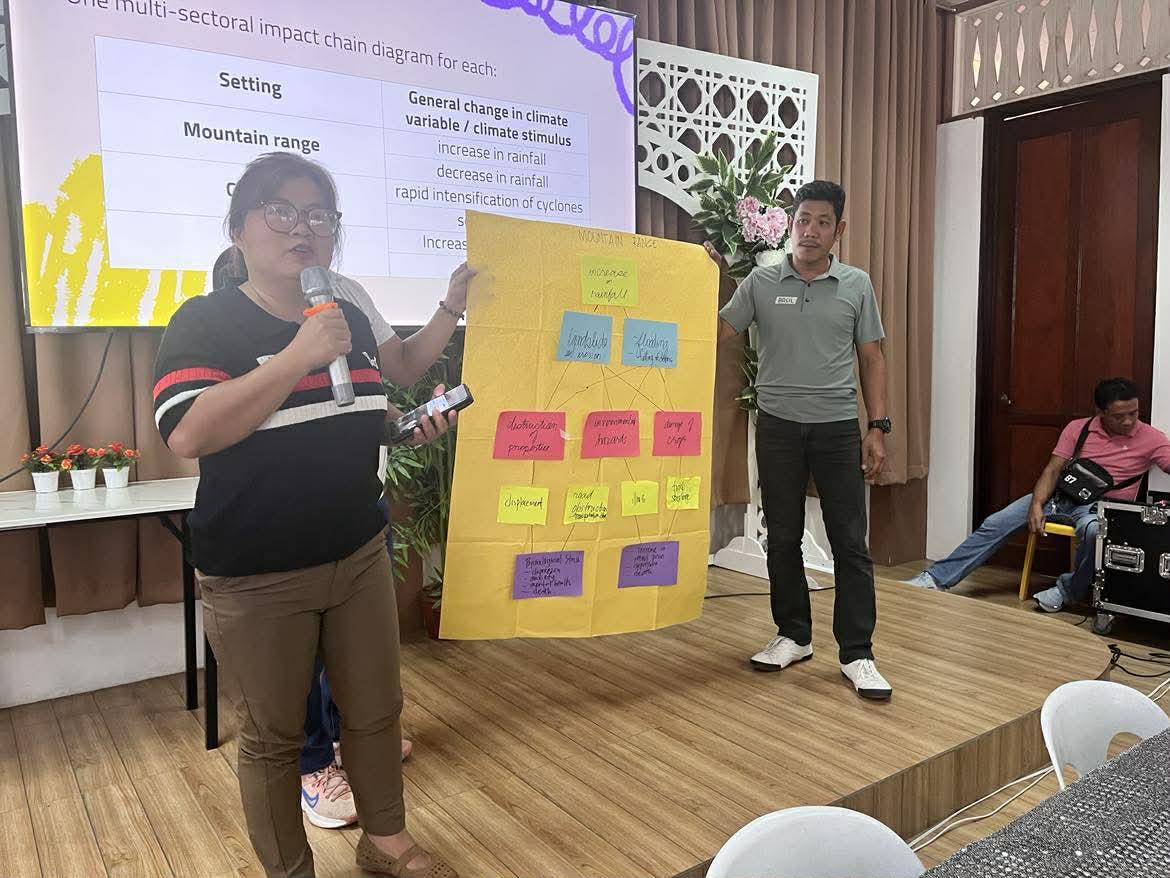
Groups presented their Impact Chain Analysis
They had to identify the effects of the hazards in their communities as triggered by climate stimuli like temperature increase, sea level rise and increase/decrease in rainfall. Then the participants excitedly played Sakunwari, a board game developed by the Research and Creative Work Division. They imagined themselves as Mayors and DRRM Officers on an island exposed to different types of hazards.
The second day was dedicated to localizing concepts of disasters and climate change. Dr. Likha Minimo added a discussion on the Ridge-to-Reef approach which was followed by ‘Pagsasalin.’ Participants were asked to write translations of features of ‘langit, lupa, at dagat’ in their own language, specifically Asi, Ini, and Onhan. These terms would serve as inputs to the ongoing project of the Katatagan Glossary and Database. The culminating activity was the writing workshop, Luntiang Tinta, facilitated by Supervising Design Specialist Kel Almazan. Building on a prompt, they were grouped into four and drafted poems about the atmosphere, the land and the seas. Afterwards, they were able to share their work with the wider group.
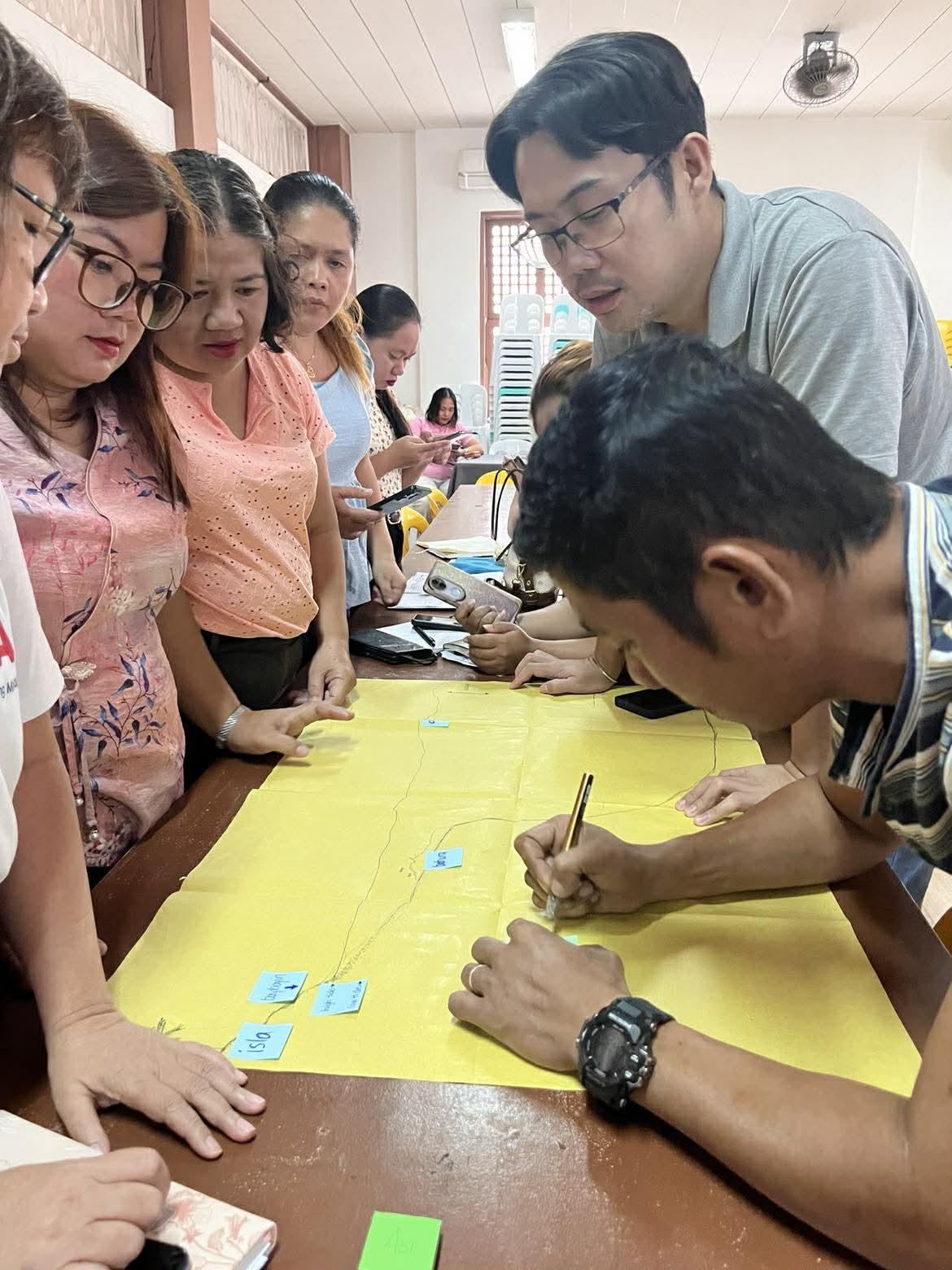
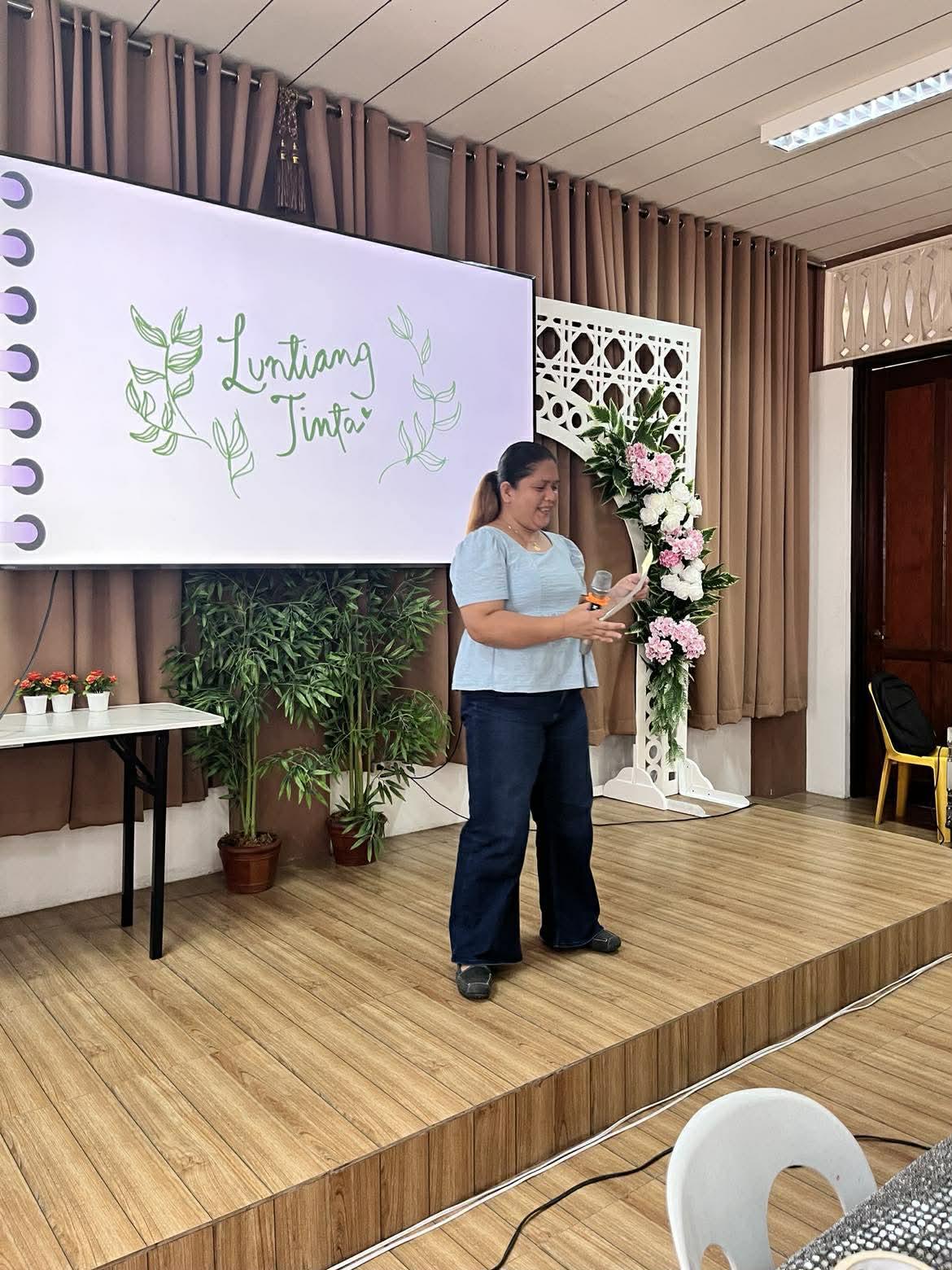
Participants engaged in Pagsasalin and Luntiang Tinta
Through this activity, the Knowledge Sharing Division emphasized that disaster preparedness and climate change adaptation does not end with data, drills and early warning systems. These should be embedded in our culture and ways of life, through which language is central.