
The UP Resilience Institute (UPRI) and NOAH Center had around 70 little visitors from the Centro Montessori school who were curious about the science behind flooding last January 15, 2026. It was the first time for UPRI and NOAH Center to host elementary learners, breaking down scientific information into hands-on learning and child-friendly activities.
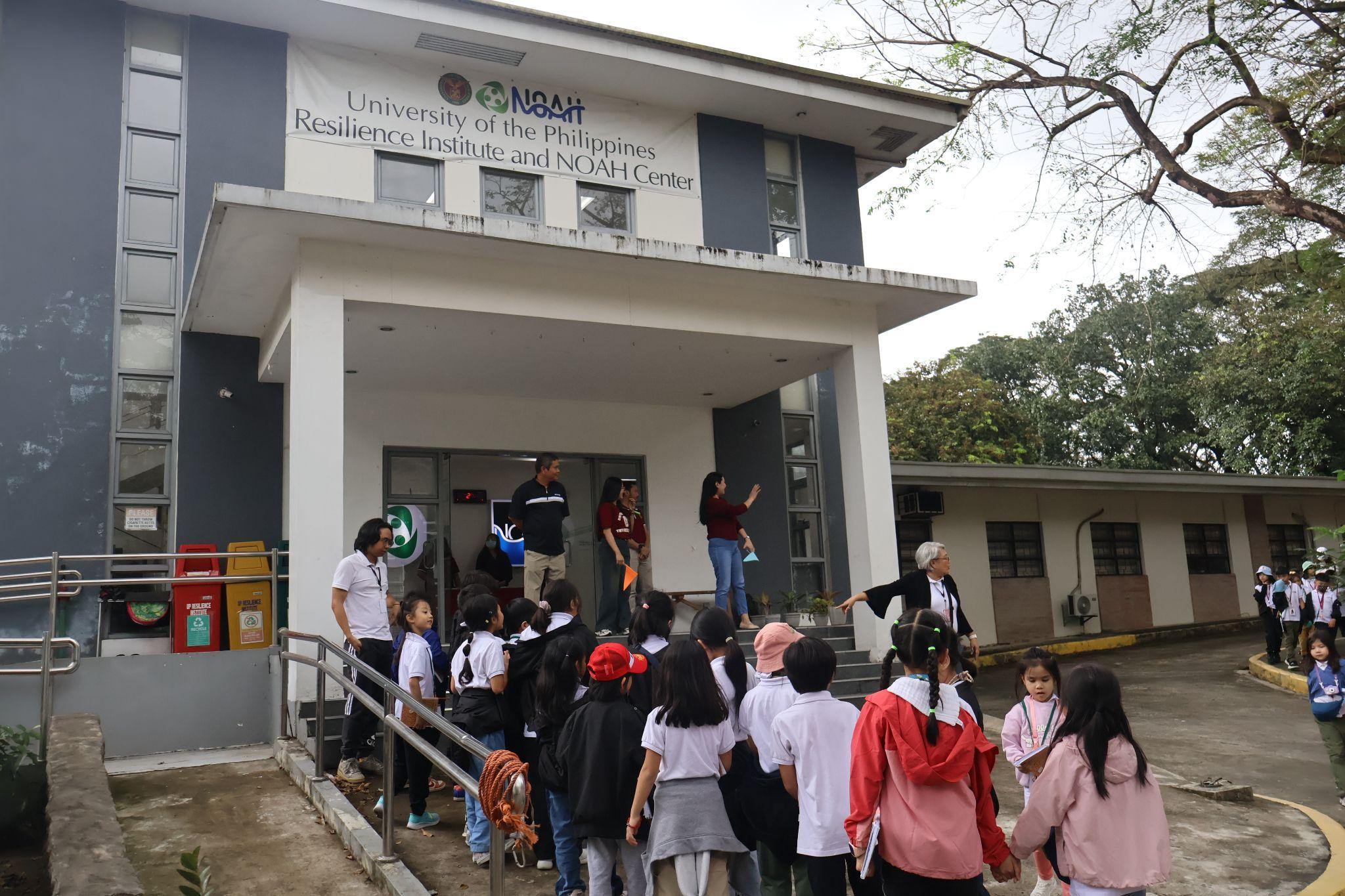
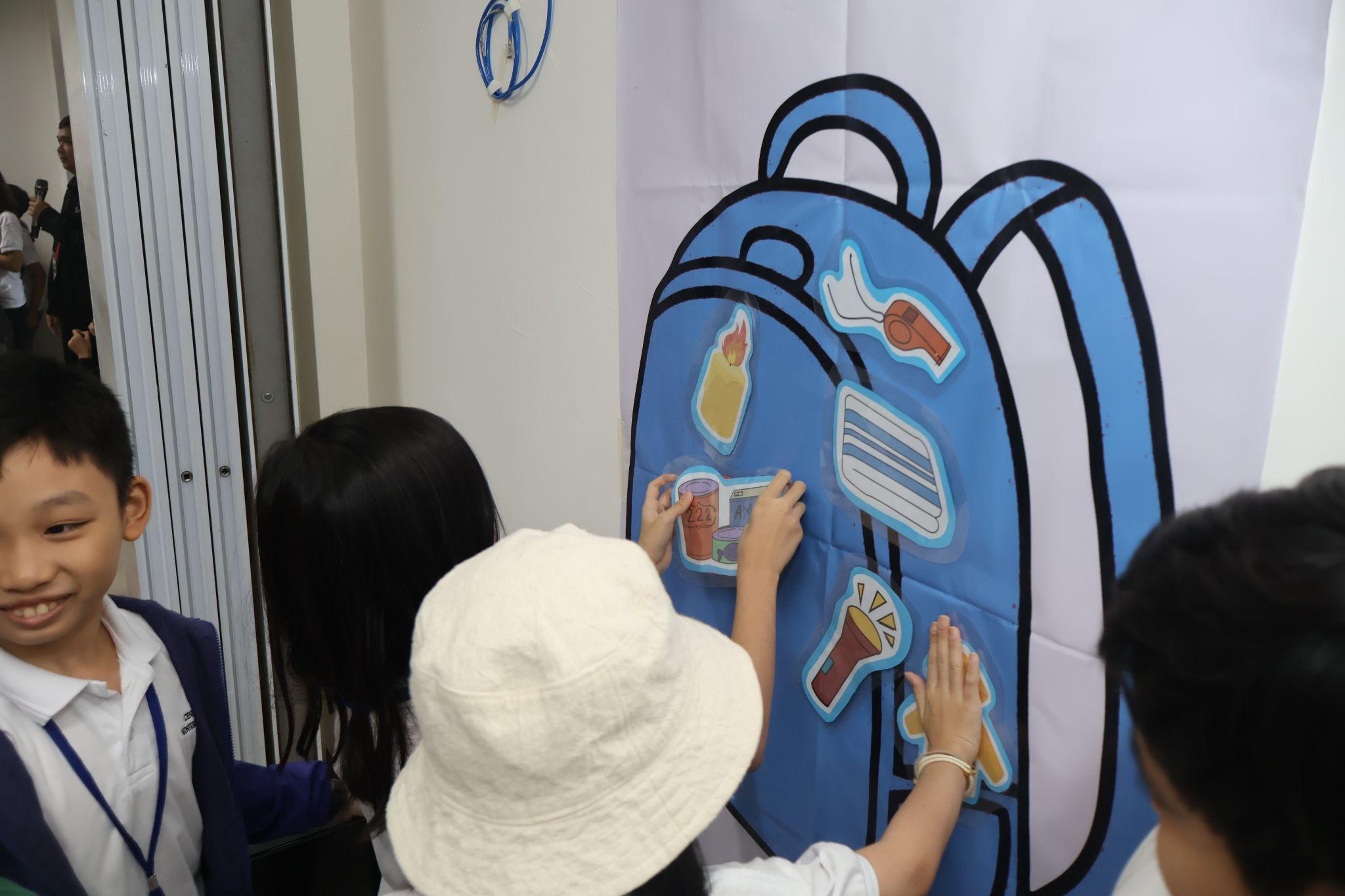
UPRI and NOAH Center Executive Director welcomed the children by starting with the Sapa Series. The Sapa Series explained waterways and how infrastructures can cause flooding. It highlighted the value of science-based planning to make risk-informed decisions. The presenters from the NOAH Hazard Assessment Team played the game, ‘Simon Says,’ where children had to act or make gestures regarding the hazard that they said. It was followed by a discussion on flooding and mitigation with the NOAH Flood Modeling Component where they listed the reasons on why flooding occurs and how these are visualized through mapping. NOAH WebGIS also shared more about Flood Impact Forecast through NOAH. The importance of planning and taking care of the environment was then presented by NOAH Planning Component. For the last session, representatives from the Institution Building Division led the Go Bag Hunting game where children had to identify and search for Go Bag items, reinforcing the idea of disaster preparedness.
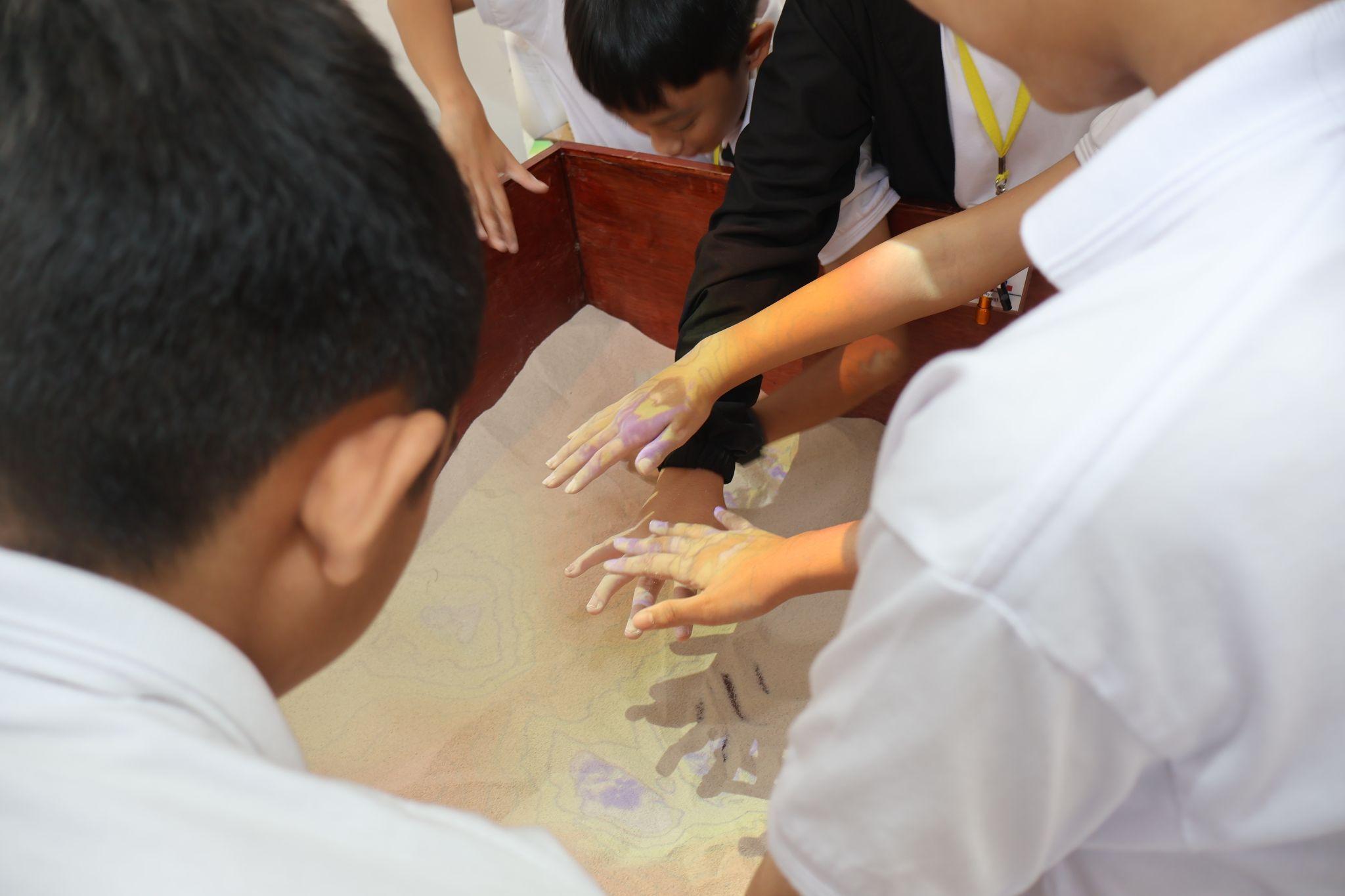
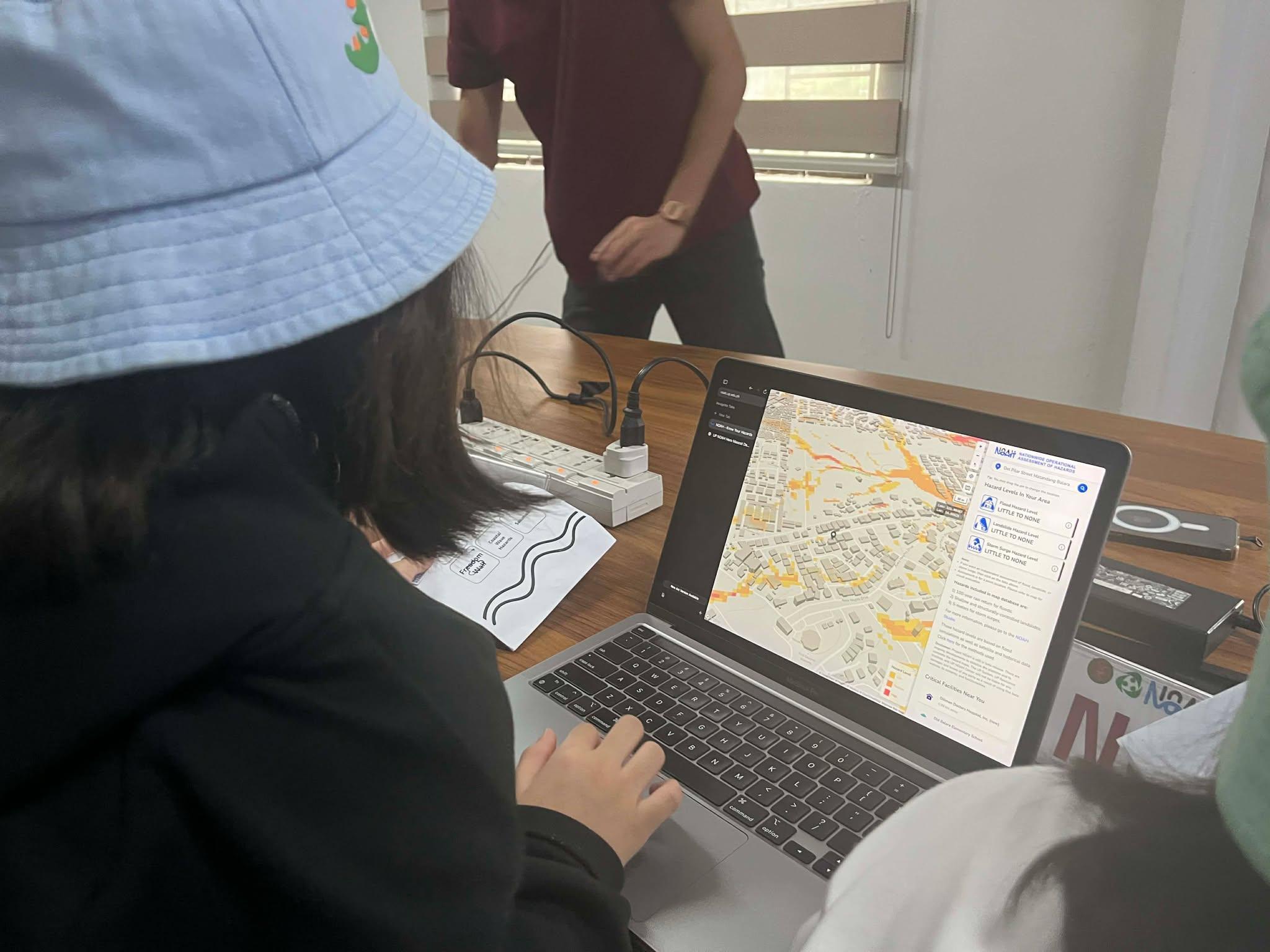
They were amazed to see scientists at work behind big computers that can forecast flooding at the NOAH Center. As the children had fun, so did the staff explaining what liquefaction is by using the shaketable and explaining how scientists map hazards that may affect their homes and communities. They were able to interact with different educational materials including the Tornado Tube and BOSS Model. Sakunwari, a board game on disaster risk reduction and management, had children pretend that they were a mayor who made decisions for the safety of their communities. Meanwhile, the Coastal Wave Hazards clay model had children observe if the coastal area would be inundated by tsunami or storm surge. They were also excited to play with the 3D printed topography models and an augmented reality sandbox. The children also used the NOAH Application and the Grow and Identify Native trees in your Area (GINA) Application to check if their homes were safe or unsafe.
The children were all smiles as they boarded their buses after the tour. As scientists and engineers for the Nation, it is our joy to bring our work to communities and to the next generation. The Science of Resilience may be complex, but it does not have to be intimidating. It serves best when understood even by the youngest with endless curiosity.