
by Aira Joy C. Delos Angeles and Dr. Darwin Bandoy
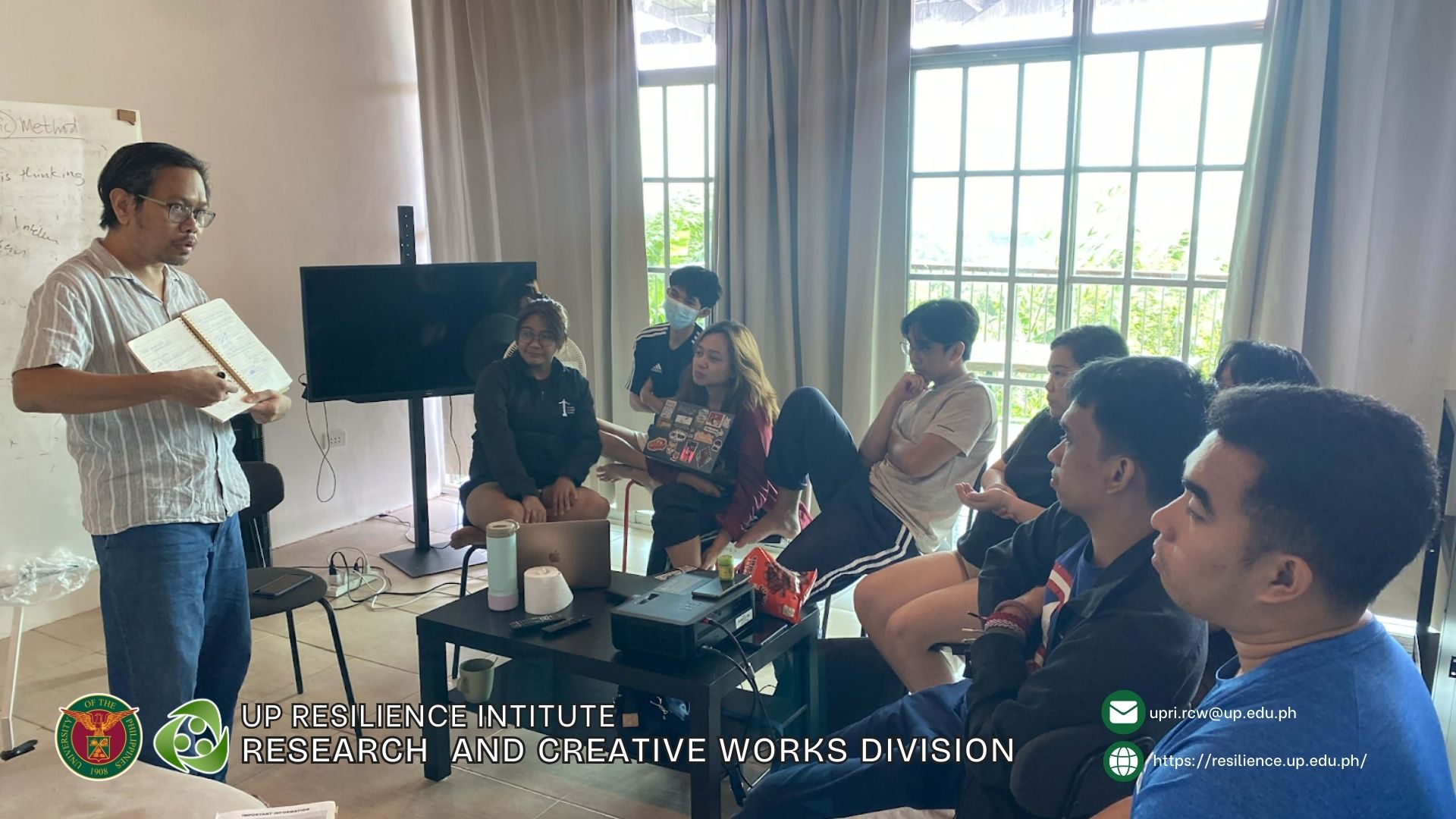
On December 3-4, 2025, the UP Resilience Institute–Research and Creative Work Division (UPRI-RCW), led by Dr. DJ Darwin Bandoy, RCW Director, conducted a writeshop and strategic planning activity in Talisay, Batangas. The UPRI-RCW is the research and creative arm of the UP Resilience Institute, responsible for producing interdisciplinary studies, policy outputs, and creative engagements on climate, disaster risk, and health. The activity brought together members of the RCW team to review ongoing initiatives and establish priorities for the 2026 research agenda. Discussions focused on project planning, methodological approaches, and publication strategies. The activity reinforced the Division’s role in translating scientific evidence into policy-relevant knowledge.
Updates on administrative and financial matters were presented during the activity, with a focus on the budget status and financial coordination. The discussions emphasized the importance of transparency in managing project resources and supporting ongoing research activities. Financial coordination was identified as a key mechanism for sustaining long-term research outcomes. These updates helped ensure alignment across projects and teams. The session reinforced the significance of sound financial practices in enabling the continuity of research efforts.
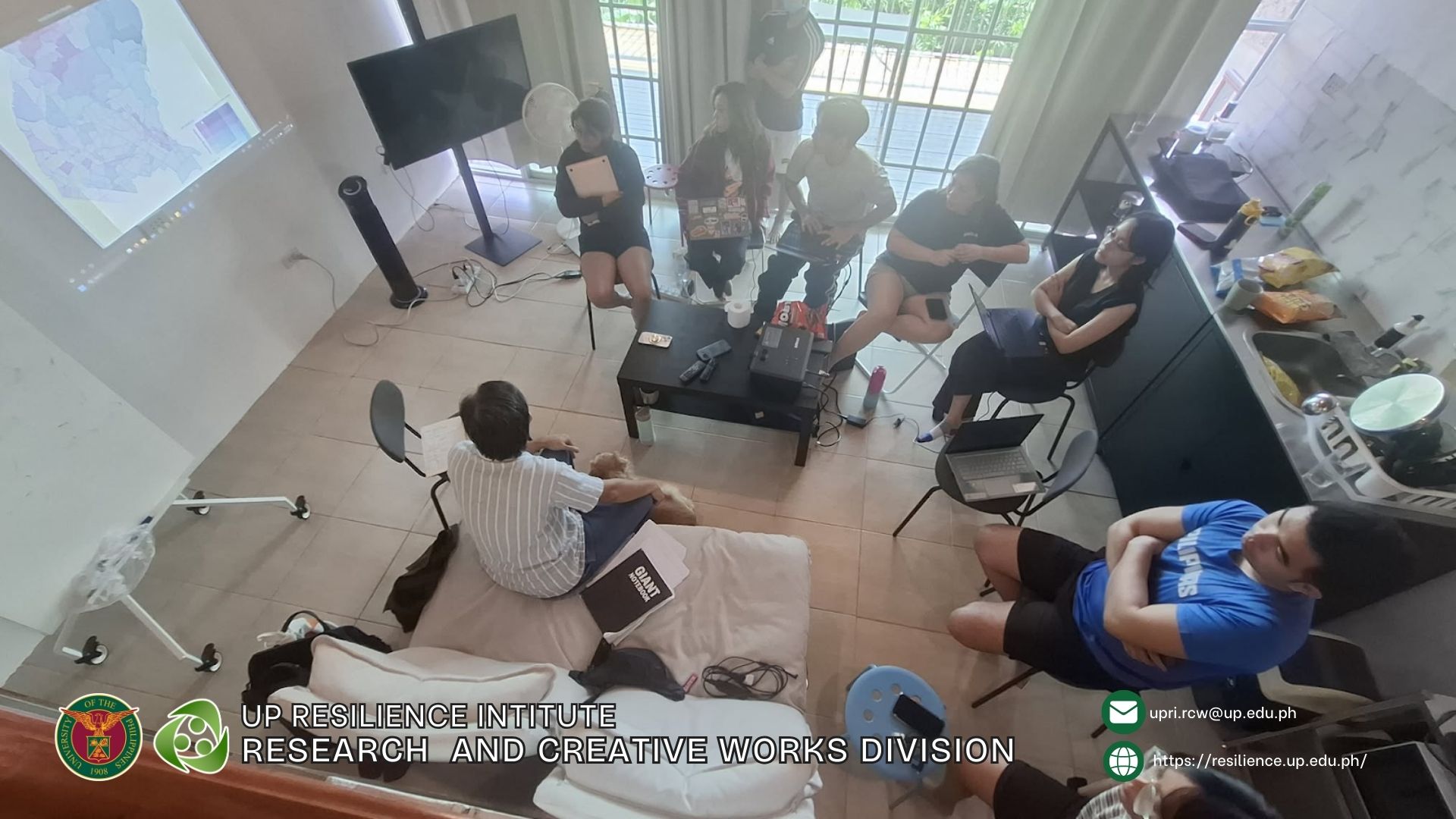
The strategic planning discussions highlighted proposed research and creative directions for 2026. These include integrating gender and development perspectives to examine women’s vulnerability to climate-related disasters. Another proposed direction focuses on countermapping human narratives (danas), translating lived experiences into maps, exhibits, and other creative outputs. The team also identified the continuation of climate and health research as a priority, aiming to build a cohesive ecosystem of published work. Creative engagement initiatives such as “MoskiToks” were identified as complementary platforms for public communication. MoskiToks represents the division’s innovative approach to information dissemination campaigns, aiming to engage vulnerable communities in addressing dengue disease and promoting dengue prevention.
The activity also reviewed progress and ways forward for research conducted under the CORD project. CORD, or the Center for Climate and Health Global Research on Disasters, is an international research consortium that focuses on anticipatory action for climate-related health risks. Within this consortium, UPRI-RCW contributes Philippine-based research on dengue, leptospirosis, flooding, and vulnerable populations. The team discussed recommendations to improve manuscript quality, including clearer unit specifications, refined table labeling, and strengthened discussions on data limitations. Spatial analyses identifying flooding, schools, and population density as vulnerability hotspots were highlighted as key analytical components.
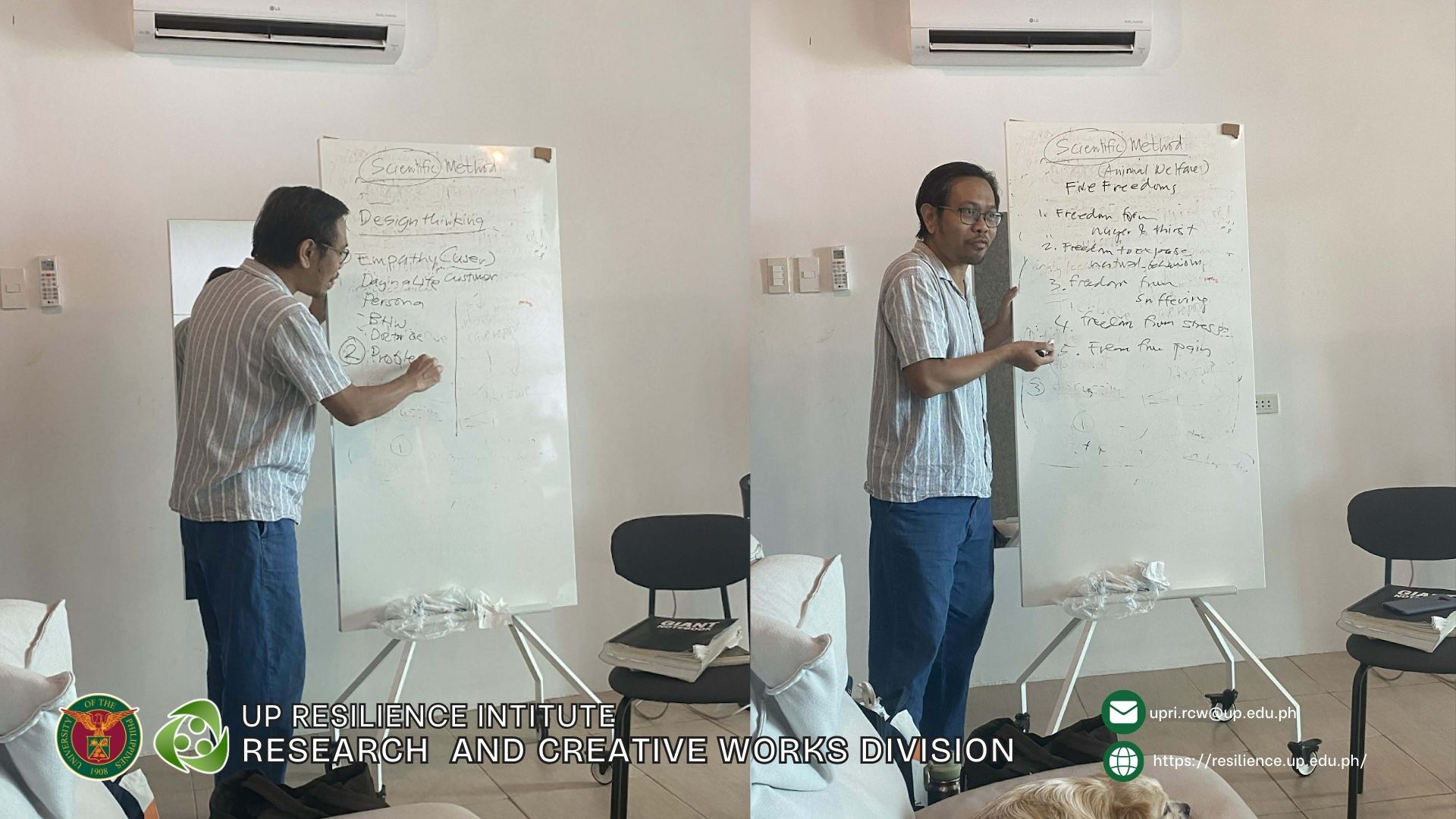
Methodological discussions emphasized research as a discovery-driven process guided by problem-centered inquiry. The team revisited the design thinking framework, highlighting empathy and user validation as critical to effective research design. Countermapping was discussed as a method for understanding community behavior and lived experience, complementing traditional theories of change. Ethical considerations, including the responsible use of artificial intelligence in writing and analysis, were also discussed.
The writeshop concluded at The Cabin in Talisay, Batangas, providing a focused environment for advancing manuscripts and policy outputs. Writing timelines and author-editor roles were finalized for papers on cloudbursts, thresholds, dengue, and leptospirosis. Planned submissions target regional and international journals and policy platforms focused on climate and health. Additional 2026 proposals include initiatives on climate financing, One Health, green and blue economy mapping, and Mapa Art. These activities reaffirm UPRI-RCW’s commitment to interdisciplinary, policy-relevant, and anticipatory resilience research.