
by Aira Joy C. Delos Angeles, Gereka Marie N. Garcia, and Klara Bilbao
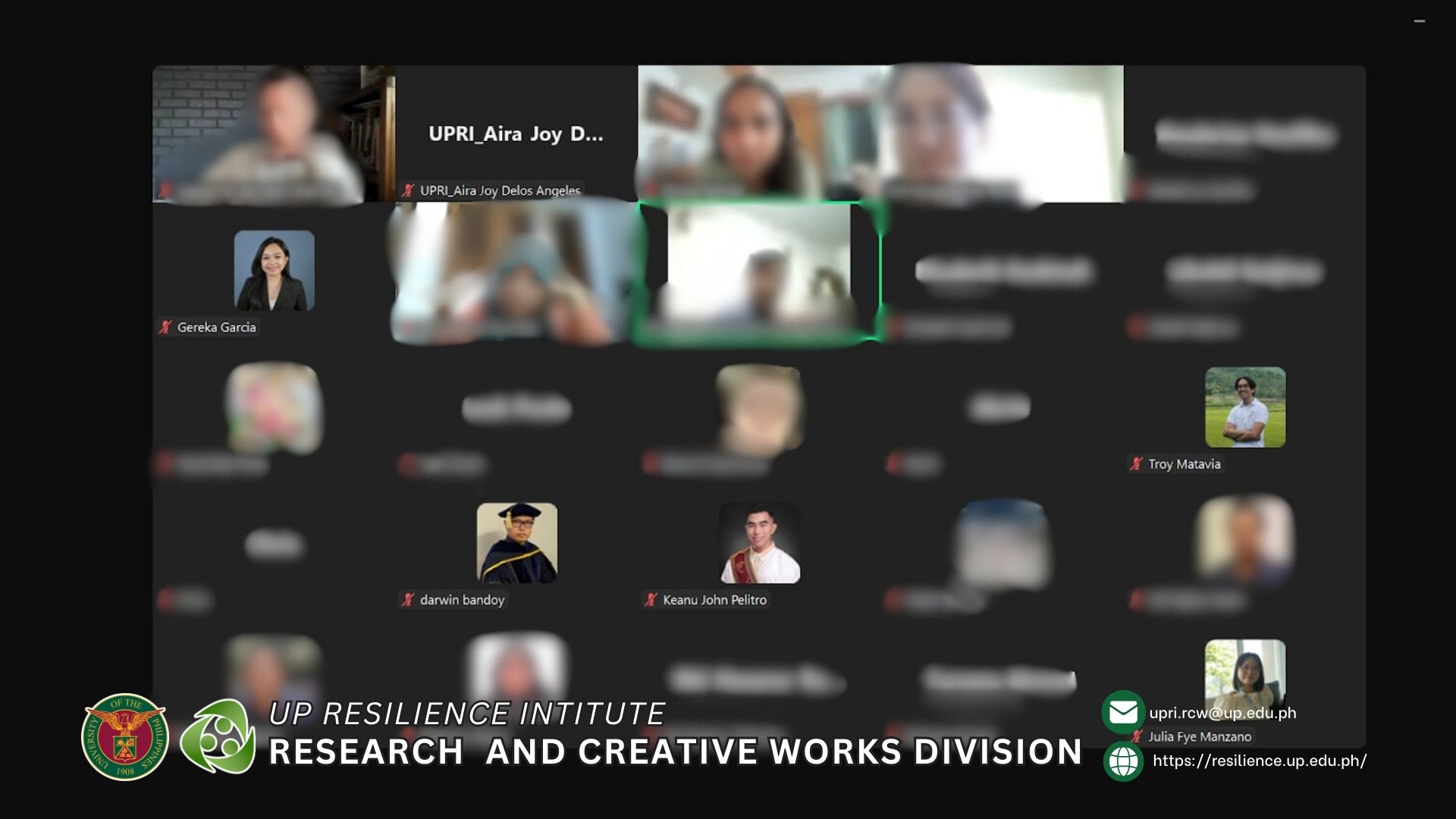
February 9, 2026 — The UP Resilience Institute’s Research and Creative Works (UPRI-RCW) team presented their communications and dissemination plan for the strategic implementation of the Center for Climate and Health glObal Research on Disasters (CORD) Project. This presentation was part of Day 1 of the CORD Virtual Retreat, held via Zoom from February 9 to 11, 2026. This three-day meeting convened the full consortium, bringing together researchers from seven universities located in Bangladesh, Lesotho, Mozambique, Namibia, the Philippines, Uganda, and Tufts University in the United States. The goal is to advance anticipatory action in response to climate-related health risks.
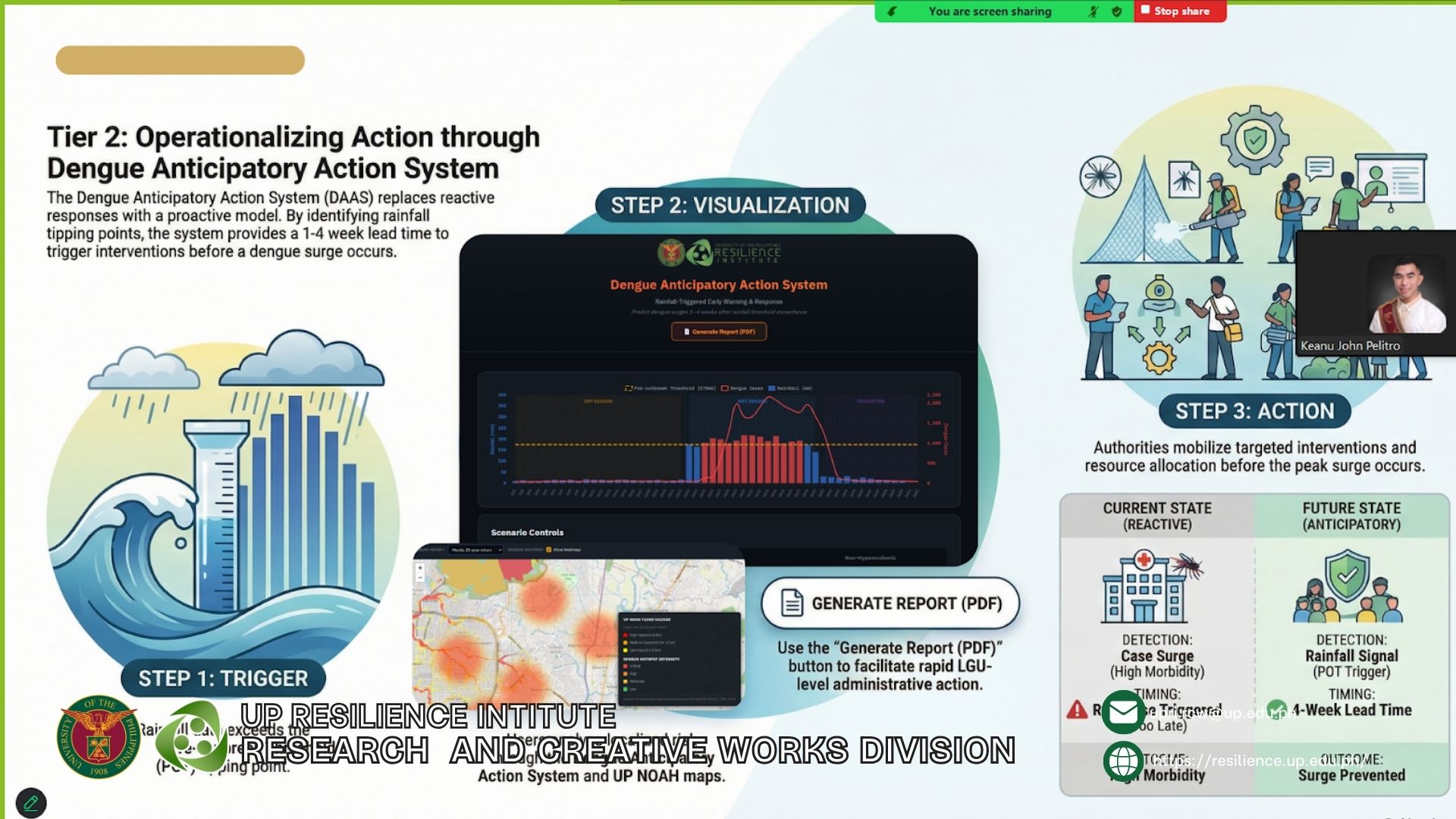
During the presentation, Mr. Keanu John A. Pelitro, Junior Project Assistant of UPRI-RCW, outlined the team’s three-tiered approach to stakeholder engagement:
- Global legitimacy and scalability – through high-impact journals, conferences, and policy briefs, ensuring that the tools and approaches are recognized internationally and can be adapted across different contexts.
- Local operationalization – tailoring tools and strategies to the needs and capacities of local communities.
- Translating anticipatory concepts into child-centered storytelling – making complex disaster risk reduction concepts accessible and engaging for children and families.
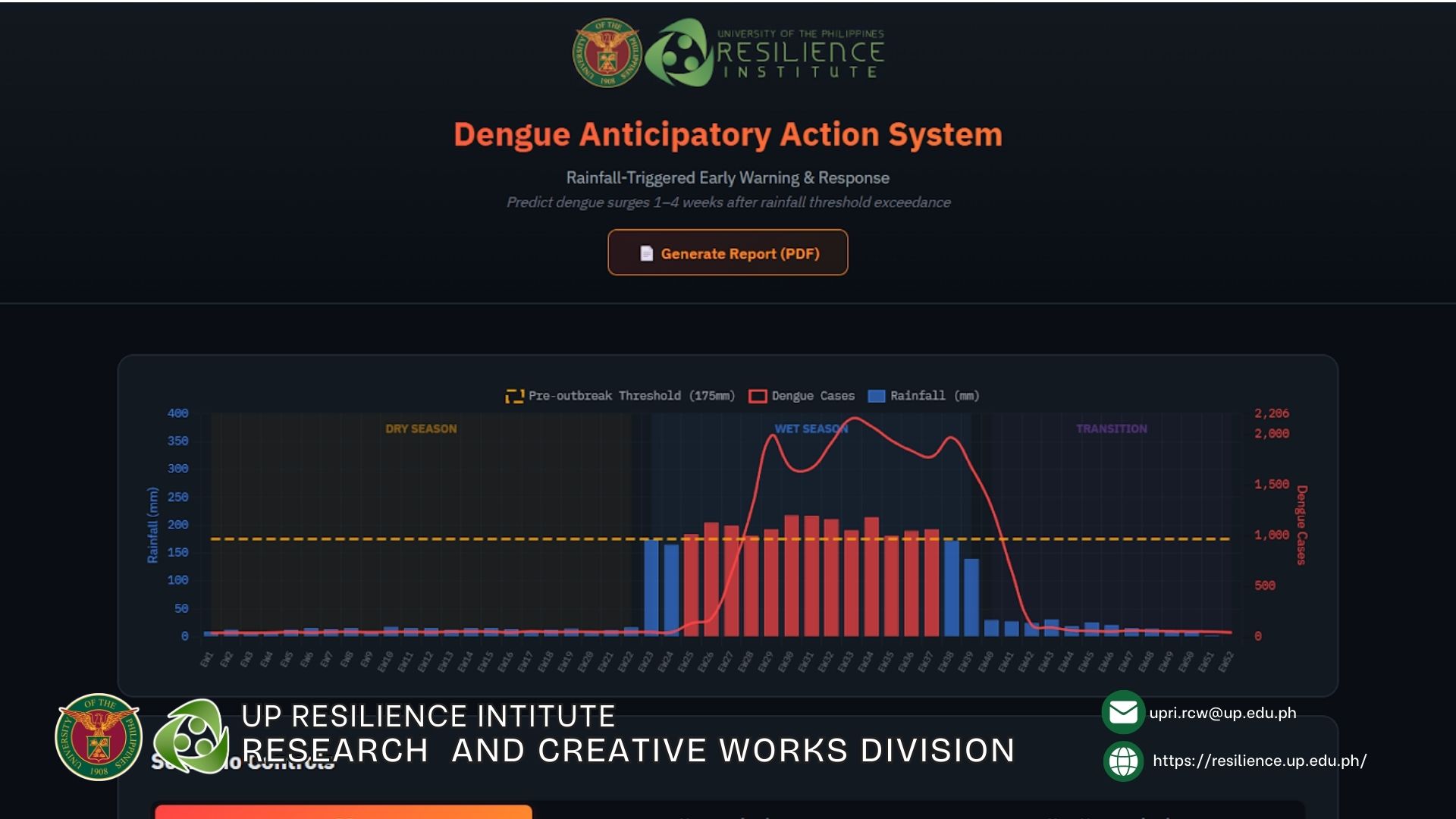
Mr. Pelitro also highlighted the dengue dashboard developed by the UPRI-RCW team to the CORD consortium. This innovative tool empowers communities and decision-makers to take informed and timely actions to prevent dengue outbreaks by transforming regularly collected data into actionable insights. Mr. Pelitro demonstrated how users interact with the dashboard. After inputting the necessary details or adjusting the settings to their desired parameters, the system generates a summary report or predictive results in PDF format. This report serves as a foundation for decision-making by relevant stakeholders.
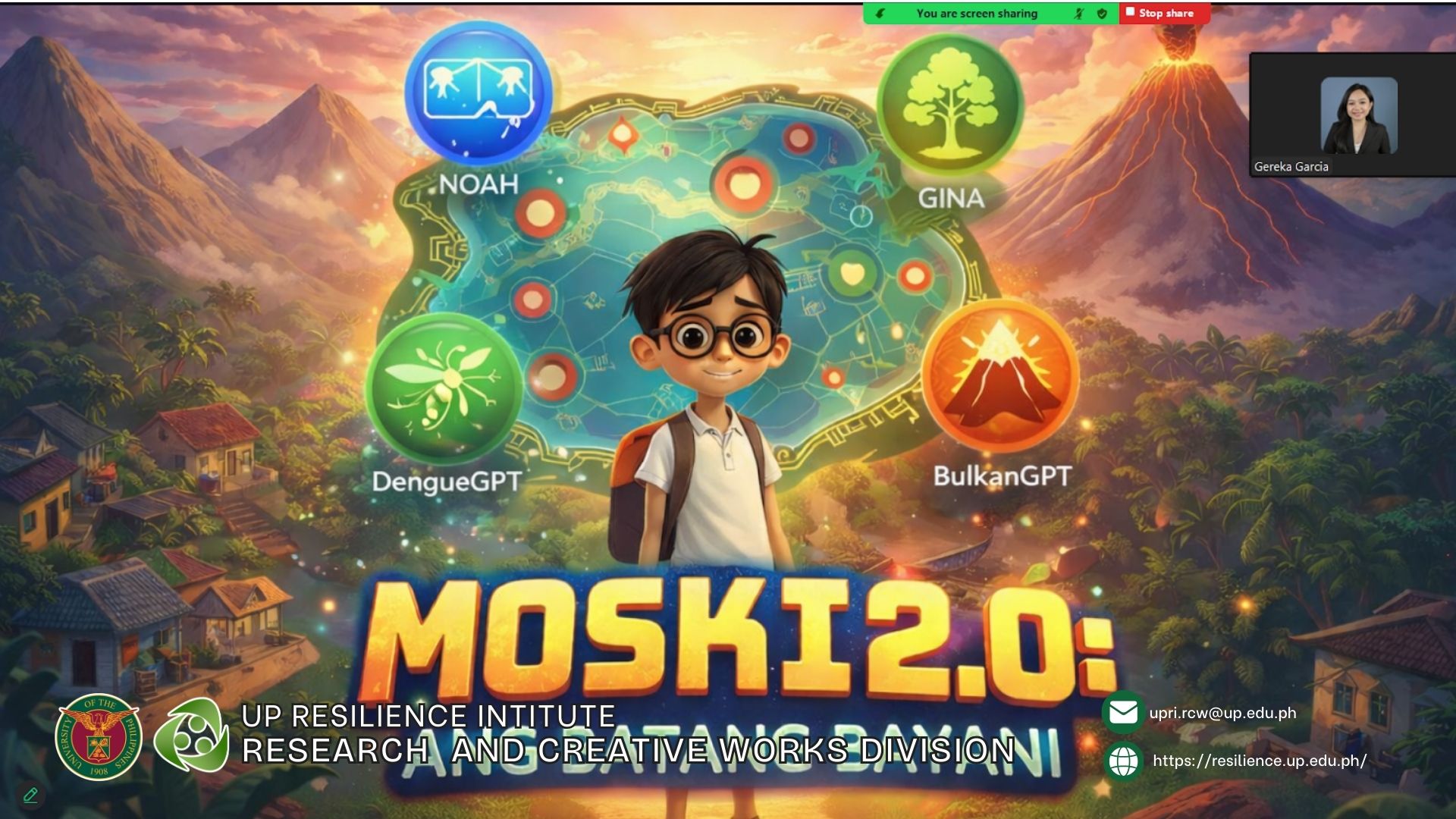
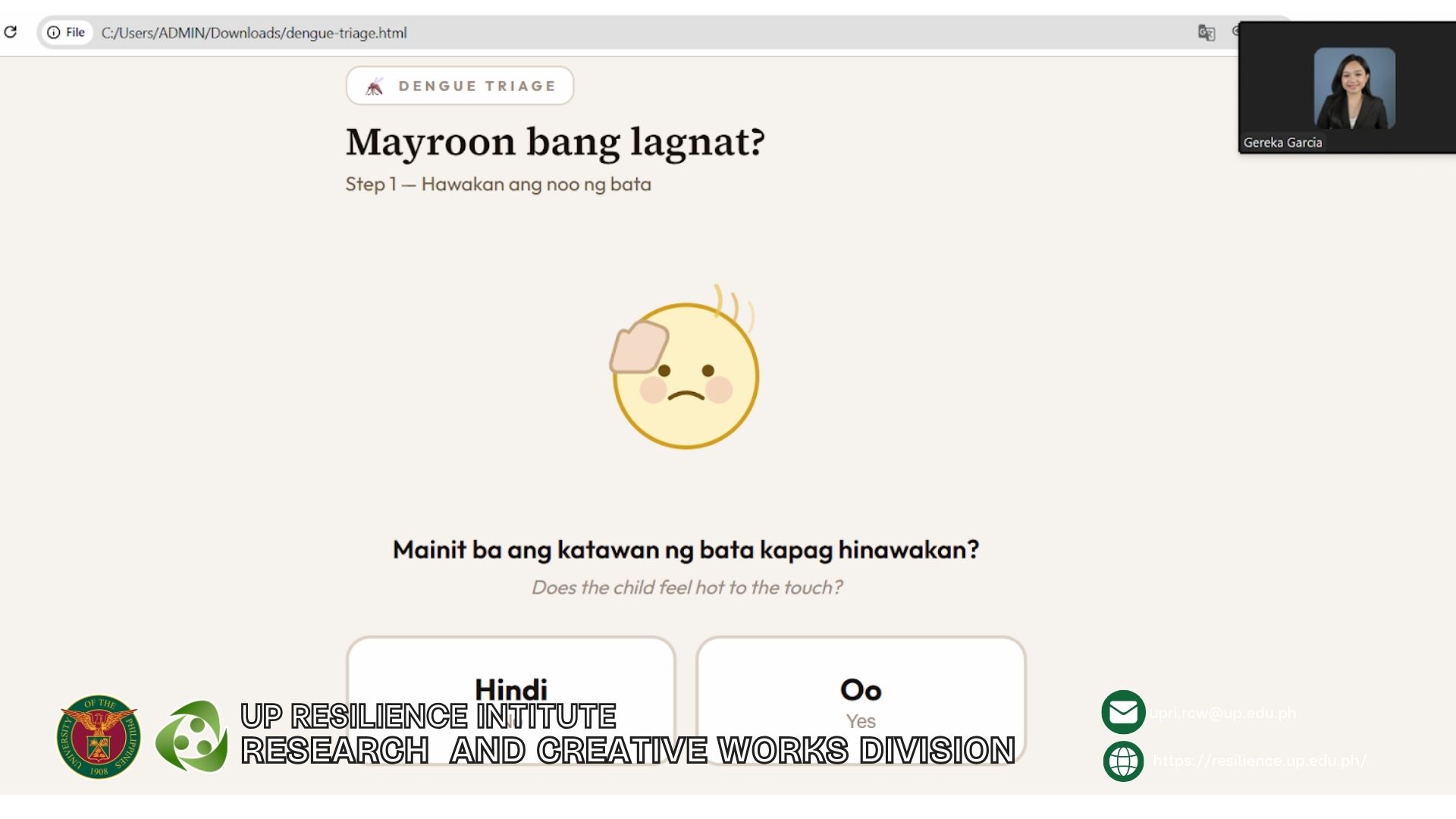
Following his segment, Ms. Gereka Marie N. Garcia, Junior Project Assistant of UPRI-RCW, presented the Moski 2.0 mock-up, offering a creative and pedagogically engaging contribution to the discussion. Moski 2.0 is an animated, gamified storybook that follows Monjing, a young hero who protects cities by applying scientific reasoning. Rather than relying on fictional superpowers, Monjing utilizes real UPRI-developed tools, including DengueGPT, BulkanGPT, NOAH, and GINA, to understand hazards, make evidence-based decisions, and safeguard communities. By embedding these tools within an adventure narrative, Moski 2.0 demonstrates how disaster risk reduction principles can be introduced early and made accessible to children and families. In an event grounded in popular education, the mock-up illustrates how technical knowledge can be transformed into culturally resonant, engaging formats that extend beyond classrooms and formal training environments.
During the Q&A segment, Dr. Dj Darwin Bandoy, Director of UPRI-RCW, addressed questions regarding the development of the dengue dashboard, providing detailed insights into its design, functionality, and implementation. The discussion emphasized that the Philippines is open to collaborating with other CORD consortium countries, offering guidance for adapting the dashboard to address country-specific diseases, hazards, or public health challenges. The dissemination plan is designed to ensure that research outputs and tools developed under the CORD Project reach the appropriate stakeholders efficiently and effectively. By strategically sharing dashboards, educational materials, and innovative tools like Moski 2.0, the plan supports data-informed decision-making, community engagement, and proactive measures against climate-sensitive health risks. This approach highlights UPRI-RCW’s commitment to evidence-based public health interventions, anticipatory action, and capacity building at both national and international levels.