
by Aira Joy C. Delos Angeles and Klara Bilbao
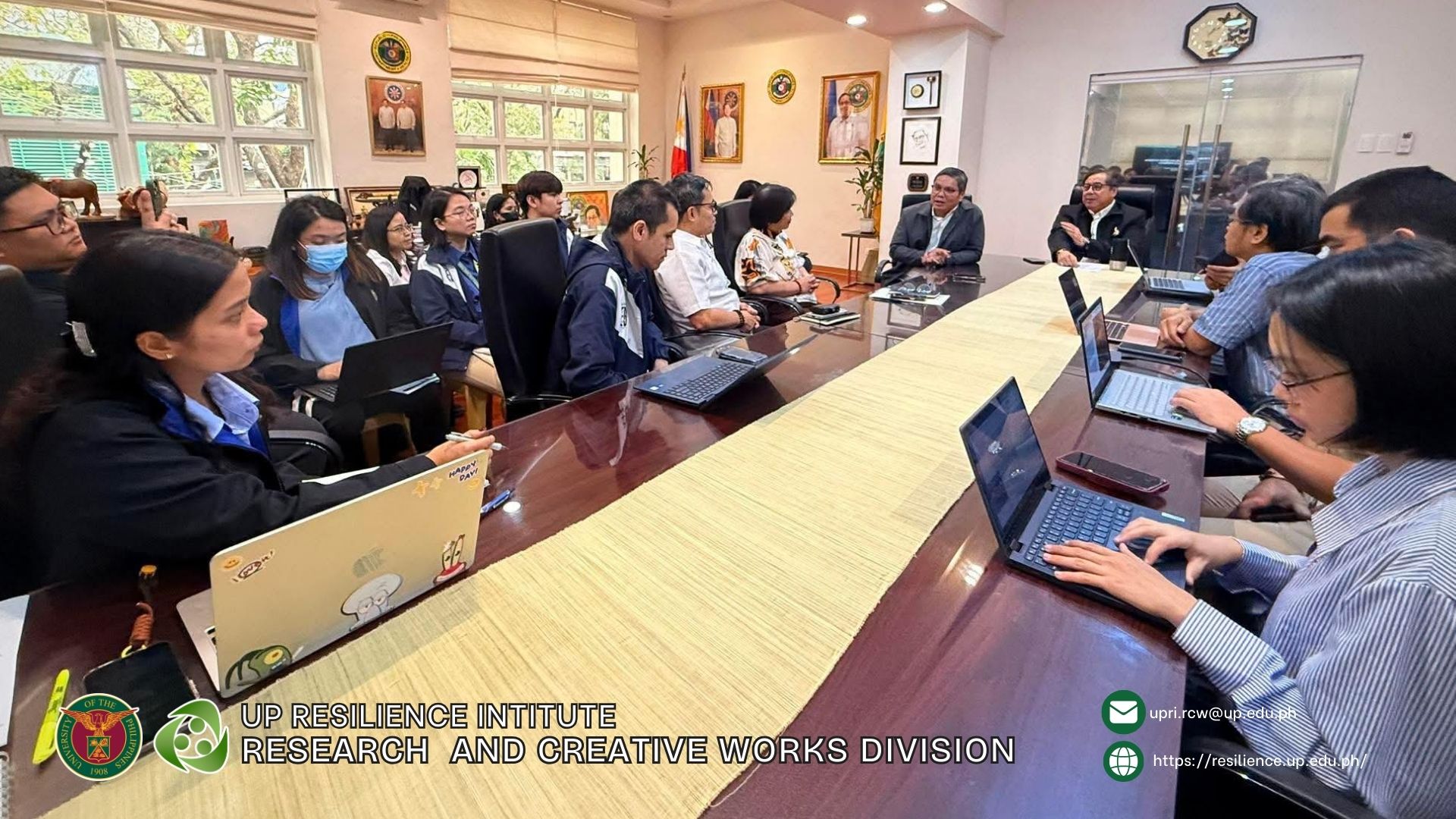
February 12, 2026 — The UP Resilience Institute (UPRI) is transforming rainfall data into an early warning system for dengue outbreaks. The team presented their US NIH–funded research, conducted in collaboration with Tufts University, to Dr. Teodoro J. Herbosa, Secretary of the Department of Health (DOH), and DOH Undersecretary Gloria J. Balboa, alongside officials from the DOH Epidemiology Bureau, the Health Emergency Management Bureau, and the Health and Climate Change Unit (HCCU) led by Director Ronald P. Law with his team, and Dr. Ian Christopher Rocha of the Disease Prevention and Control Bureau (DPCB) with his team. The study demonstrates how anticipatory, evidence-based action can convert routine weather data into data-driven guidance that enables timely interventions, saves lives, and optimizes resources. By integrating research into practical tools, UPRI provides early guidance that helps communities act before outbreaks occur, emphasizing proactive, data-driven public health strategies.
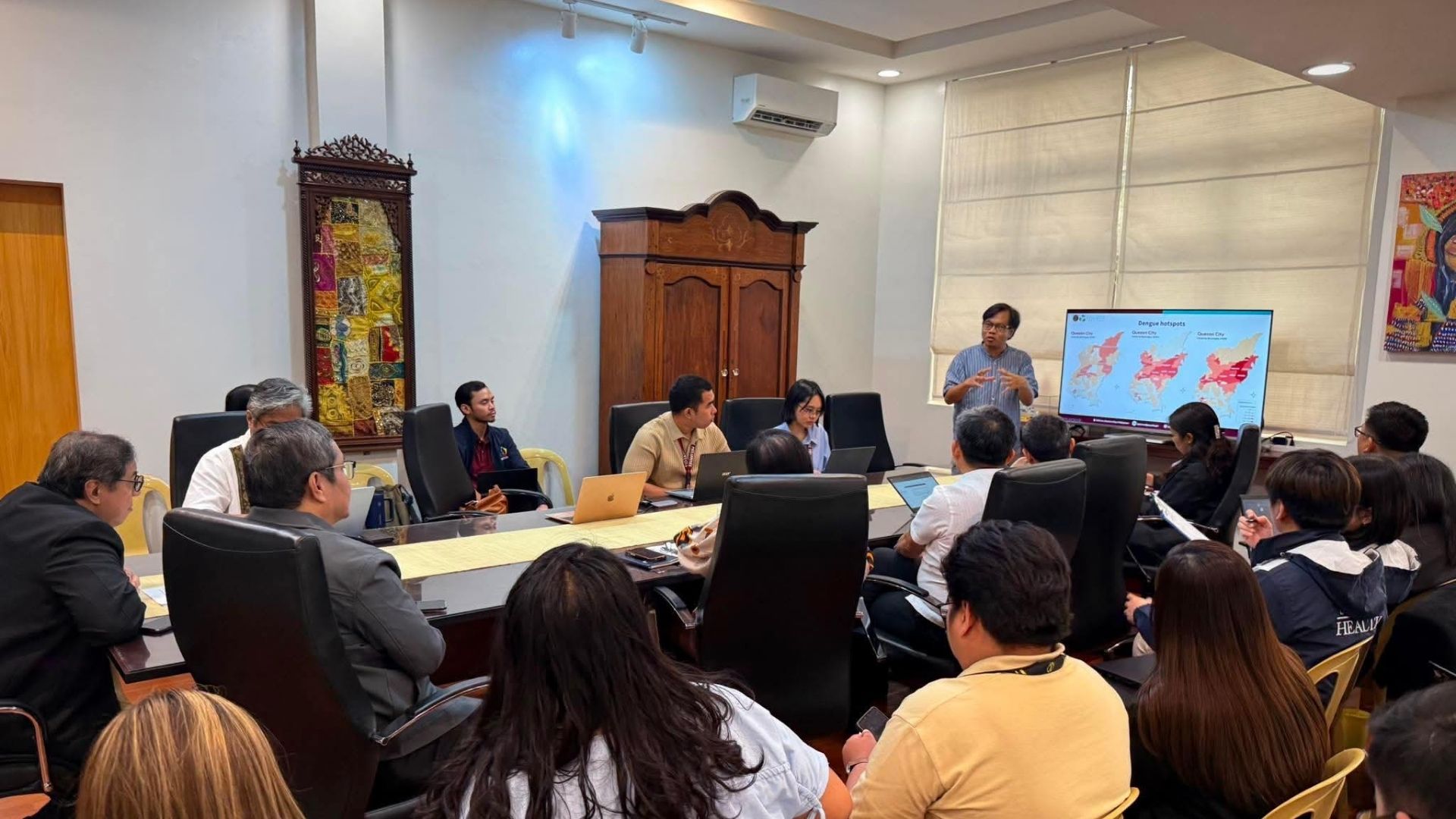
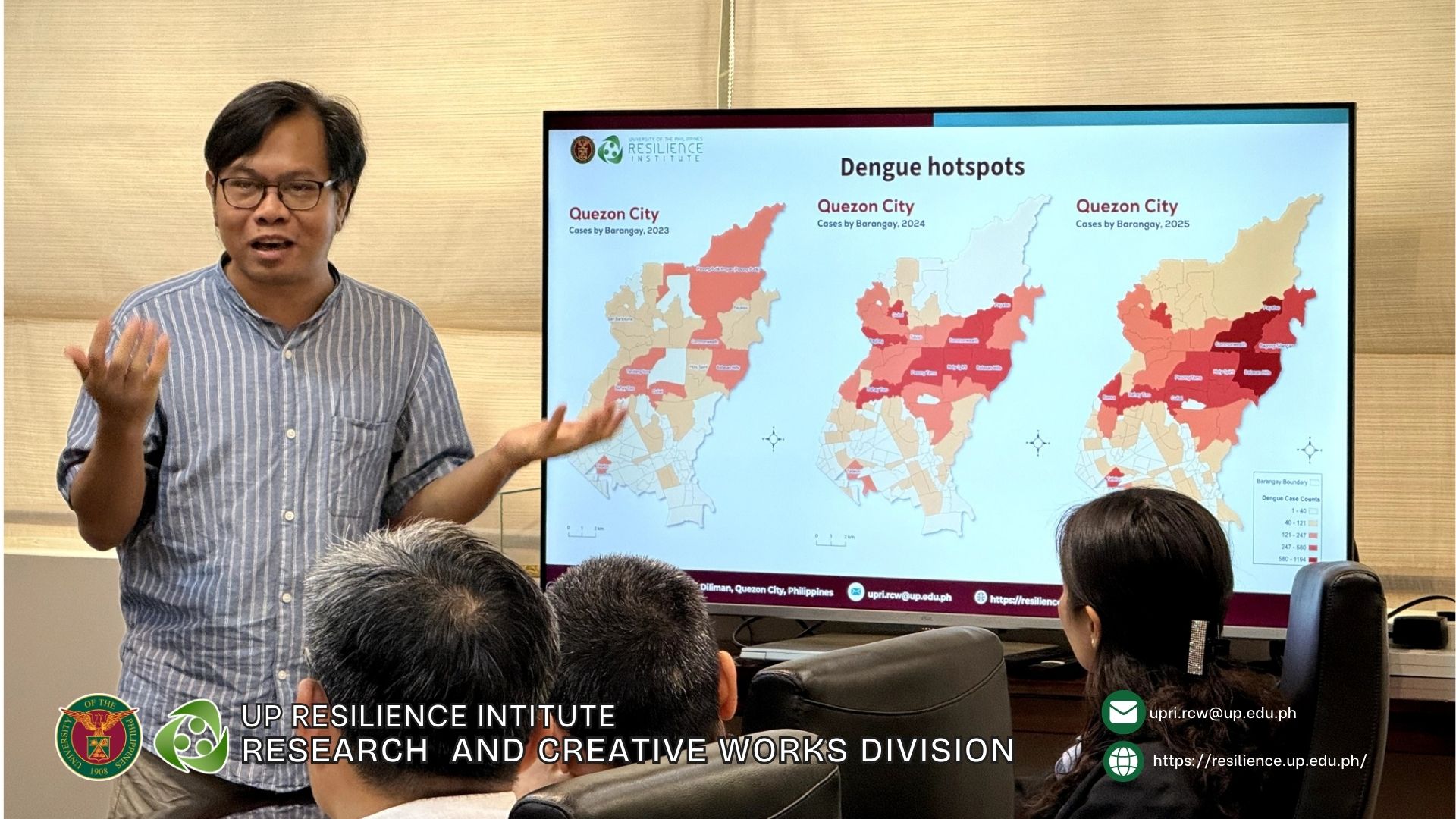
Dr. Mahar Lagmay, Executive Director of UPRI-NOAH, led the presentation with Dr. Darwin Bandoy, Director of the Research and Creative Works (RCW) Division, and Dr. Carlos P. Gundran, Director of the Institution Building (IB) Division. Mr. Keanu John A. Pelitro and Ms. Julia Fye Manzano, Junior Project Assistants under RCW, were present at the meeting and served as core members of the research team that developed the early warning system and decision support tool. Alongside Dr. Lagmay were his Office of the Executive Director team, Mr. Armand Conrad Pascual, Mr. Emmanuel Vitangcol, and Ms. Amidian Rose Dinampo. The team identified a clear rainfall threshold that signals elevated dengue risk, allowing outbreaks in Quezon City to be anticipated two to four weeks in advance. Their decision support tool pinpoints priority areas for intervention, enabling timely, targeted action that conserves resources and prevents case surges. This work demonstrates how climate data can directly guide public health decisions and strengthen community preparedness.

The research is part of the Center for Climate and Health Global Research on Disasters (CORD) Project, an international consortium focused on anticipatory action for climate-related health risks. Building on this engagement, a new DOH–UP partnership is being explored to enhance data analysis and translate research into practical measures that improve health outcomes nationwide. By combining research, technology, and cross-sector cooperation, UPRI is advancing anticipatory public health interventions that empower decision-makers, maximize resources, and protect communities.