
Written by NOAH Hazard Assessment Team
Representatives from the UP Resilience Institute NOAH Center were invited to serve as guest lecturers last March 13 at the National Geology Congress held at UP Diliman’s National Institute of Geological Sciences. As guest lecturers for both the High School Workshop and the Earth Science Teachers’ Seminar, the UP Resilience Institute NOAH Center contributed to advancing geoscience education among high school students and educators.
The National Geology Congress, held from March 13 to 14, 2026, was organized by the UP Geological Society. It is one of the country’s leading earth science events, primarily catering to high school students and earth science educators. Workshops, seminars, and a quiz bee aimed to promote interest in the earth sciences while equipping participants with a deeper and more practical understanding of the field.

In his High School Workshop lecture titled “Geohazard Discussions and Demonstrations for High School Students,” Cristan Malaiba of the UP NOAH Center discussed ways to better understand prevalent natural hazards in the Philippine context. Using analog models to illustrate both geologic and hydrometeorological hazards, the session demonstrated how these events form and how they can be identified, presenting key concepts in a manner that was both engaging and accessible to students.
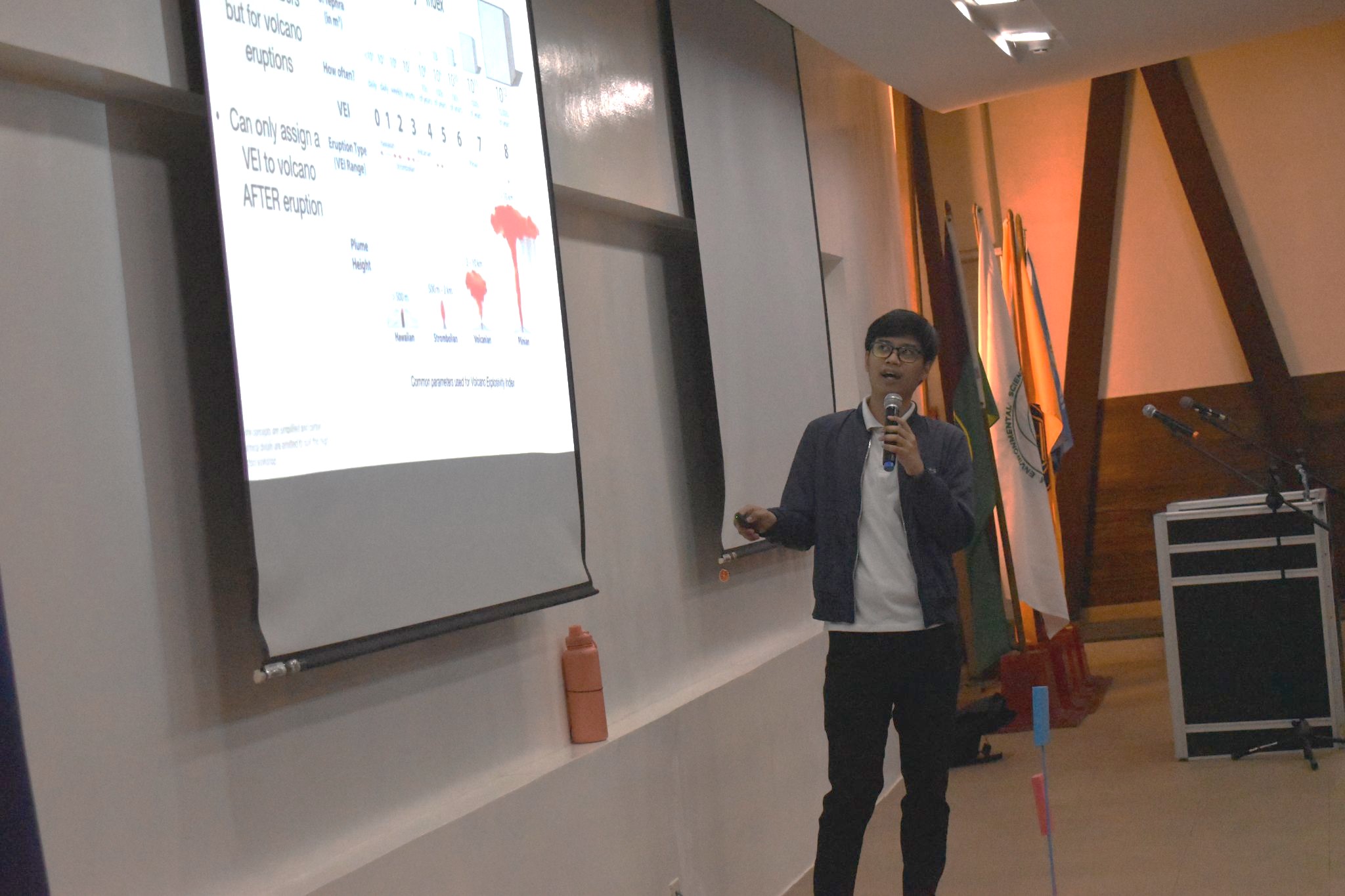
By grounding the discussion in the Philippine setting, the lecture emphasized the importance of disaster awareness and resilience in a country frequently exposed to geophysical and climate-related risks. The lecture examined why such hazards, particularly flooding, are so widespread in the Philippines, emphasizing that these conditions are driven not only by extreme weather events but also by gaps in planning and infrastructure. The lecture further showed that understanding geohazards need not be daunting, demonstrating how simple, do-it-yourself analog models can make these concepts easier to grasp, while pointing to readily available tools, such as online platforms, that enable individuals to identify hazard-prone areas and assess their exposure with relative ease.
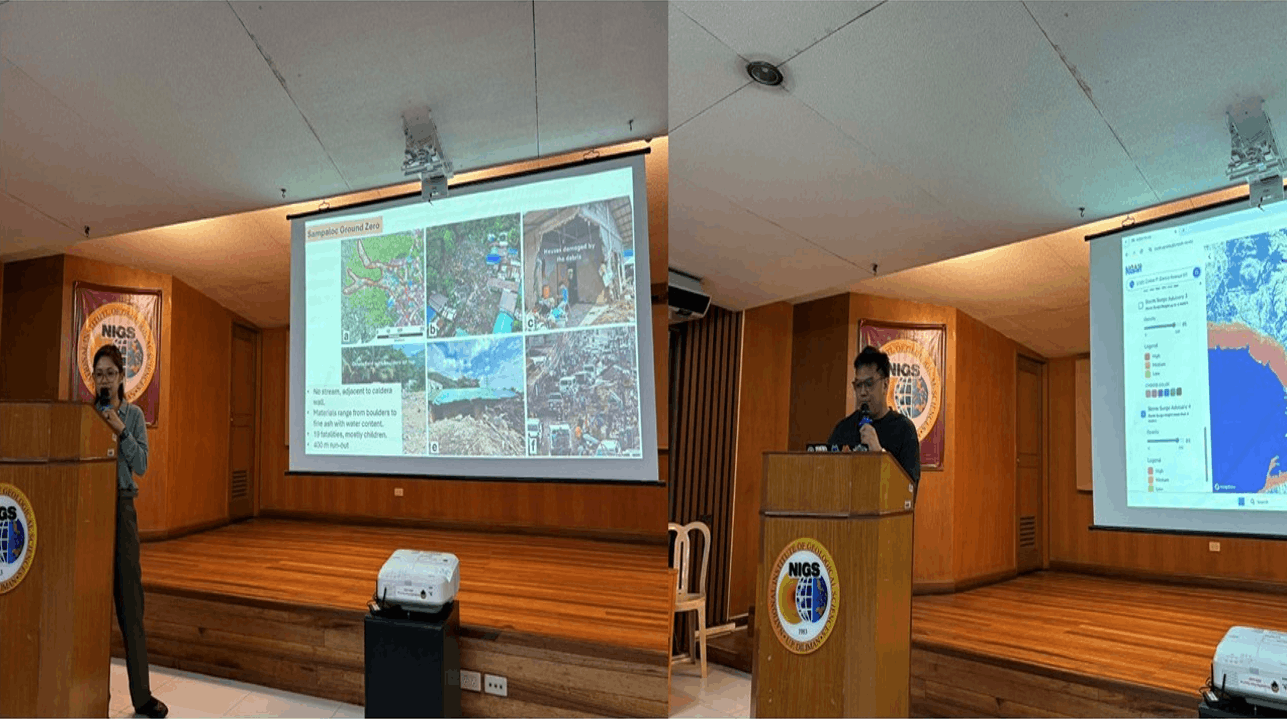
Jolly Joyce Sulapas of the UPRI NOAH Center delivered a lecture on “Lahar Deluge in the Coastal Areas of Taal Lake,” where she shared the latest research and emerging trends in geohazards with earth science educators. She discussed the institute’s recent efforts to map disaster-affected areas and explained the processes behind these events, using communities surrounding Taal Lake affected after STY Kristine remobilized ash fall deposits from the 2020 eruption as a case study. The lecture also highlighted cutting-edge topics, including the interaction between geohazards and climate change, particularly how increasing rainfall can intensify lahar risks, demonstrating how evolving science is shaping both understanding and preparedness in hazard-prone areas.
In the same workshop, Marc Forneste emphasized that preparation is the foundation of resilience, underscoring how awareness of hazards such as landslides, flooding, and typhoons can save lives. He introduced the NOAH platform as a reliable tool for understanding risks, guiding participants on how to effectively use and interpret its data to strengthen community preparedness and promote disaster resilience.