
Article Written By: Patrick Ryan Bello & David Josh C. Concepcion
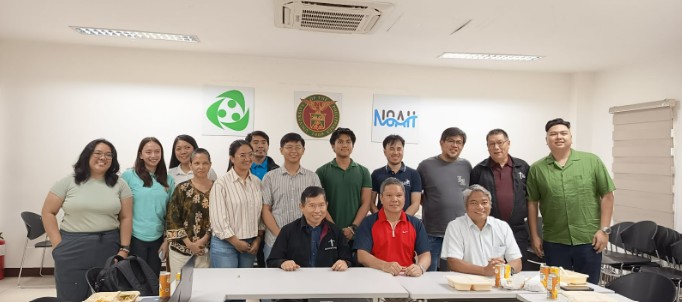
On January 20, 2026, UPLB–INREM Resilience Hub, represented by its director, Dr. Juan M. Pulhin, and UPRI represented by Executive Director Dr. Mahar Lagmay and Institution Building Division Director Dr. Carlos Gundran, met to discuss proposals and updates. Key agenda items included preliminary activities for 2026, potential budget support, the INREM transition period, and priority areas for collaboration.
The need to improve coordination and collaboration between the two units, especially in training, learning and development, research, and ecosystem-based initiatives, was stressed during the meeting. Proposed programs for 2026 include a year-long youth extension initiative, LGU training for watershed management, and capacity-building activities that UPRI divisions, such as Education and NOAH, can support.
The meeting also focused on major research and innovation directions centered on nature-based solutions (NbS), climate mitigation, and ecosystem-based resilience. They presented plans to map NbS initiatives in flood hotspots using UPRI–NOAH data, and use satellite imagery, drone-based LiDAR, and AI platforms like the GINA app to monitor trees, forest cover, and protected areas. These efforts aim to create a scientific basis for greening and adaptation programs by showing the relationship between ecosystem restoration, biodiversity, and disaster risk reduction.
Overall, the UPLB–INREM and UPRI coordination meeting was successful in identifying key areas for collaboration in training, research, and ecosystem-based resilience initiatives. It highlighted the importance of strengthening institutional partnerships, integrating nature-based solutions, and using data-driven approaches for disaster risk reduction and climate adaptation. The meeting ended with an emphasis on shared responsibility, innovation, and coordinated action as vital in building resilient communities and institutions across the UP System.