
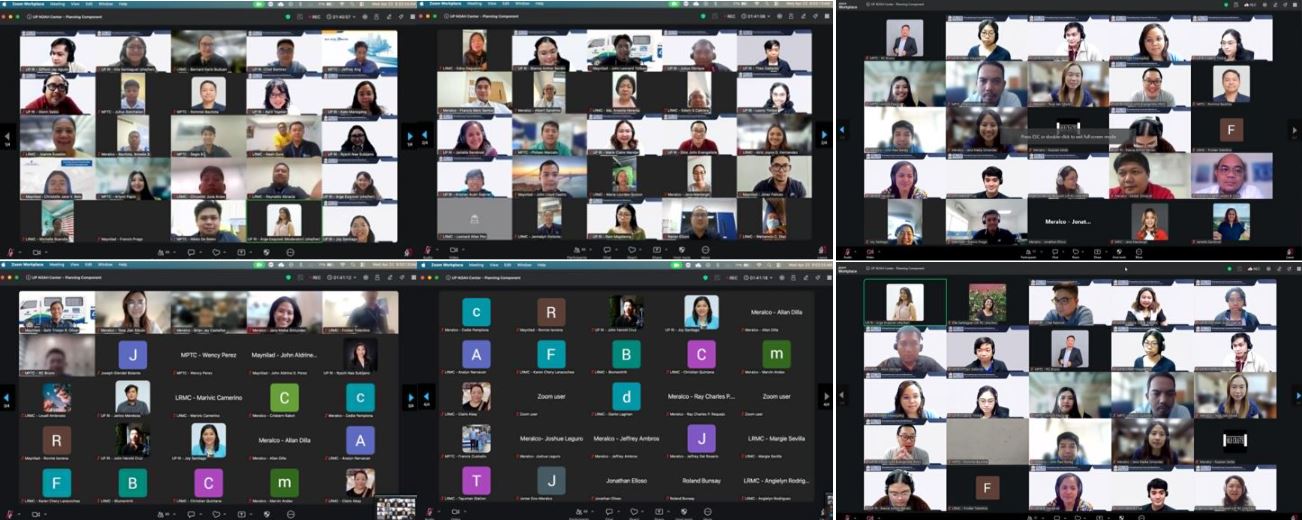
The Flood Modeling Component (FMC) assisted in the development of an exposure database for Metro Pacific Investments Corporation (MPIC) through a participatory workshop conducted on April 22-23, 2026. This online workshop was organized and facilitated by the Planning Component of the University of the Philippines (UP) Resilience Institute (UP RI) – Nationwide Operational Assessment of Hazards (UP NOAH) Center.
MPIC is one of the largest infrastructure holding companies in the Philippines. It manages critical sectors such as power, transport, water services, healthcare, and agribusiness, and continuously provides essential services to millions of Filipinos. In an agreement signed with the Philippine Academic Society for Climate and Disaster Resilience (PASCDR), a national network of academic experts dedicated to advancing disaster risk reduction (DRR) and climate change resilience across the Philippines, MPIC will work with the UP Resilience Institute through the UP NOAH Center in reinforcing their business’s resilience to climate and disaster-related risks that is fundamental for public safety and long-term sustainable development.
UP NOAH will collaborate with MPIC in developing an exposure database to capture asset-level characteristics and operational conditions, and will provide a structured foundation for assessing risk across MPIC’s list of assets. The completed database will yield a validated, organized inventory of exposure units, complete with sensitivity and adaptive capacity indicators of 52 facilities across Metro Manila, including assets of Metro Pacific Tollways Corp., Maynilad Water Services, Manila Electric Co., and Light Rail Manila Corp..

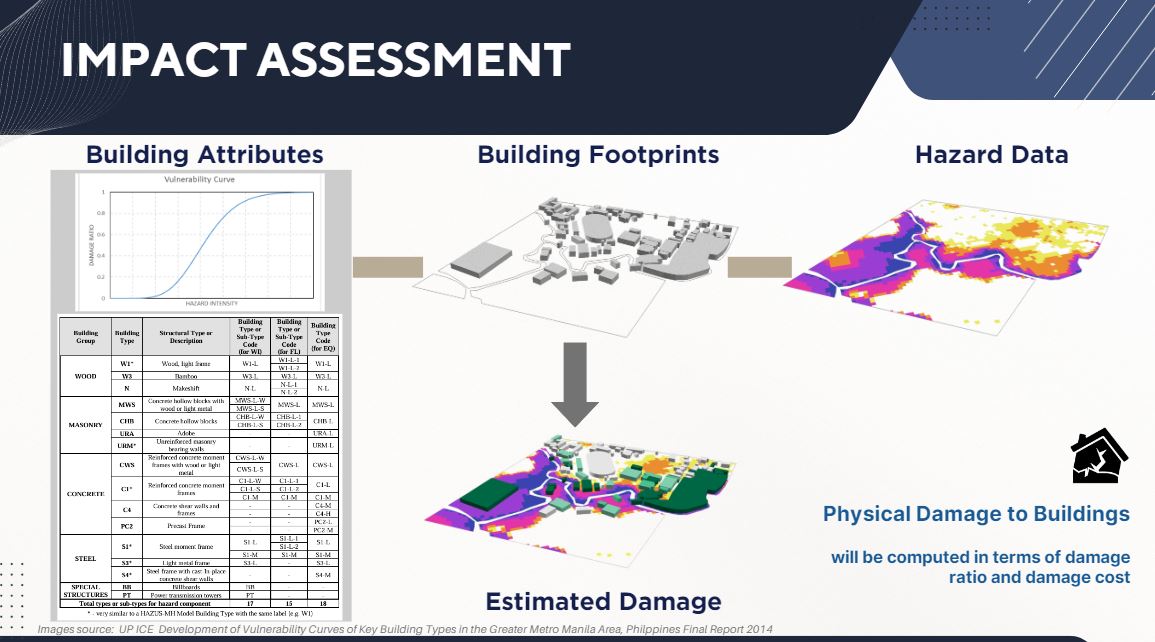
The FMC assisted in the valuation of economic impacts of flood, severe winds, ground-shaking, and rain-induced landslides to physical assets. By capturing structural indicators such as construction materials, spatial dimensions, and asset valuations, the study quantifies the economic impacts of hazards like flooding and seismic activity. The assessment will evaluate direct impacts, measured through the repair and replacement costs of physical assets.

With the establishment of baseline datasets, the project provides the evidence-based foundation needed for impact assessment. These outputs will support MPIC to transition from general planning to highly targeted, data-driven resilience strategies for its assets to ensure business continuity.