
by: UPRI Education Division and UPRI NOAH Hazard Assessment Team
As part of its commitment to disaster resilience education, the UP Resilience Institute recently conducted a capacity-building workshop for Department of Education teachers in Aroroy, Masbate, last March 28, 2026.

A coastal municipality in the Masbate province, Aroroy is regularly exposed to natural hazards such as earthquakes, typhoons, landslides, and storm surge. In response to this, the activity titled “Natural Hazard Demonstrations & Activities for Secondary School Teaching,” aimed to equip teachers from secondary schools in Aroroy, Masbate with the practical tools to teach the science behind these pressing local hazards.
By introducing innovative, low-cost educational materials as a teaching tool, the workshop also aimed to demonstrate how teachers can effectively illustrate complex hazard processes without the need for expensive equipment.
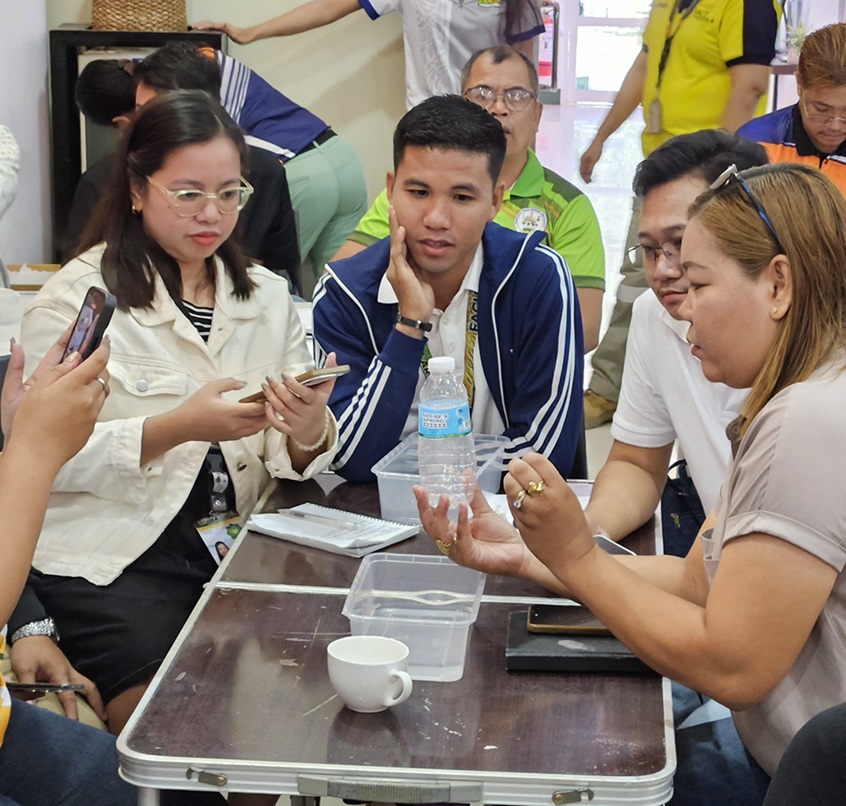
During the workshop, 38 high school teachers from the different barangays of Aroroy were trained on how to assemble, build, and utilize these materials in their own classrooms. The sessions were guided by an inquiry-based learning framework, utilizing the “Observe-Predict-Observe-Interpret” (OPOI) method to help teachers effectively structure their classroom demonstrations and engage students in scientific thinking.
A variety of hands-on models were presented in order to help teachers explain the different hazards existing in their community.
Models such as the Hot Water Bottle experiment, Tornado Tube and Balloon Bottle were used to explain the concepts of wind and atmospheric pressure.
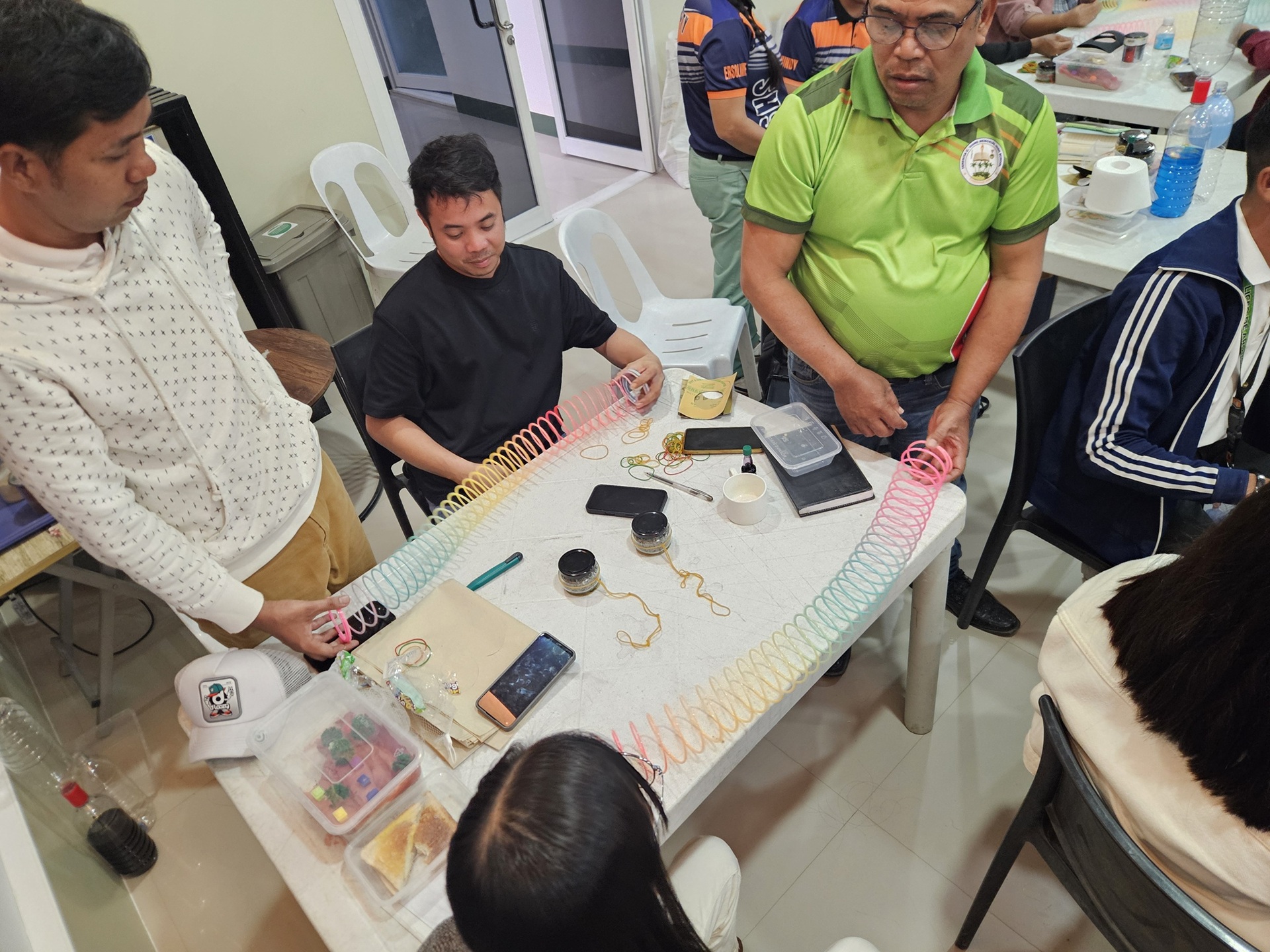
Earthquake mechanics were brought to life through the help of the Bottle-Rubber Band, Stick-Slip, Slinky waves, Foam Deformation Model, Liquefaction Model, and the Building Oscillation Seismic Simulation (BOSS) model.
Mass wasting processes were explored using the Eraser Stick-Slip, Mass Wasting Bottle, and Toilet Paper Rolls, while tsunami and volcanic hazards were effectively demonstrated using the Clay Topography Model, Lava Lamp, and the classic Mint-Softdrinks experiment.
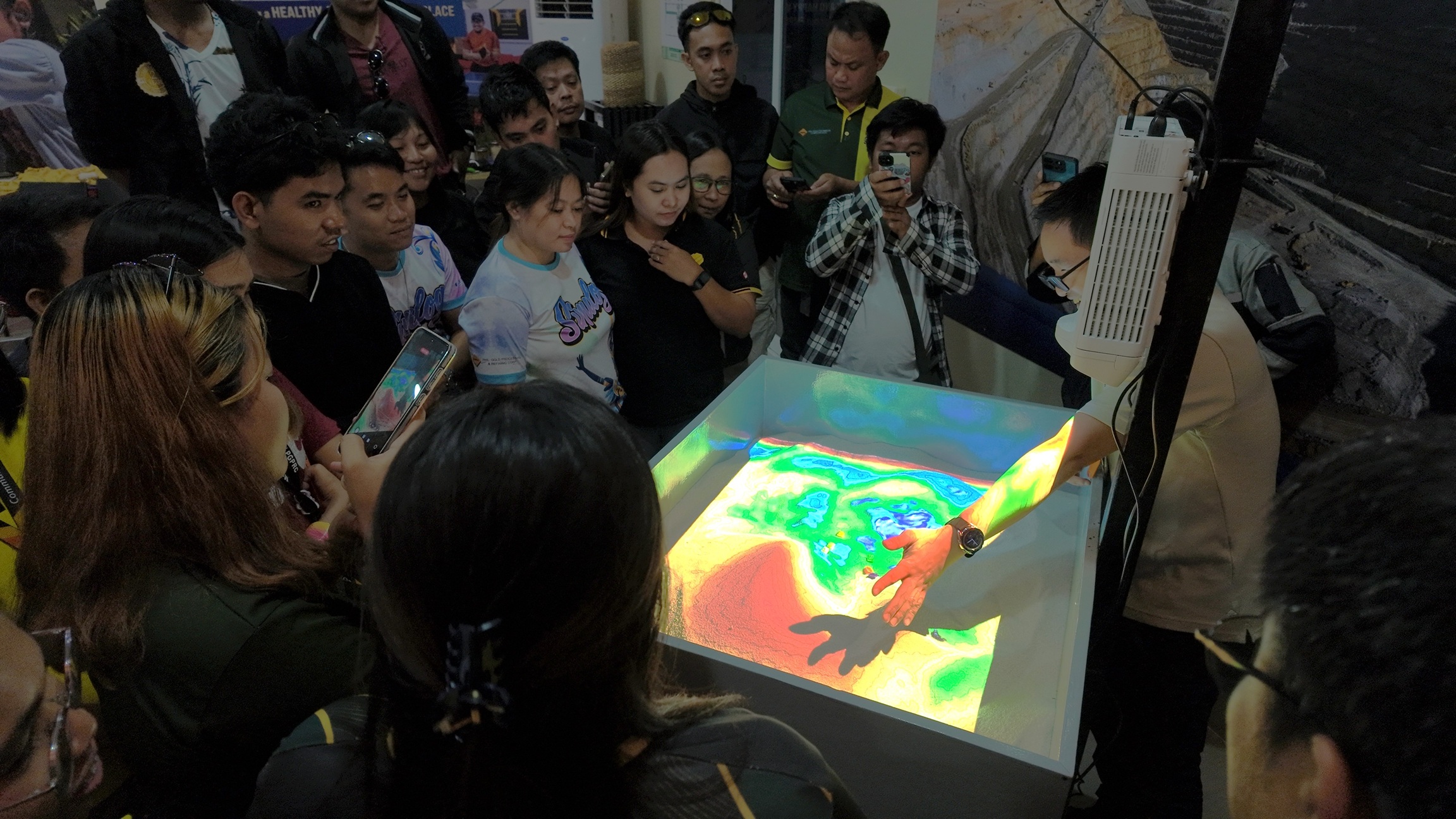
One highlight of the workshop was the Augmented Reality Sandbox, an interactive exhibit that uses 3D visualization equipment to project topography onto a sand surface in real time. Teachers observed firsthand how changes in land elevation impact water movement, providing a powerful way to make abstract concepts like flooding and terrain relief tangible.
To ensure the sustainability of these teaching materials and practices, the team ended the activity by displaying the estimated pricing of all materials, along with suggestions on where these can be easily purchased and sourced locally.
By prioritizing affordability and accessibility, the project ensures that even remote schools can transform their science classrooms into hubs for disaster preparedness. This initiative serves as a vital investment in resilience, empowering Masbate’s educators to cultivate a generation that is well-informed, prepared, and capable of responding to the hazards facing their communities.
The activity was made possible through the support of Filminera Resources Corporation, facilitated through the Philippine Academic Society for Climate and Disaster Resilience (PASCDR).