
Written by Alexa Samantha Hernandez, UPRI Education Division
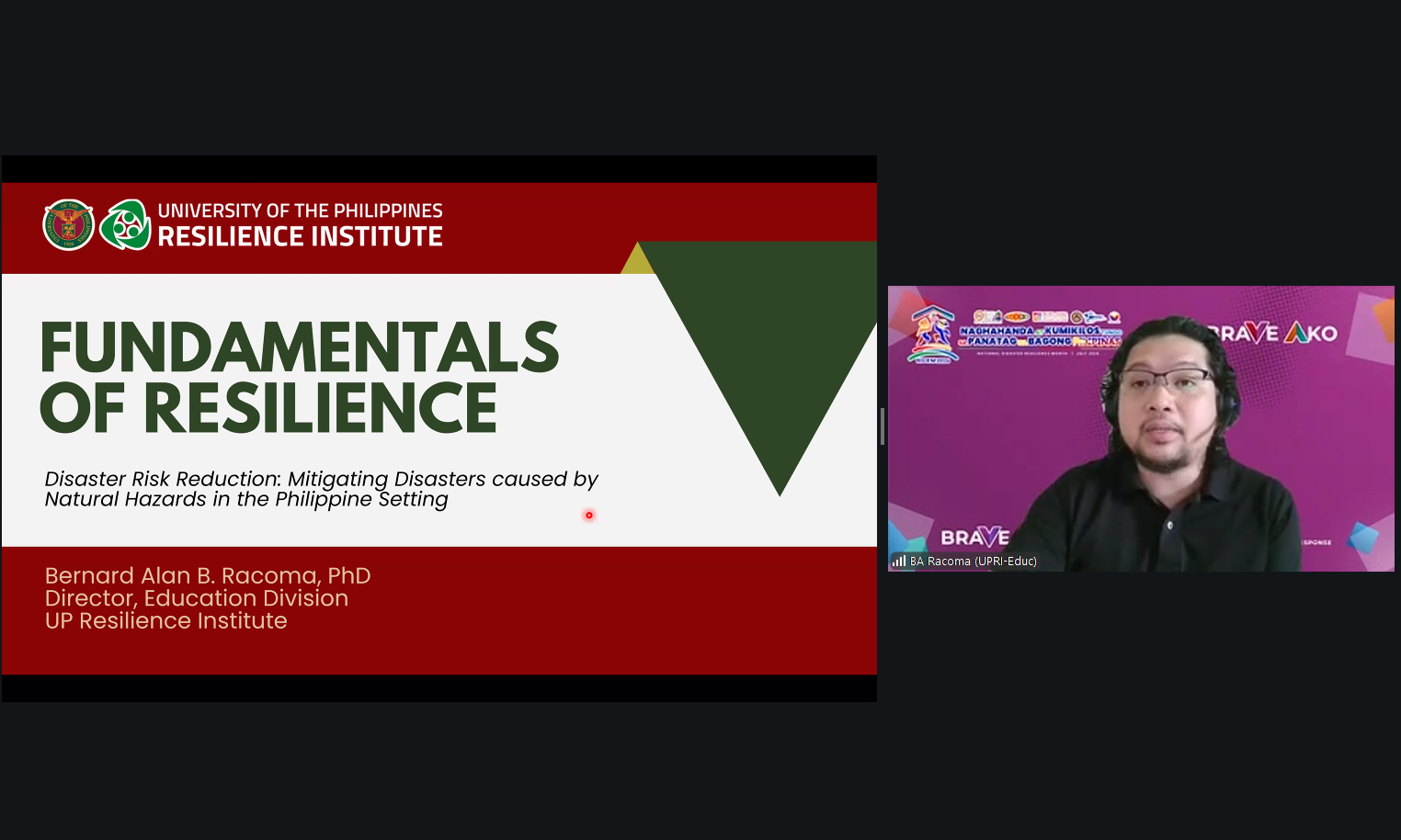
In line with the celebration of National Disaster Resilience Month (NDRM) and this year’s theme, “Naghahanda at Kumikilos Tungo sa Panatag na Bagong Pilipinas,” the Department of the Interior and Local Government–National Capital Region (DILG-NCR) conducted the BRAVE AKO 101: Fundamentals of Resilience and the Handa Integrated Platform for Preparedness and Response on July 16, 2026. Now on its third iteration, this online training course is a vital component of the Barangay Resilience Advocates Volunteer Group (BRAVE) Training Program, which aims to strengthen the capacity of local actors and stakeholders to effectively mitigate the compounding and cascading risks associated with hazards.
With over 800 participants joining via Zoom and more than 60 viewers tuning in through Facebook Live, the morning session featured Dr. Bernard Alan B. Racoma, Director of the Education Division of the UP Resilience Institute (UPRI), who delivered a comprehensive lecture on the Fundamentals of Resilience. Drawing on research, policy, and real-world applications, Dr. Racoma emphasized the importance of understanding disaster risk, reducing vulnerabilities, and strengthening preparedness as essential steps toward building safer and more resilient communities.
Framing the discussion within the Philippine context, his lecture emphasized that disasters are not “natural” but occur when hazards intersect with vulnerable and exposed communities, highlighting the importance of understanding risk, reducing vulnerabilities, and strengthening capacities through preparedness and science-based decision-making.
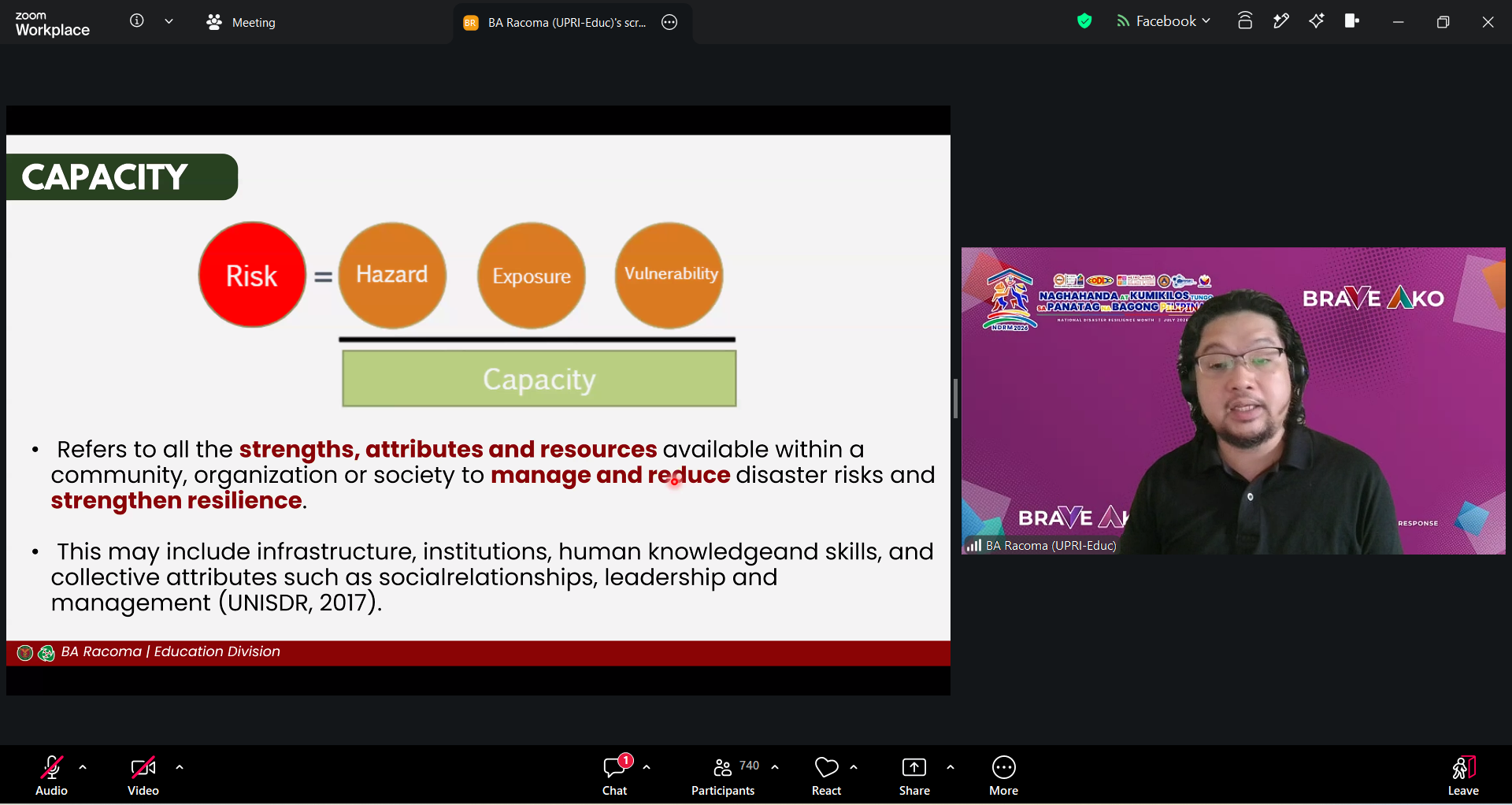
A significant portion of the session focused on understanding the key components of disaster risk. Participants learned how hazards, exposure, vulnerability, and capacity interact to determine the severity of disasters. Emphasizing that resilience begins at the local level, Dr. Racoma encouraged participants to assess their own disaster risks by identifying hazards, understanding their exposure, reducing vulnerabilities, and strengthening their capacity. He likewise highlighted the impact of UPRI’s Fundamentals of Resilience Massive Open Online Courses (MOOCs), which have reached tens of thousands of learners nationwide, reflecting the institute’s commitment to making resilience education accessible to the public.
The lecture was then followed by an open forum, during which participants actively submitted their questions and clarifications through the chat. Dr. Racoma addressed a wide range of inquiries, including the implications of climate change for disaster risk reduction and management (DRRM) and practical ways to remain calm and respond effectively during emergencies.
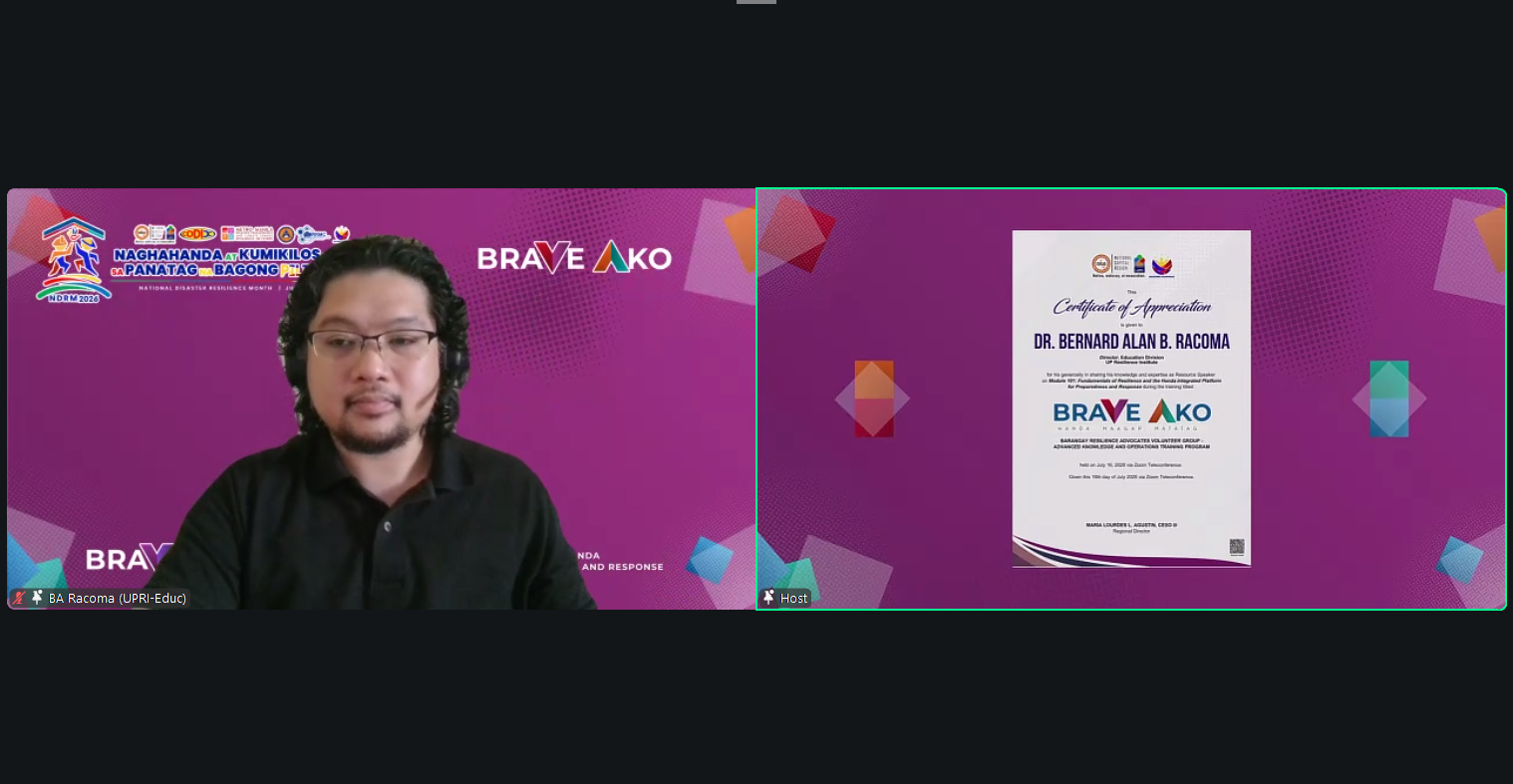
Through the session, BRAVE AKO 101 participants gained a deeper appreciation of the science behind disaster resilience. It also served as a reminder that resilience is a shared responsibility that requires the collective efforts of individuals, communities, organizations, and government institutions. The lecture reinforced that resilience is built not only through effective disaster response but more importantly through continuous learning, preparedness, and collective action long before disasters strike.