
Dengue remains a significant and recurring public health concern in Quezon City. In February 2025, the city declared an outbreak after recording 1,769 cases in just over six weeks, 58% of them involving school-aged children (Quezon City Government, 2025). In response to this continuing concern, the UP Resilience Institute YouthMappers (UPRIYM), with support from the Open Mapping Hub Asia Pacific through its Open Mapping Guru Pro+ Community Event Grant, conducted MAPAGBANTAY, an open mapping campaign that engages students in documenting environmental features relevant to dengue prevention.
First Iteration: NSTP-CWTS Anthropology Class
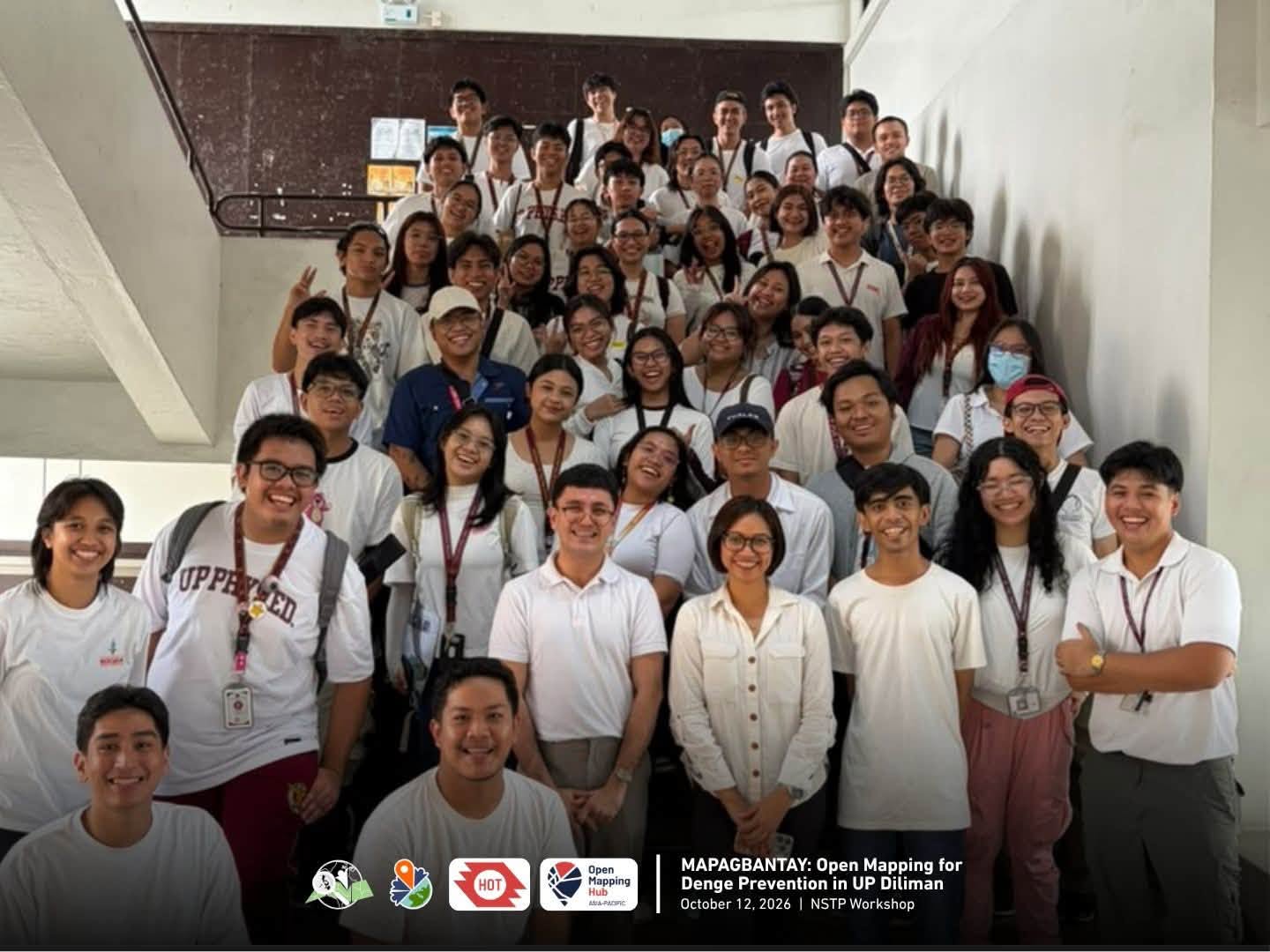
On October 12, 2026, UPRI YouthMappers conducted the first MAPAGBANTAY workshop with 42 students from the National Service Training Program–Civic Welfare Training Service (NSTP-CWTS) class under the Department of Anthropology, College of Social Sciences and Philosophy.
The workshop opened with an introduction to the campaign objectives, a briefing on the local dengue situation, and a walkthrough of ChatMap, a tool that converts locations and messages shared through group chats into a map. This was followed by a health, safety, and field mapping orientation. Each participant also received a dengue prevention kit before heading out to their assigned campus areas to observe and document environmental features relevant to dengue prevention.
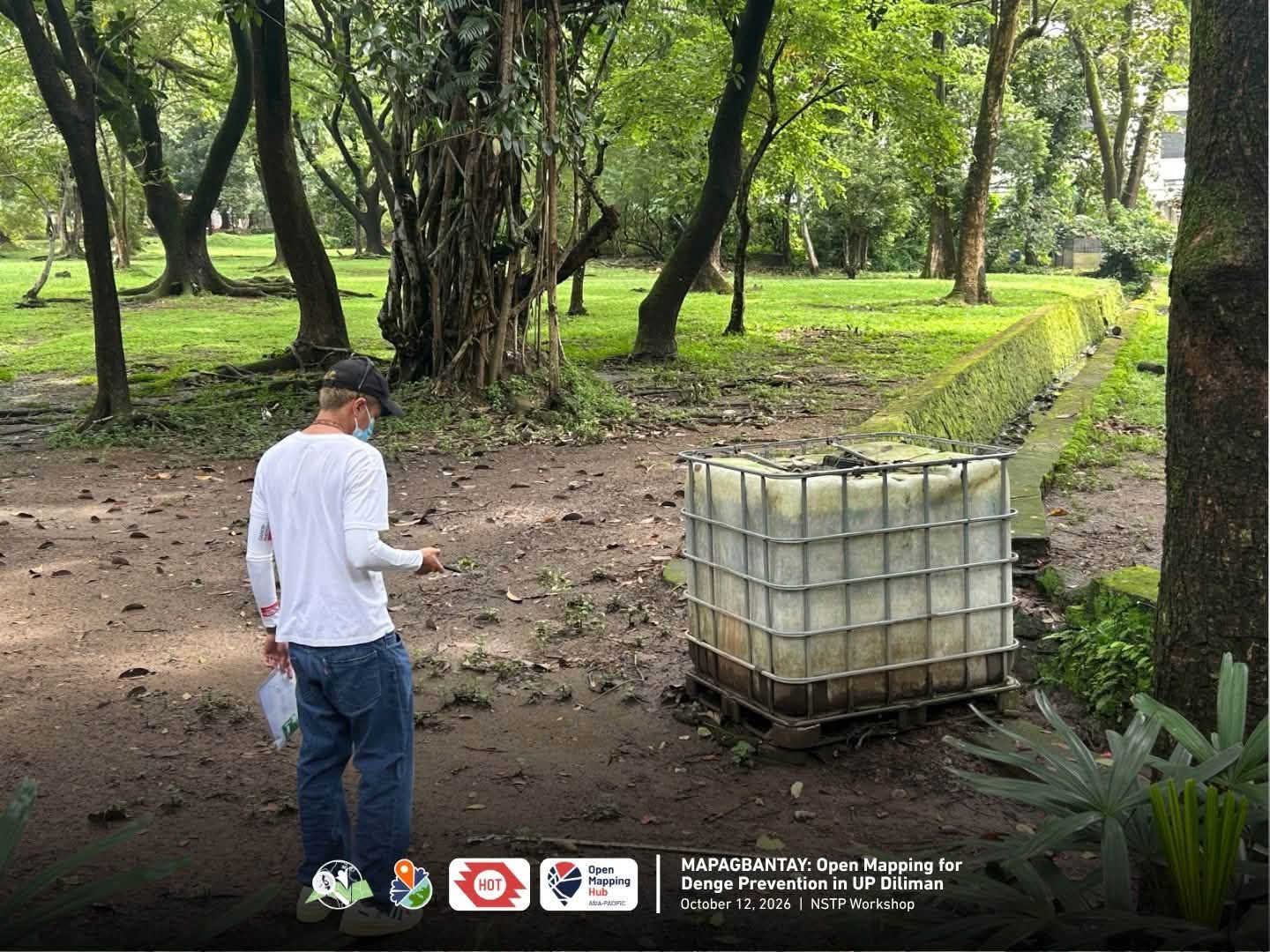
The first iteration showed how accessible digital mapping tools let students contribute meaningful, hyperlocal data without prior mapping experience. It also generated operational insights for improving subsequent workshops, particularly in addressing connectivity challenges in low-signal areas and coordinating with campus security and building administrators.
Second Iteration: Geography 135 Class
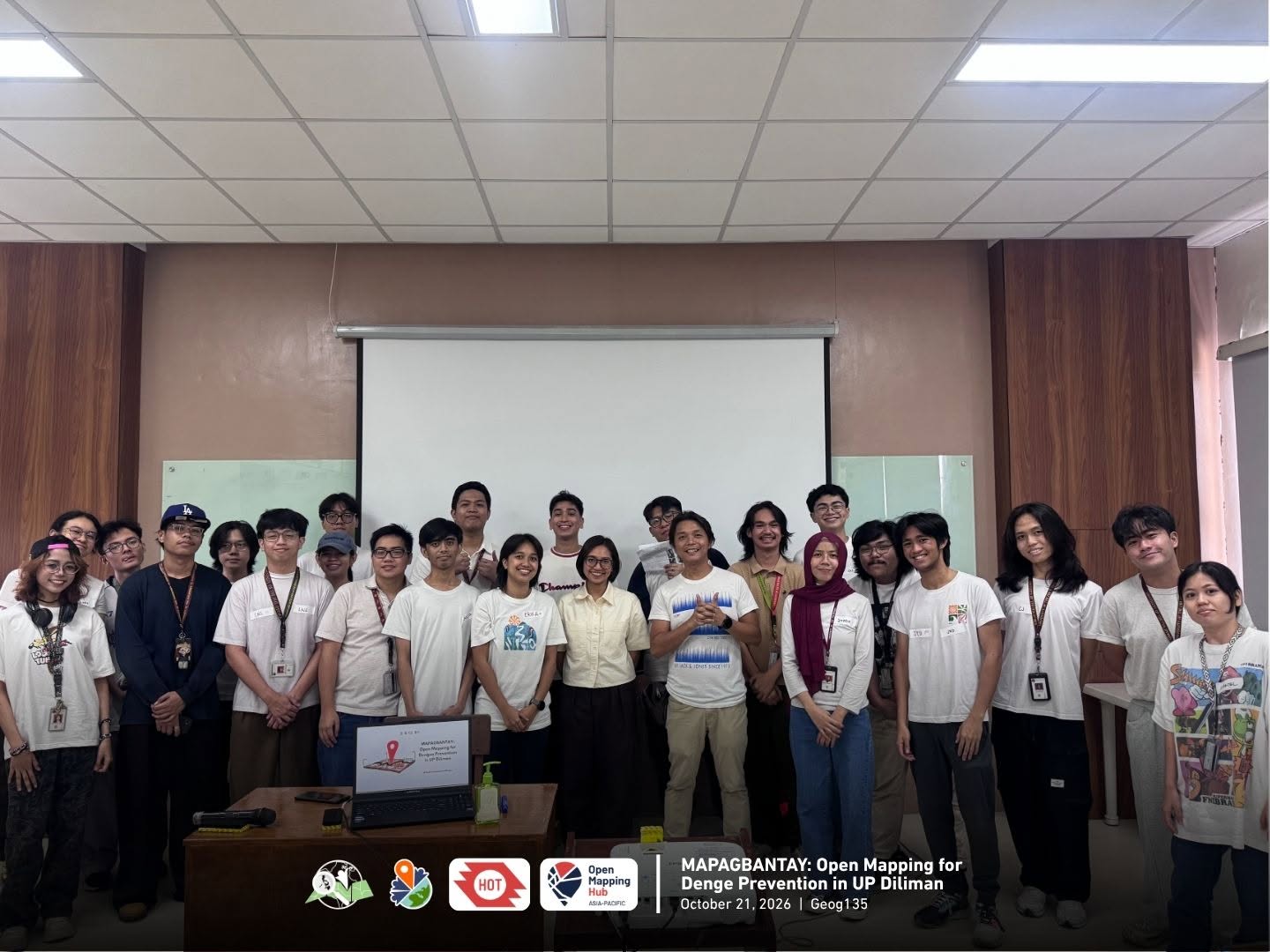
Building on the lessons from the initial workshop, UPRI YouthMappers conducted a second MAPAGBANTAY iteration with 38 students from Geography 135 (Rural and Urban Geography) under Dr. Jake Rom Cadag on October 19, 2026.
The second iteration incorporated improvements informed by the first workshop. In particular, pre-generated QR codes for each group’s ChatMap conversation were prepared before the activity, allowing participants to join their assigned group chats more quickly and streamlining the onboarding process. Through this, students continued to demonstrate how participatory mapping can support the collection of localized environmental data for dengue prevention.
Mapping Results
Together, the two workshops were able to engage 80 students and generated a combined total of 1,348 mapped features and geolocated data points across the UP Diliman campus. The resulting dataset provides a localized record that can help inform further campus assessment, awareness initiatives, and dengue prevention efforts.
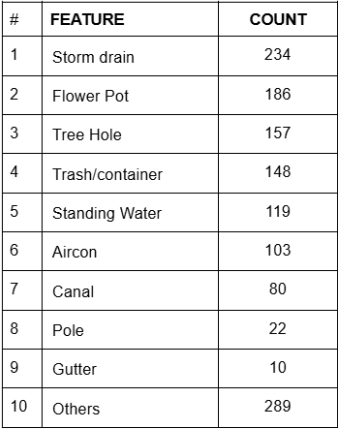
These outputs highlight the potential of participatory mapping to generate substantial amounts of hyperlocal environmental data within a short period. The resulting dataset can serve as a basis for further campus-level assessment, awareness initiatives, and discussions on dengue prevention and environmental management.
Ways Forward
Moving forward, UPRI YouthMappers aims to strengthen its collaboration with the UP Diliman National Service Training Program Office and the CWTS Program to integrate community mapping into more NSTP classes and sustain student participation. The team also seeks to further develop MAPAGBANTAY as a scalable and replicable university-based initiative that other campuses and YouthMappers chapters can adapt to support local environmental monitoring and dengue prevention.
Reference:
Quezon City Government. (2025, February 15). Quezon City declares outbreak amid rise of dengue cases. https://quezoncity.gov.ph/quezon-city-declares-outbreak-amid-rise-of-dengue-cases/