
“Having more standardization on how data should be shared, or how data can be shared between different actors, is critical. And what this leads us to is the creation of a more unified, interoperable data network, which can have more positive downstream effects on the person that is on the move.”
Nandini Jiva, Senior Research Analyst at Aapti Institute
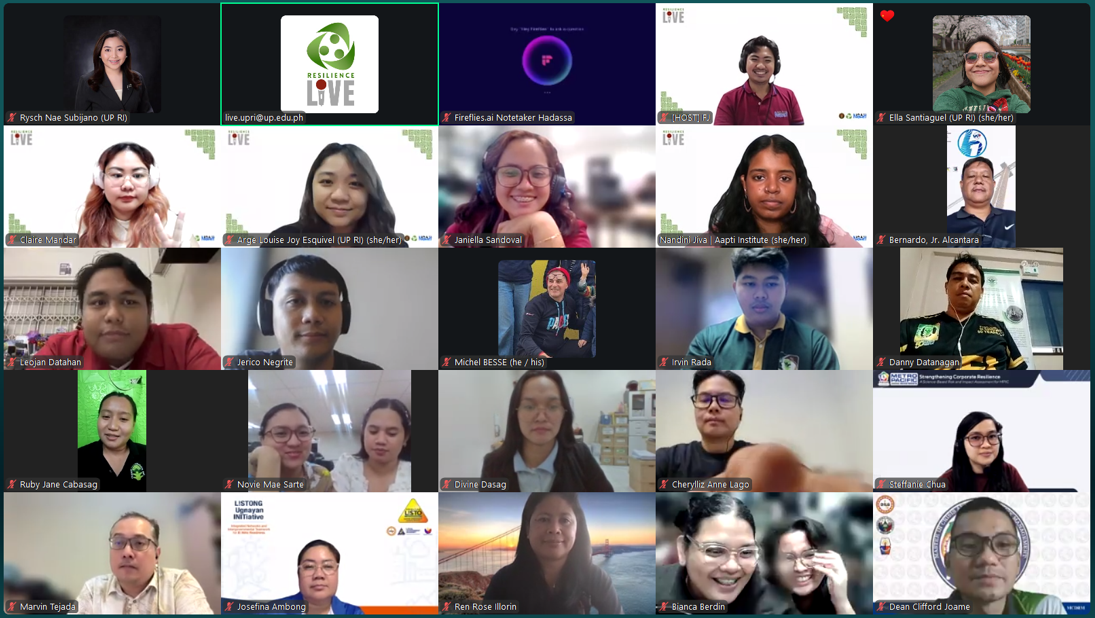
Resilience Live premiered its last episode for the year last October 29, 2026, featuring senior research analyst Nandini Jiva of Aapti Institute. Titled “Whole-of-Society Coordination on Disaster Data: Findings from the Philippines,” the 24th episode discussed Aapti Institute’s research on climate-induced displacement in the Philippines with an emphasis on hazard data and digital technologies in disaster response and mitigation.
Jiva opened her discussion by briefly introducing Aapti Institute, an organization that examines the intersection between people and technology, particularly in the Global South. Using mixed-methods research, the institute centers on people’s lived experiences and incorporates diverse stakeholder perspectives into its work. The presentation focused on Aapti’s “Data on the Move” project, which investigated how people experiencing migration and displacement interact with digital platforms and technological tools to undertake their journeys more safely with greater agency and decision-making capacity. With a particular focus on the Philippine context, the study explores how technology improves access to welfare and assistance throughout the displacement journey.
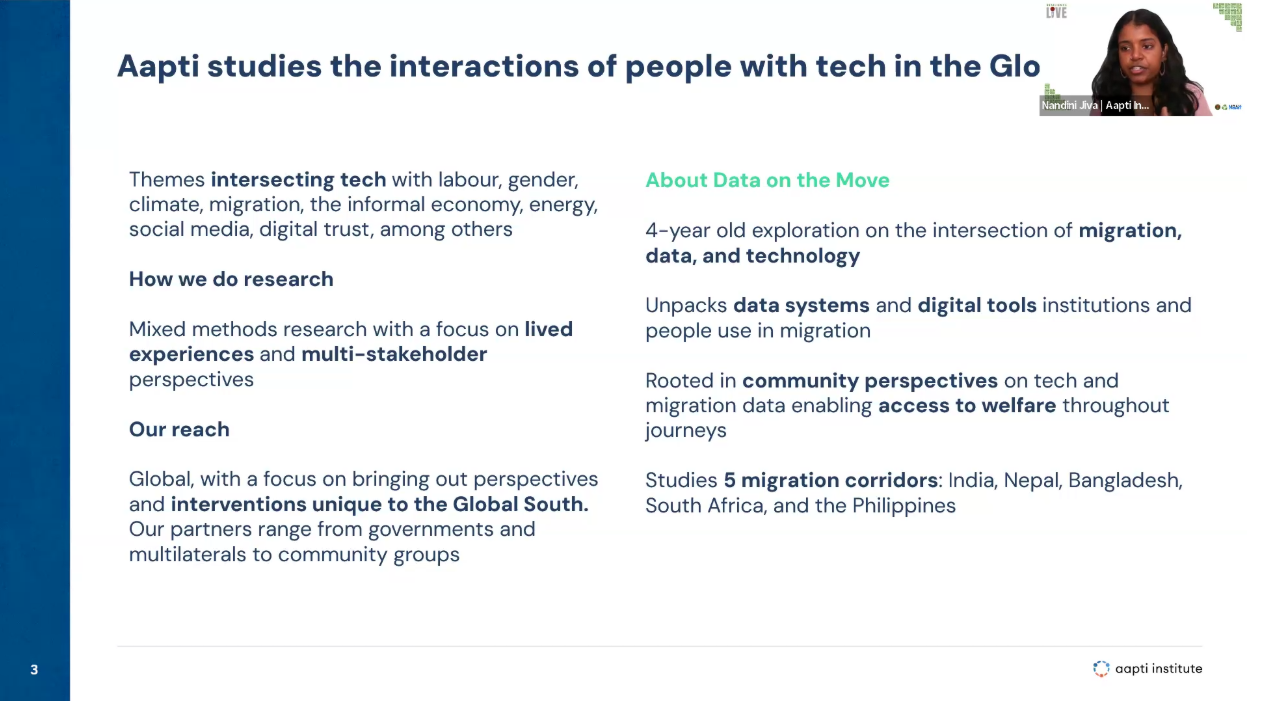
Jiva presented three key findings on the role of digital technologies, disaster data management, and community participation in improving disaster response and welfare delivery.
First, there is potential for digital public infrastructure to improve disaster management. Existing platforms in the Philippines such as GCash, Maya, and InstaPay can facilitate beneficiary identification and faster financial assistance, including remittances from overseas Filipino workers. Digital identification systems can also simplify access to government services. However, limited public awareness and familiarity remain barriers, highlighting the need for digital literacy and information campaigns to build trust and encourage adoption.
Second, there is a need for enhanced hazard data interoperability and institutional coordination. Philippine disaster data are spread across multiple institutions and sources, including census records, household surveys, evacuation data, satellite imagery, and weather information. Fragmented systems, duplicated records, and inconsistent data standards hinder information sharing and beneficiary verification, potentially delaying assistance. Jiva emphasized standardized data-sharing arrangements and interoperable systems to improve coordination, reduce duplication, and streamline welfare delivery.
Third, community participation and local knowledge are crucial for disaster data systems. While the Philippines has established community-based disaster risk reduction and management mechanisms, institutional approaches do not always capture the varying needs and circumstances of local communities. For instance, island communities may have sufficient food supplies, but require support for infrastructure restoration or agricultural livelihoods. Jiva stressed the importance of bottom-up mechanisms that integrate local knowledge and community-identified needs into disaster data systems and response planning.
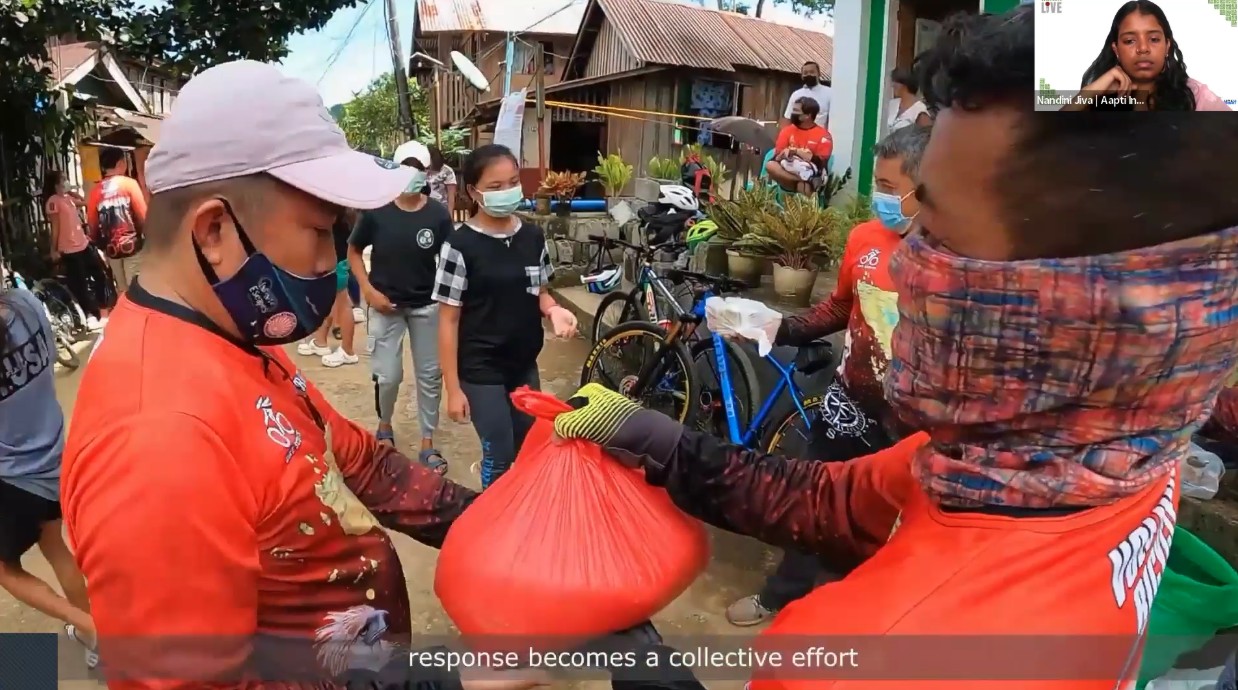
To conclude her presentation, Jiva presented “Bayanihan In Times Of Disasters,” a short film produced in collaboration with the Bike Scouts Project in the Philippines. The Bike Scouts Project is a volunteer bicycle-led messaging and response initiative operating in remote communities. Its volunteers serve as first responders to immediate welfare and relief needs following disasters.
The film documented the experiences of disaster-affected Filipinos, illustrating several important aspects of displacement and community resilience, such as the impacts of disasters on livelihoods, the practice of bayanihan, the existence of digital connectivity, and the innovative actions within the community. The film emphasized that while Filipinos demonstrate considerable adaptability during disasters, resilience should not mean that communities must continually endure hardship. Strengthening disaster preparedness requires reliable data systems, accessible technologies, and sustained institutional and community support.
Overall, the presentation emphasized that addressing climate-induced displacement requires an integrated approach to disaster data governance, digital inclusion, and community participation. Technology and data systems should serve communities rather than simply facilitate institutional processes. A truly effective disaster management must recognize local capacities, understand the different experiences of displaced populations, and coordinate interventions across government institutions, civil society, and community-based organizations.
The full Episode 24 discussion is accessible through this link. The Aapti Institute and the Bike Scouts Project-produced documentary short film “Bayanihan In Times Of Disasters” is available for free through this link.
Article written by: Stephany Joy Ayo and FJ Calvario