
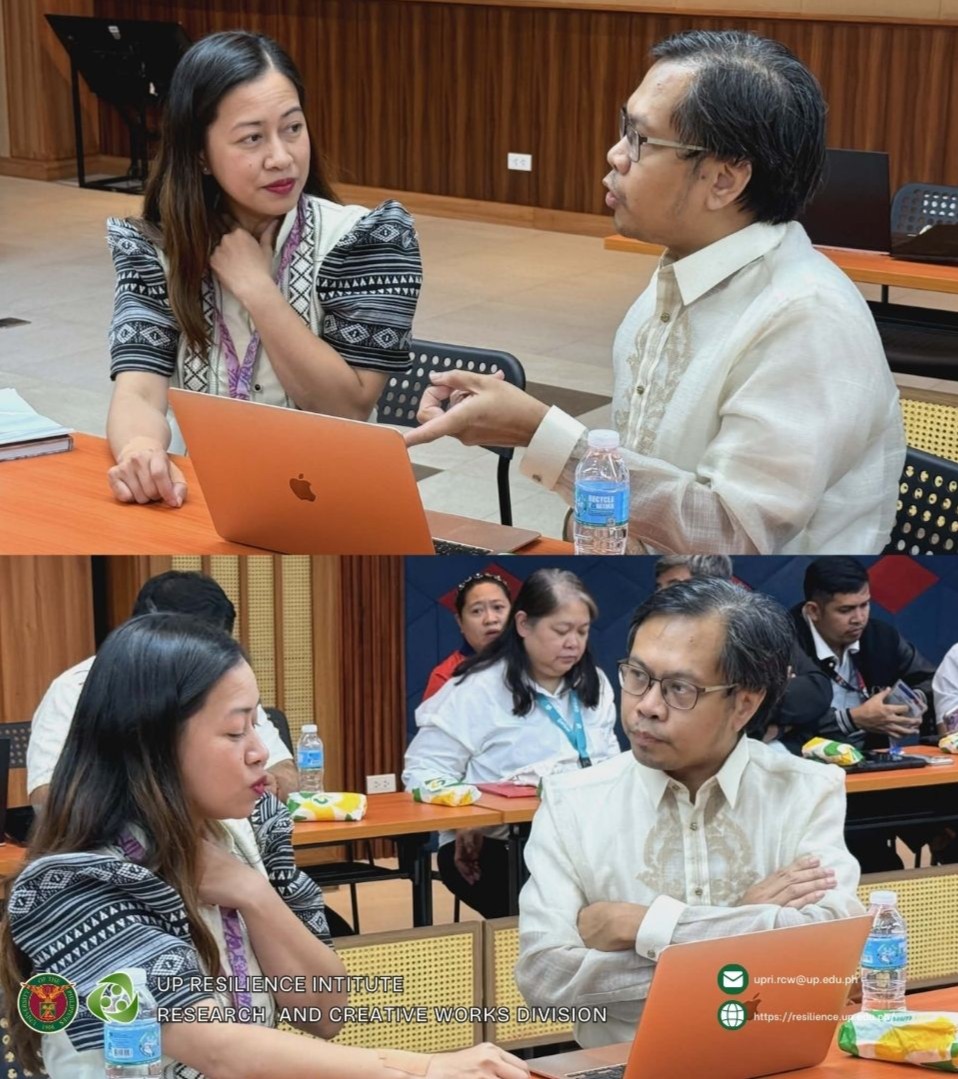
February 2, 2026 — During the Memorandum of Understanding (MOU) signing between the University of the Philippines (UP) and the Department of Social Welfare and Development (DSWD), the UP Resilience Institute – Research and Creative Work (UPRI-RCW) Division showcased a research prototype that highlights the use of artificial intelligence in evaluating the impact of development programs.
Dr. DJ Darwin Bandoy, UPRI-RCW Director, presented the prototype to KALAHI-CIDSS National Program Manager Atty. Bernadette Mapue-Joaquin. The model is designed to support project assessment through the integration of artificial intelligence and spatial mapping, enabling a more systematic and data-driven evaluation of development interventions. The prototype demonstrates how emerging technologies can help identify which projects are effective and responsive to community needs. By analyzing project outcomes alongside geographic and contextual data, the model allows for clearer insights into program performance, particularly for initiatives aimed at reducing poverty and strengthening social development efforts.
Through this approach, policymakers and program implementers are better equipped to understand the real-world impact of their interventions. As a result, decision-making becomes more evidence-based, helping ensure that resources are directed toward projects that deliver meaningful and measurable outcomes for communities. The presentation during the UP–DSWD MOU signing underscores the value of collaboration between academic institutions and government agencies in advancing innovation for public service. It also reflects UPRI-RCW’s commitment to translating research and creative work into practical tools that address national development challenges. UPRI-RCW continues to pursue interdisciplinary initiatives that harness data, technology, and research to support inclusive development, resilience-building, and sustained efforts to address poverty across the country.