
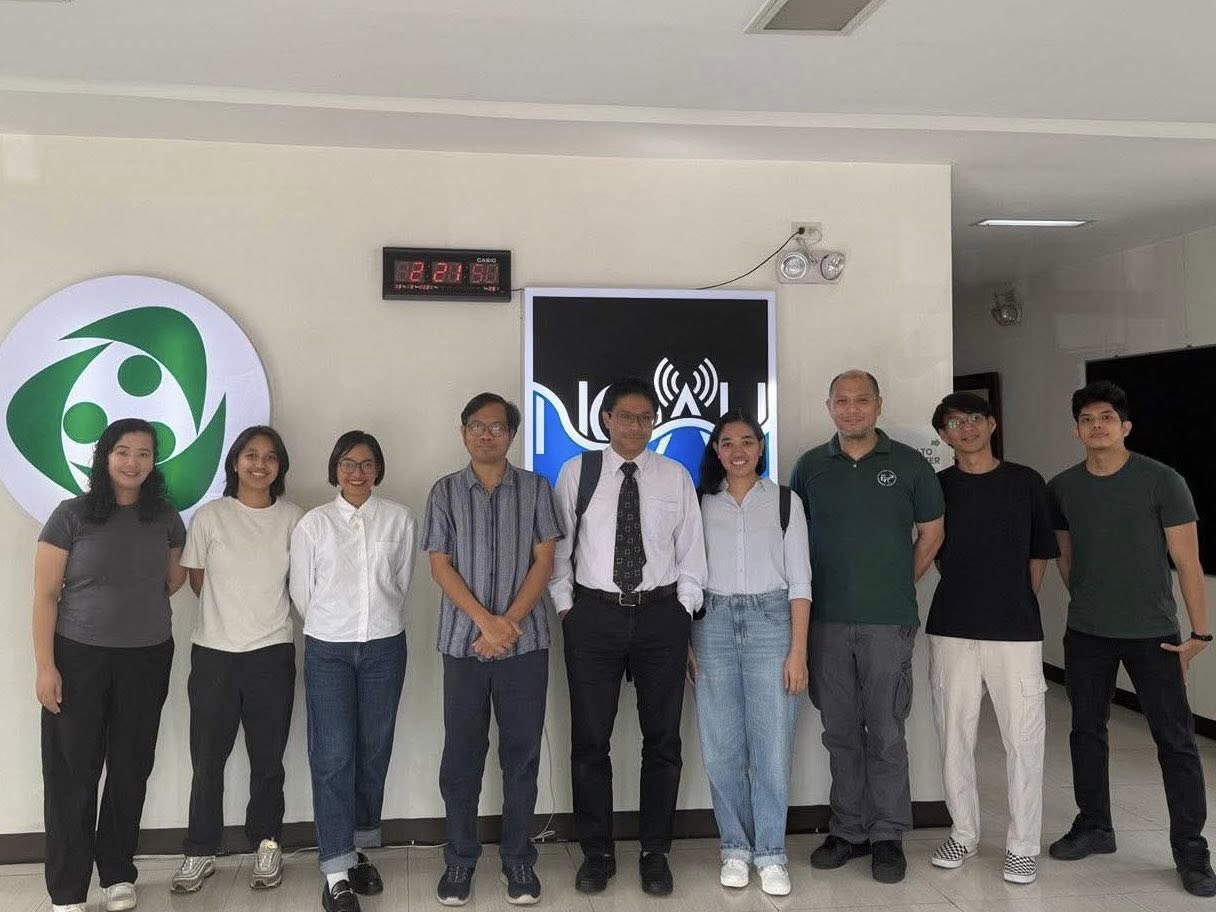
February 13, 2026 — The University of the Philippines Resilience Institute (UPRI) welcomed Dr. Mohd Saberi Mohamad, Director of the Institute for Data Innovation and Artificial Intelligence (IDEA-AI) in Victoria, Australia, and Kuala Lumpur, Malaysia, along with his team, for a high-level strategic visit focused on advancing Artificial Intelligence (AI) solutions for disaster risk reduction in the Philippines.
The engagement centered on strengthening the integration of AI into disaster science — from enhanced hazard modeling and predictive analytics to more responsive decision-support systems. Dr. Mohamad and his team shared expert insights on emerging methodologies and global best practices, emphasizing how intelligent systems can sharpen anticipatory action frameworks and improve the delivery of timely, actionable risk information.
UPRI-NOAH participants present during the strategic discussions included Dr. Mahar Lagmay, Executive Director; Mr. Marcus Rosales, Executive Assistant; the WebGIS Team, led by Ms. Feye Andal, Junior Managing Researcher, with team members Ms. Dianne Bencito, Senior ICT Associate, Ms. Erika Joy Del Rosario, Junior Project Assistant, Mr. Fritz Andal, Senior Assistant, and Mr. Kenneth Liporada, Senior ICT Assistant; and Dr. DJ Darwin Bandoy, Director of the Research and Creative Works Division, together with Julia Fye Manzano, Junior Project Assistant from UPRI-RCW. The dialogue underscored the critical role of combining geospatial intelligence with advanced AI systems to generate more precise, forward-looking, and impact-based risk assessments.
As climate change and rapid urbanization intensify the complexity of hazards, UPRI continues to push the frontiers of science and technology to enhance early warning systems, strengthen preparedness, and support evidence-based decision-making. The visit reflects a shared commitment to innovation that directly benefits communities most vulnerable to disasters. By leveraging AI to strengthen research, modeling, and operational capacity, UPRI reaffirms its mission to deliver science-based, technology-driven solutions, ensuring that every Filipino has access to the best tools to mitigate disaster risk and build resilience.