
The Master of Climate and Disaster Resilience (MCDR) was formally launched on 27 February 2026 during the 31st Anniversary celebration of the University of the Philippines Open University (UPOU), marking a significant milestone for resilience education in the Philippines.
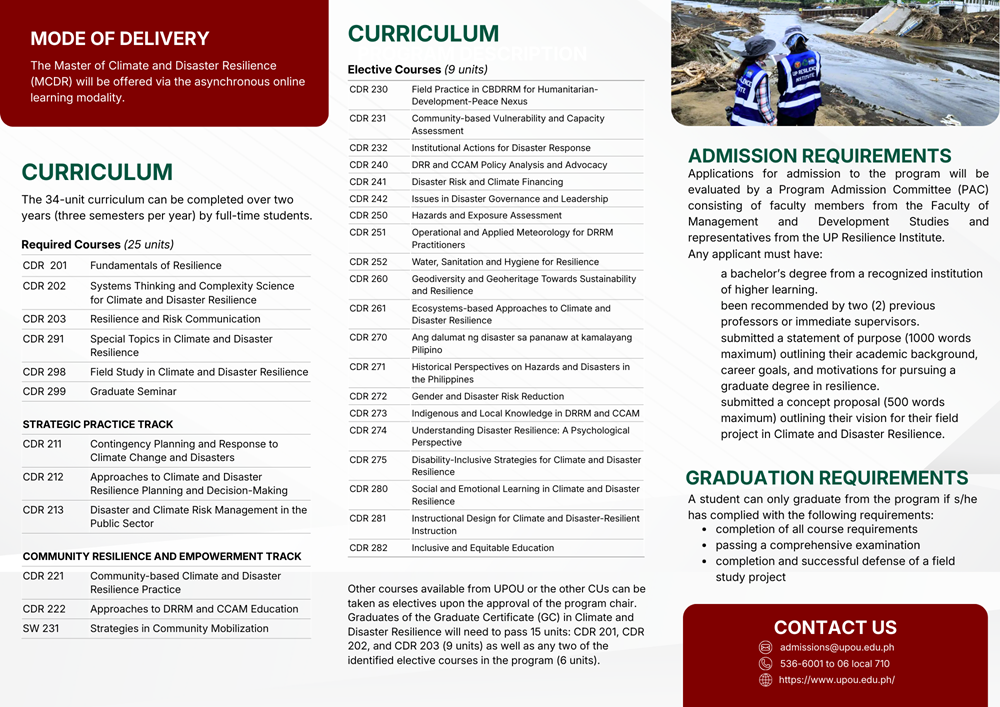
Approved by the UP Board of Regents during its 1,405th meeting on 29 January 2026, the MCDR is a 34-unit, fully online graduate program jointly developed by the Faculty of Management and Development Studies (FMDS), UPOU, and the UP Resilience Institute (UPRI).
In his recorded address during the launch, Dr. Mahar Lagmay, Executive Director of UPRI, underscored the urgency of integrating climate change adaptation and disaster risk reduction into a unified framework. He reflected on the country’s increasingly complex risk landscape, noting that “climate change is no longer a projection… It is a lived reality for Filipinos.”
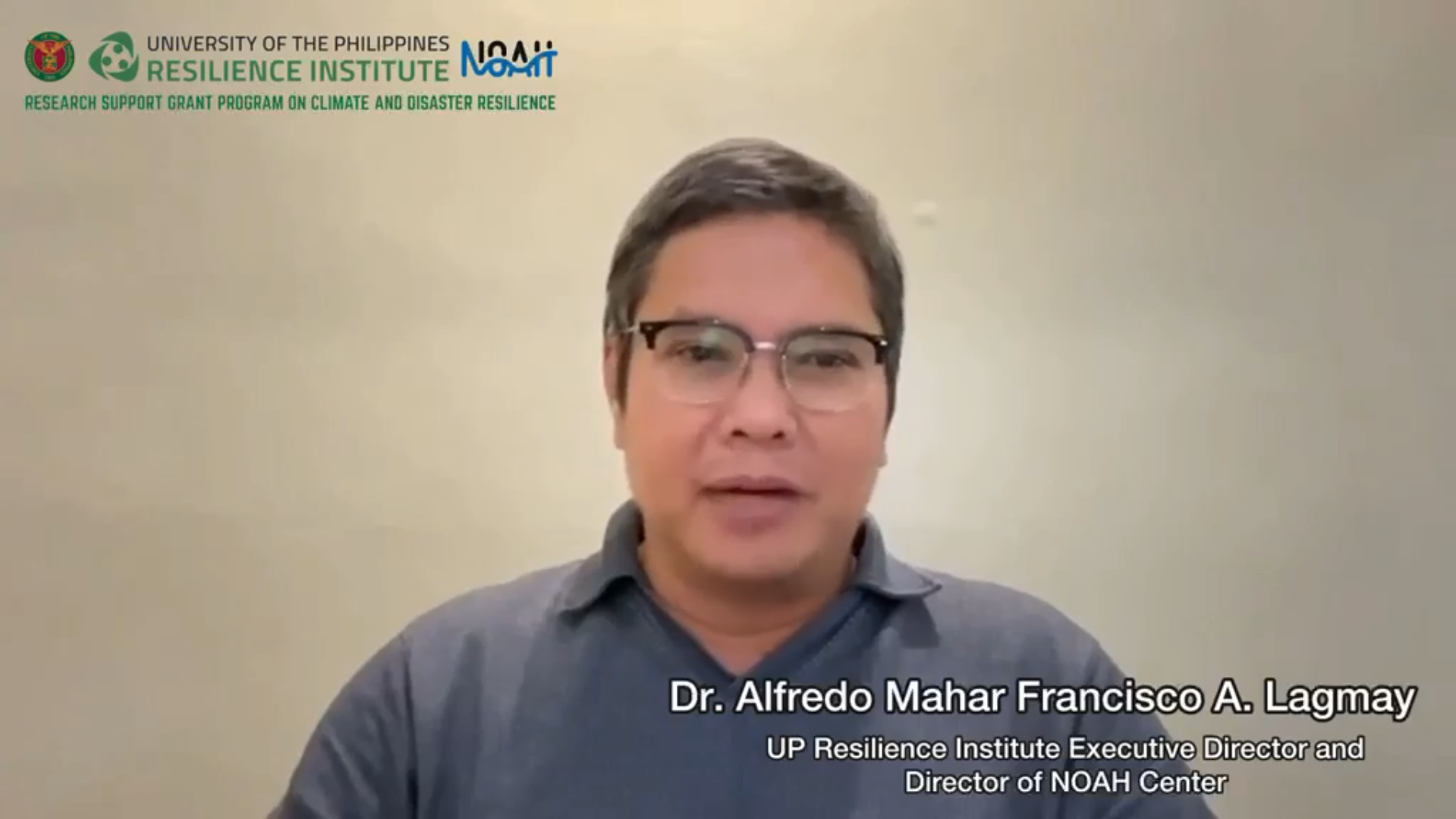
Dr. Lagmay emphasized that what the country lacks is not initiative, but integration. For decades, disaster risk reduction and climate change adaptation have often been treated separately, with response prioritized over anticipation and infrastructure over governance. The MCDR, he explained, represents a decisive step toward closing this gap.
“This is not simply the opening of a new degree program. It is the institutionalization of an integrated approach to resilience,” he stated. Designed for practitioners, planners, administrators, policymakers, and educators, the program brings together science-based risk assessment, adaptive governance, systems thinking, and community-centered planning into a coherent framework of action.
The MCDR offers two tracks that respond to complementary needs. The Strategic Practice Track prepares leaders to shape policy, manage institutions, and implement science-informed strategies, while the Community Resilience and Empowerment Track strengthens participatory approaches, grassroots capacity building, and inclusive local governance. Together, these tracks reinforce resilience from both institutional and community levels.
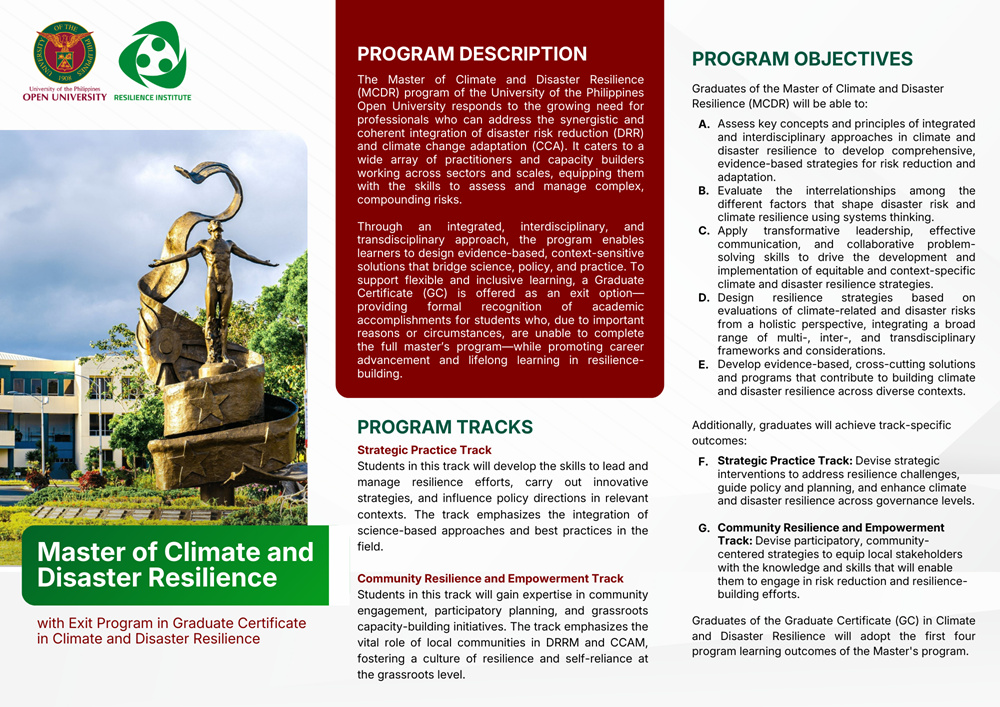
Dr. Lagmay also highlighted the transformative potential of delivering the program fully online through UPOU. Removing geographical and professional barriers enables local planners, disaster officers, and educators across the archipelago to pursue advanced resilience education without leaving their posts. As he noted, resilience education must be accessible if resilience itself is to be inclusive.
The program advances the Sustainable Development Goals not merely as a checklist, but as a framework for systemic change, linking quality education, climate action, sustainable cities, water governance, ecosystem protection, and social equity.
Concluding his remarks, Dr. Lagmay framed the MCDR as an investment in leadership grounded in science, ethics, and foresight. “We cannot stop the storms, but we can prevent hazards from becoming disasters… Resilience is not the absence of disaster. It is the presence of foresight.”
As the UP Resilience Institute continues its mission to advance science-based, inclusive, and integrated approaches to resilience, the launch of the MCDR marks a decisive step toward strengthening national capacity for climate and disaster risk governance.
Admissions to the Master of Climate and Disaster Resilience (MCDR) will soon open for the First Semester of the Academic Year 2026–2027. Further details on the program structure, admission requirements, and application procedures will be announced on the UPOU Admissions website and will also be shared on the official UPRI Facebook page. Please regularly check these websites for updates.