
The UP Resilience Institute (UPRI) hosted the University of the Philippines Manila (UPM) College of Nursing and the University of Tokyo (UTokyo) last June 19, 2026 for a knowledge exchange on innovating resilience using technology for disaster response.
Dr. Likha Minimo, Director of the Knowledge Sharing Division, introduced the UP Resilience Institute and shared its direction and advocacies in mainstreaming disaster risk reduction and climate change adaptation. Dr. Carlos Primero Gundran, emergency physician and Director of the Institution Building Division, provided an in-depth discussion on their division mandate and the several capacity building activities they conduct. He also highlighted the capacity of UP Manila DRRM-Health to use XVR on Scene Software, Emergo Train System, and Disaster Simulation Suite.
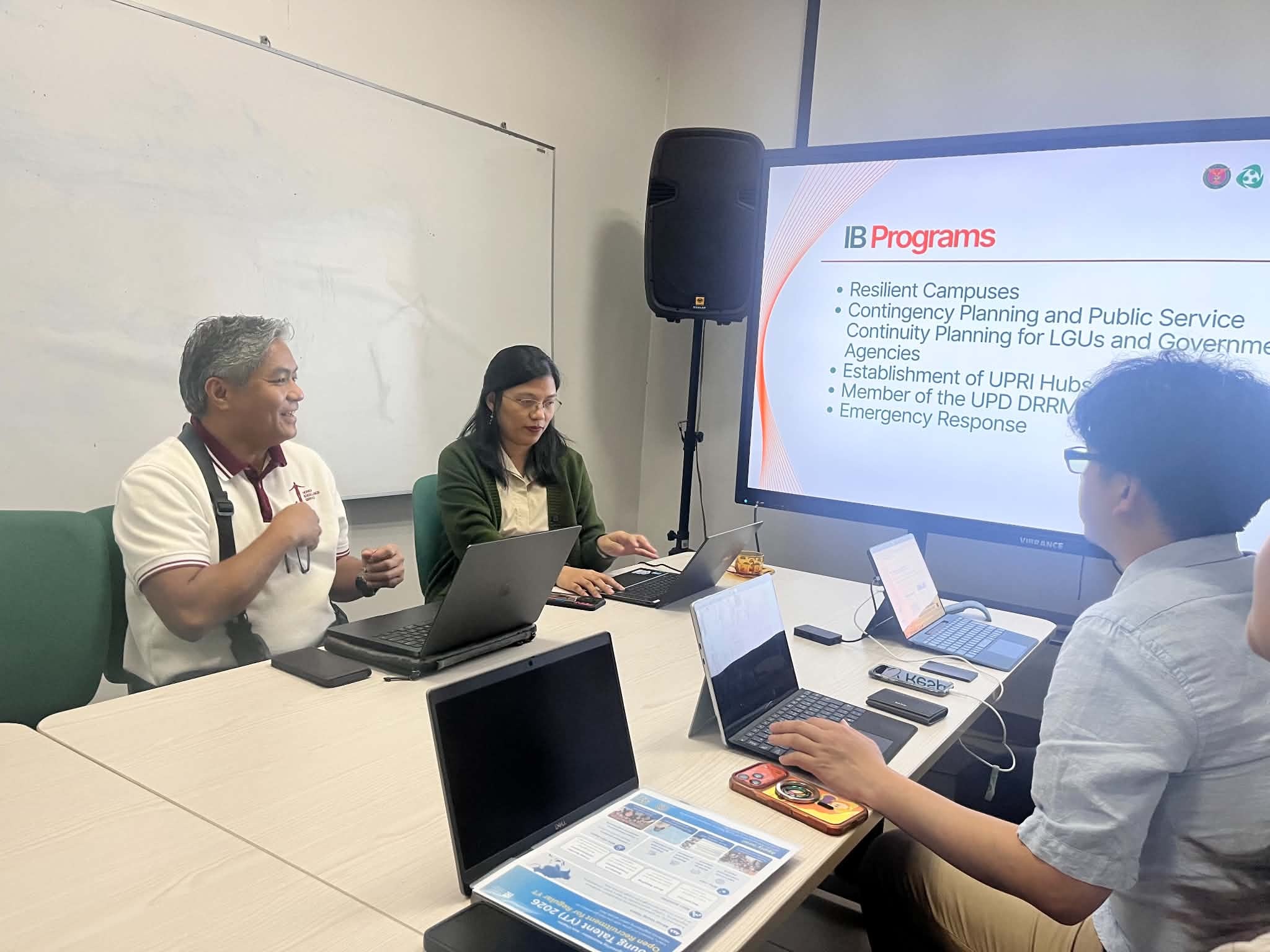
Dr. Gundran, Director of Institution Building Division, explained their programs and scope of work
These projects were of interest to the representatives from UTokyo led by Assoc. Professor Taro Kanno. Japan being one of the most disaster-prone countries in the world, they seek to capacitate disaster base hospitals that provide medical care during disasters. He presented their research questions that pertain to scenario design and data-driven evaluation of disaster drill performance. They will extend this by improving and creating patient scenarios, focusing on a specific type of mass casualty incident. Dr. Gundran continued the discussion by explaining the need to create context-specific scenarios and to match and advance the skill level of training participants.
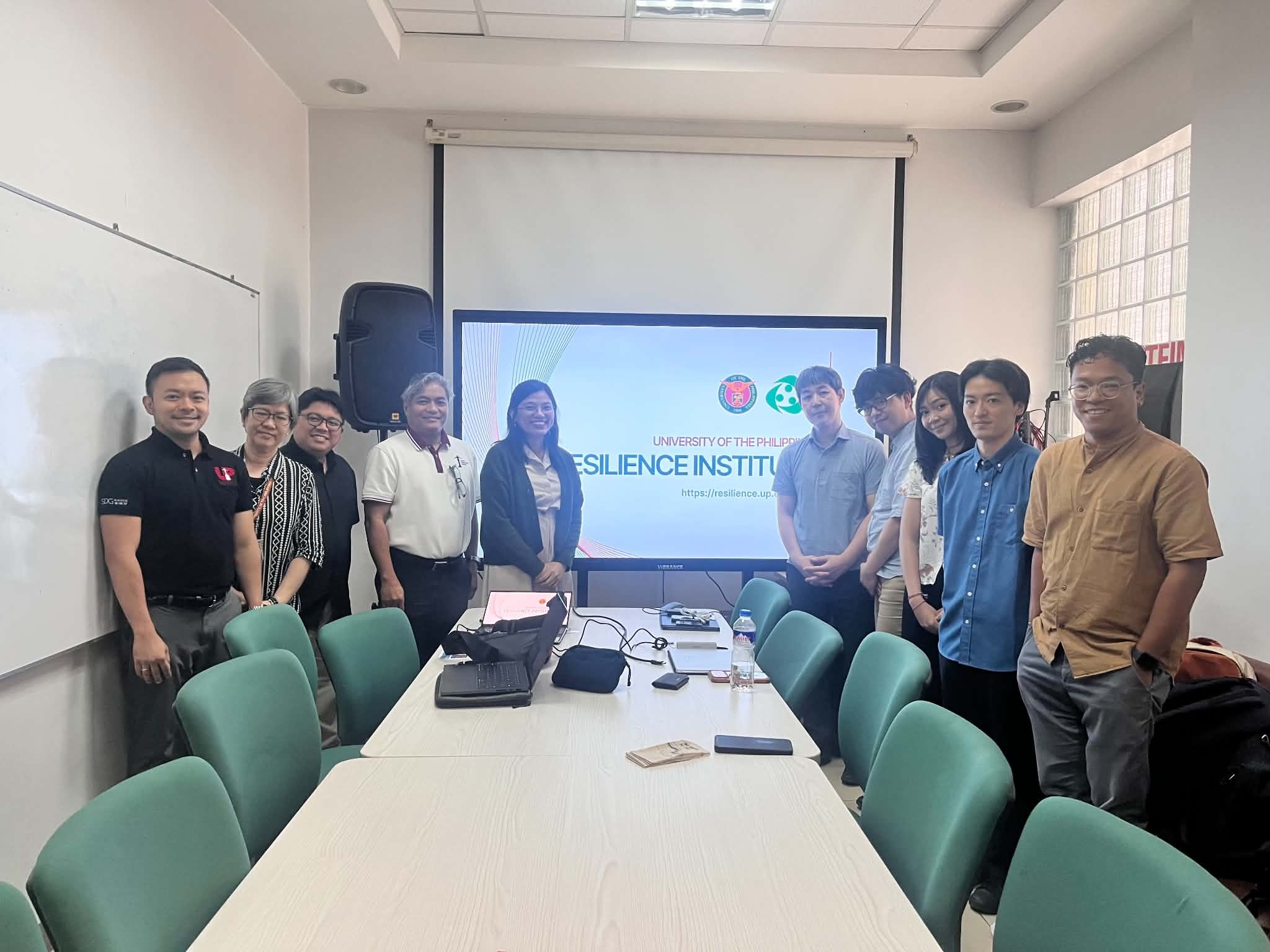
(L to R): Asst. Prof. Laurence B. Parial (UPM College of Nursing), Asst. Prof. Bettina D. Evio (UPM College of Nursing), Asst. Prof. Jan Vincent delos Santos (UPM College of Nursing), Dr. Carlos Gundran (UPRI), Dr. Likha Minimo (UPRI), Assoc. Professor Taro Kanno (University of Tokyo), Asst. Prof. Shunichi Tada (Toyo University), Desak Ayu Clara Dewanti (University of Tokyo – School of Engineering), Ayato Miyatake (University of Tokyo – School of Engineering), Asst. Prof. Erickson R. Bernardo (UPM College of Nursing)
Through the UPM College of Nursing, Assoc. Professor Kanno invited UPRI to become a member of the Resilience Engineering Asia where the goal is to integrate and collaborate on building holistic research and practice on resilience. Their objective is to pioneer safety engineering, disaster engineering, and community resilience engineering. His presentation further stressed that resilience engineering is the science and practice of ensuring that complex socio-technical systems can adapt and continue to function during unexpected challenges. Instead of focusing on preventing failure, they work on improving the systems to succeed in unpredictable conditions. In line with this goal, they shared their ‘Resilient Hospital Project’ where they use technology and applications to collect patient data and monitor the movement of responders during disaster drills.
The UP College of Nursing, led by Asst. Professor Bettina Evio, closed the productive visit by citing ways forward and possible areas of collaboration, emphasizing the need for a multidisciplinary approach on health during disaster situations.