
Written by: NOAH Hazard Assessment Team
In the wake of Typhoon Uwan (international name: Fung-wong), which made landfall in Dinalungan, Aurora on November 9, the UP Resilience Institute (UPRI) and UP NOAH Center deployed a Quick Response Team (QRT) to conduct a post-event coastal assessment in the municipality of Dingalan from November 20 to 25. The QRT was composed of members of the NOAH Hazard Assessment Team (NOAH-HAT): Lea Victoria D. Serrano, Senior Science Research Specialist; Ada Beatrice F. Reyes, Junior Research Analyst; and Julian Marie Bernice M. Grageda, Junior Project Associate. The mission aimed to assess storm surge impacts, document coastal damage, and support local government efforts in strengthening disaster risk reduction and preparedness.
Coordinated Fieldwork Across Affected Barangays
Upon arrival on November 20, the team conducted a courtesy call with the Municipal Government of Dingalan to align objectives and coordinate access to affected communities. Over the next several days, field activities were carried out in multiple barangays, including Paltic, Aplaya, Umiray, Ibona, Matawe, Dikapanikian, and Butas na Bato.
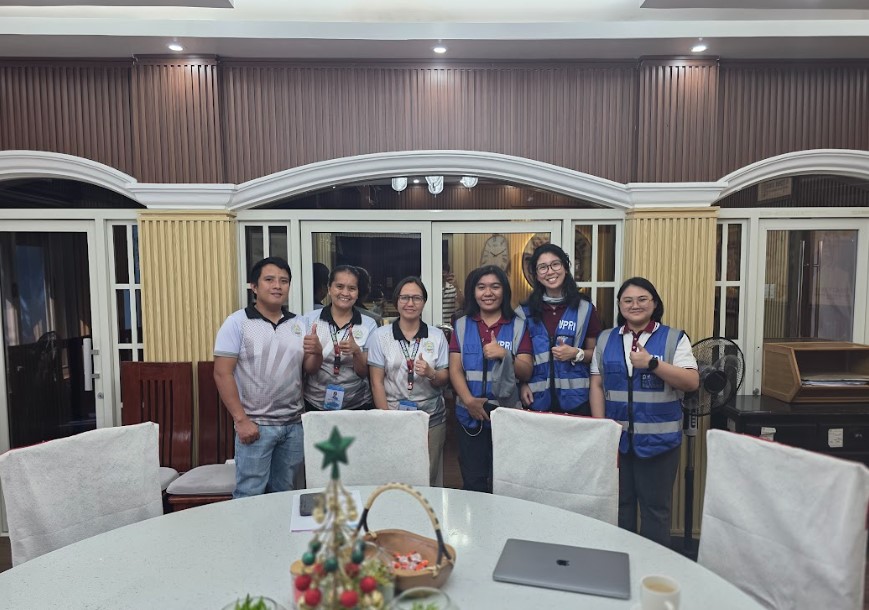
The team undertook a combination of key informant interviews, on-site inspections of storm surge deposits and damage, and high-resolution UAV (drone) mapping of coastal areas. Drone surveys were conducted along the Paltic–Aplaya coastline, in Dikapanikian, at the Paltic feeder port, and in Umiray and Butas na Bato to capture post-event coastal conditions. In Dikapanikian, the team also carried out boulder measurements and detailed documentation of storm surge deposits to better understand sediment transport and coastal processes associated with extreme events.
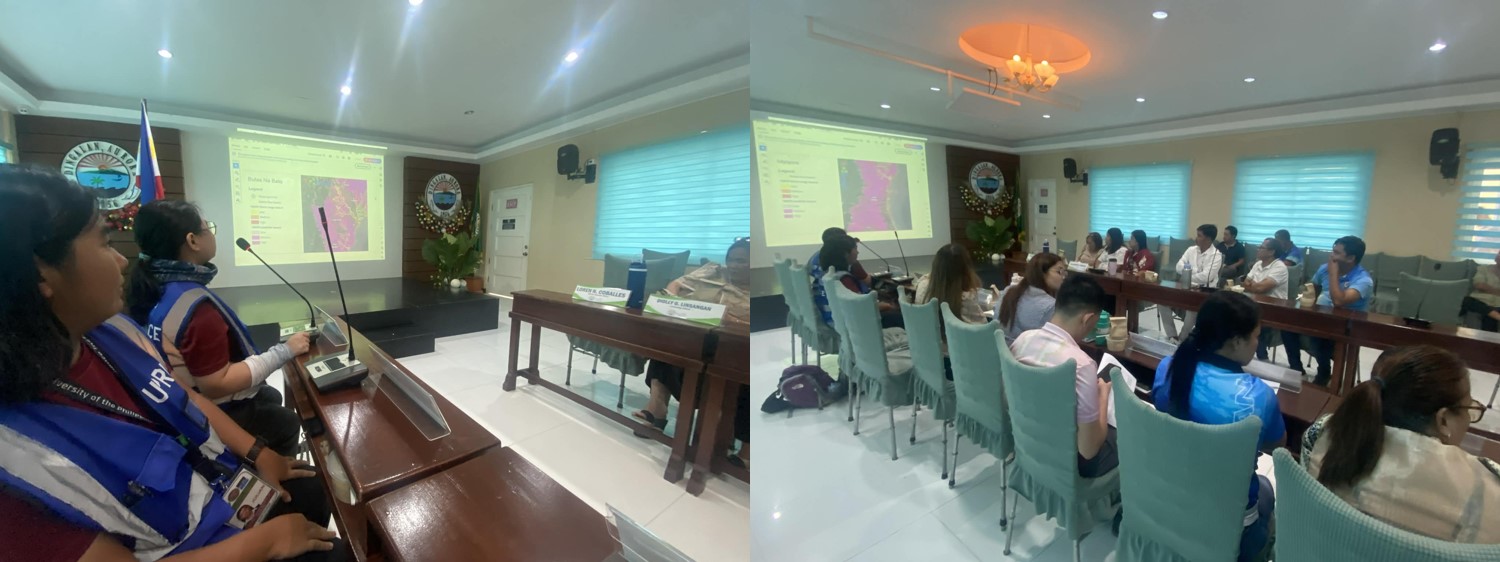
Data processing and preliminary analysis were conducted during the field mission, culminating in an exit presentation to the Municipal Management Committee (MANCOMM) on November 24, where initial observations and key takeaways were shared with local officials.
This level of fieldwork would not have been possible without the effective coordination and clear communication facilitated by Mr. Christian Dagasdas, Municipal Disaster Risk Reduction and Management Officer, under the leadership of Hon. Mayor Aurora Guzman-Taay. Their support ensured that the team was formally received in each target barangay and accompanied by a municipal representative. Across all sites, the team engaged with capable barangay leaders who articulated their experiences, challenges, and envisioned pathways forward with clarity and insight.
Zero Casualties and the Role of Effective Early Warning Systems
One of the most significant findings across all barangays visited was the absence of casualties during Typhoon Uwan. Community members and local officials consistently cited the presence of an effective early warning system (EWS) and clear communication channels between the municipal government and barangays. These mechanisms enabled the timely dissemination of warnings and evacuation advisories, which residents largely followed.
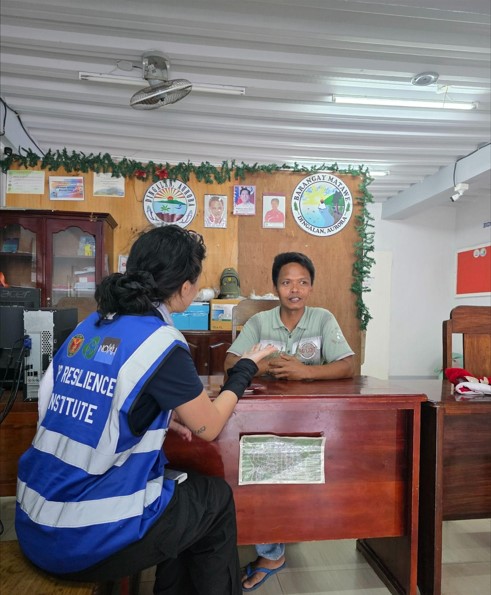
The team observed that preparedness in Dingalan is not only institutional but also deeply embedded at the community level. Evacuation protocols were well understood, and coordination between barangay leaders and the municipal government appeared smooth and responsive, an outcome that reflects years of experience in disaster risk management.
“Disaster Memory” as a Foundation for Preparedness
Local preparedness in Dingalan is shaped in part by the municipality’s collective memory of past disasters. In 2004, three successive typhoons Winnie, Violeta, and Yoyong brought catastrophic flooding and debris flows that resulted in widespread destruction and loss of life. These events remain a defining moment in the town’s history.
Every November, Dingalan observes Kutiptapan, a community-wide day of prayer, remembrance, and reflection for the victims of the 2004 tragedy. Derived from the word “kutitap,” meaning “a small light,” Kutiptapan symbolizes hope in the face of past darkness and serves as a reminder of the importance of learning from history. As local leaders often emphasize, “Ang kasaysayan ay mauulit lamang kung hindi tayo makikinig at matututo, history will only repeat itself if we fail to listen and learn.
This culture of remembrance, or “disaster memory,” appears to play a crucial role in sustaining preparedness. By institutionalizing reflection on past losses, Dingalan reinforces community vigilance and strengthens collective commitment to disaster risk reduction.
Rapid Recovery and Community Action
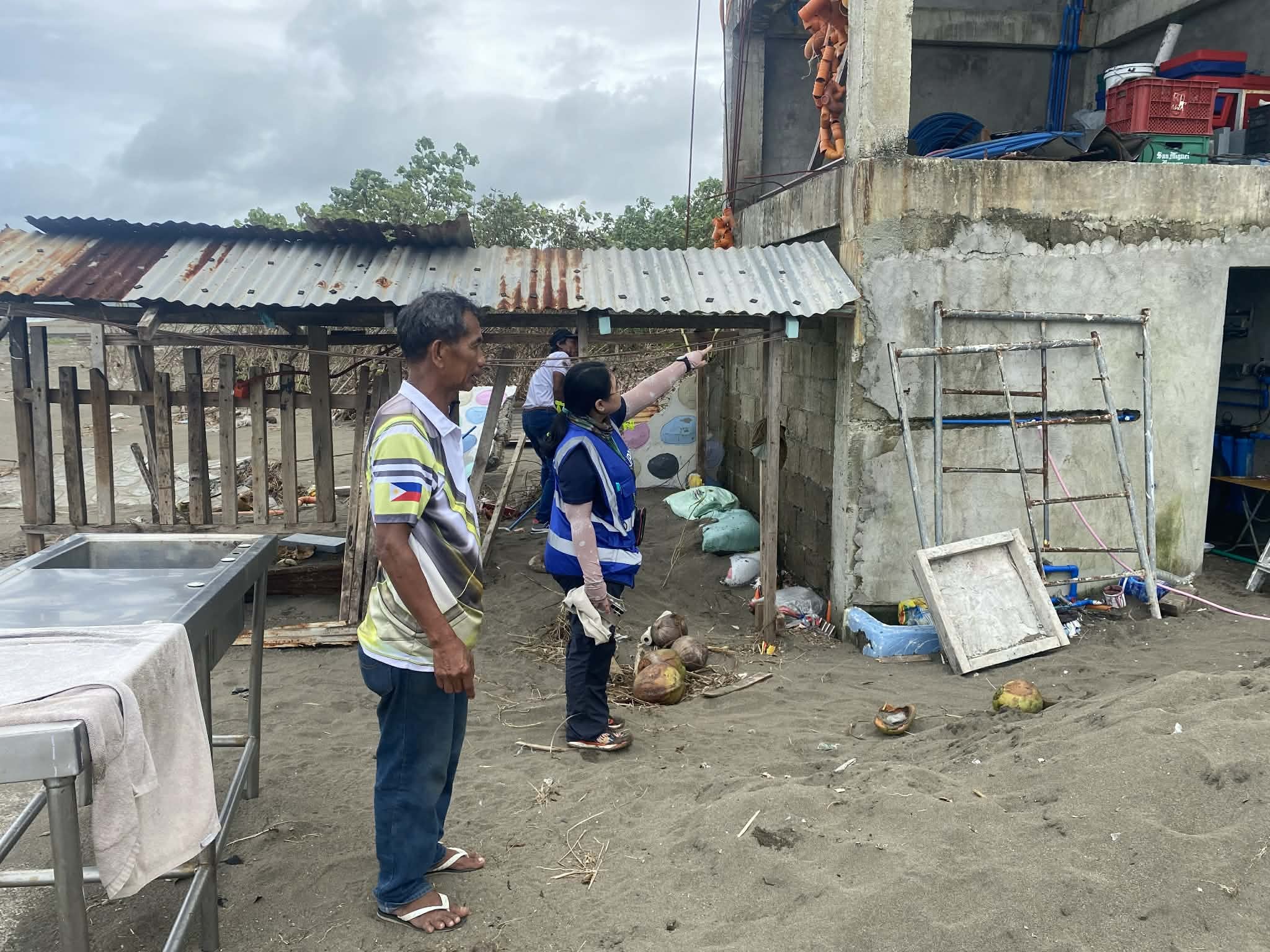
In addition to preparedness measures, the team noted the municipality’s quick cleanup and recovery efforts following Typhoon Uwan. Affected areas showed evidence of organized debris clearing and community-led rehabilitation, underscoring the capacity of both local government units and residents to respond swiftly after hazard events.
Supporting Evidence-Based Resilience Planning
The data collected during the field mission will contribute to ongoing hazard assessments and coastal studies by UPRI and the UP NOAH Center. These outputs aim to support evidence-based planning, improve risk communication, and further strengthen disaster preparedness at the local level.
The Dingalan mission highlights how a combination of technical assessment, strong local governance, and deeply rooted community practices can reduce risk and save lives. As climate-related hazards continue to intensify, lessons from municipalities like Dingalan underscore the value of both scientific tools and collective memory in building resilient coastal communities.
Strengthening Coastal Resilience Through Science, Governance, and Collective Memory
The post-event coastal assessment conducted by the UPRI NOAH Quick Response Team in Dingalan, Aurora following Typhoon Uwan demonstrates how the integration of scientific field assessment, effective local governance, and strong community based disaster preparedness can significantly reduce risk and prevent loss of life. The absence of casualties highlights the critical role of functional early warning systems, clear communication, and well-practiced evacuation protocols, reinforced by the municipality’s deeply rooted “disaster memory” stemming from past catastrophic events. Rapid post-disaster recovery efforts and active community participation further reflect Dingalan’s resilience and adaptive capacity. The data and insights gathered from this mission will support evidence-based planning and hazard assessment, underscoring that as climate-related coastal hazards intensify, resilience is most effectively built through the combined strengths of technical expertise, institutional coordination, and collective community experience.