
By: Ma. Shara Micah G. Oliquino, UP RI Education Division
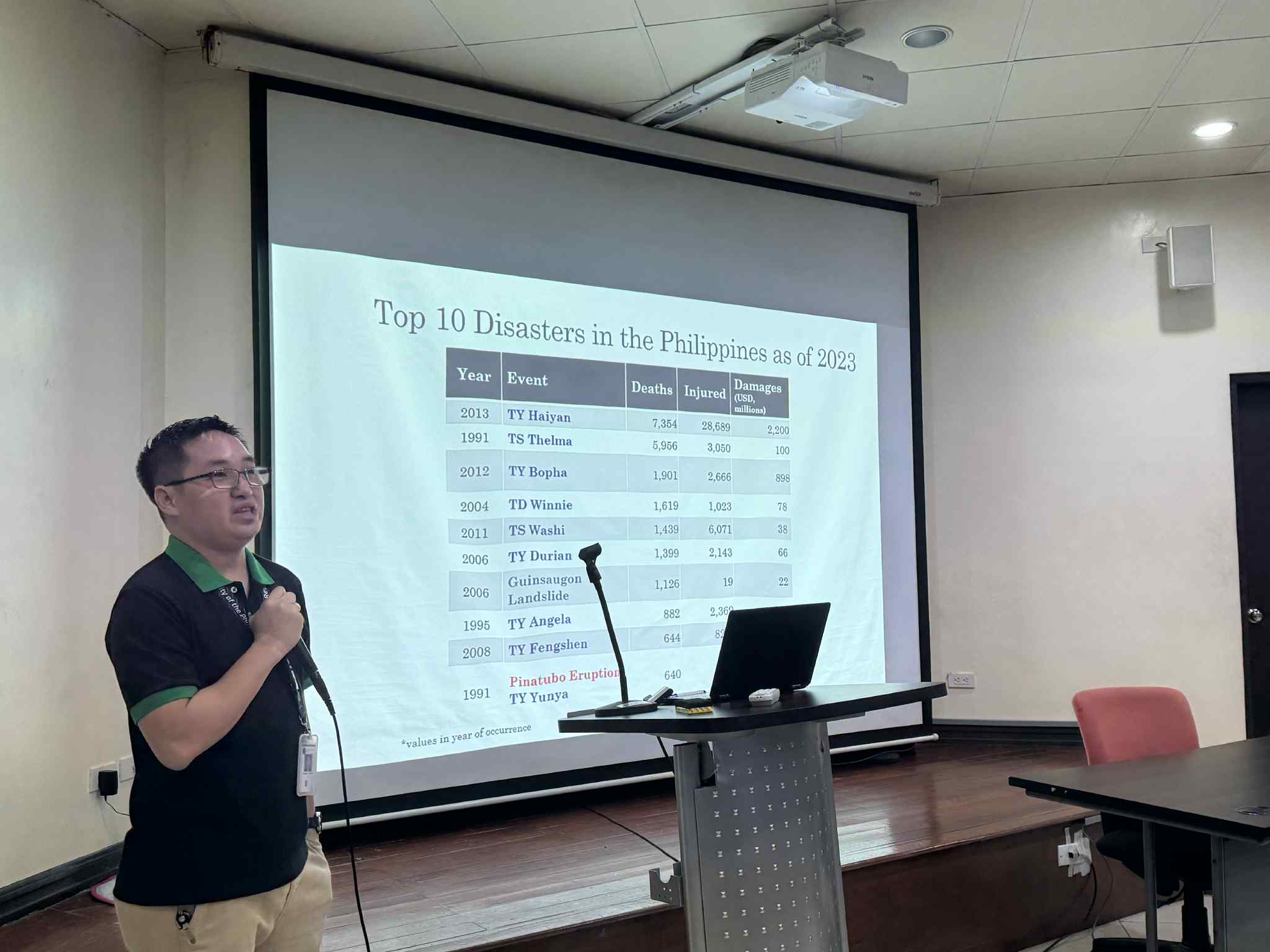
On October 20, 2025, Mr. Richard Ybañez, Chief Science Research Specialist of the UP-Resilience Institute’s Education Division, delivered a comprehensive lecture on the fundamentals of Disaster Risk Reduction and Management (DRRM) and Climate Change Adaptation and Mitigation (CCAM) to students of a National Service Training Program (NSTP) class at the Institute of Chemistry, UP Diliman.
During his discussion, Mr. Ybañez offered insightful perspectives that could guide the students in developing NSTP projects aimed at supporting the civic welfare of Filipino communities facing the threats of calamities and natural hazards. The lecture allowed the class to explore the essential principles of DRRM and CCAM, equipping them with knowledge and skills to serve as proactive agents of change, particularly in advancing community resilience building.
Mr. Ybañez’s lecture began with a question: Why does the Philippines continue to rank at the top of the World Risk Index? He encouraged the class to reflect on this persistent reality. This initial prompt allowed learners to explore the intricate relationship among natural hazards, exposure, and vulnerability, helping them understand how these three factors are all crucial in shaping capacity-building interventions. When compared with countries that experience the same, if not a higher, frequency of typhoons, earthquakes, and volcanic eruptions, yet fluctuate on the ranking list each year, this question prompted the class to delve deeper into what actually constitutes disaster risk.
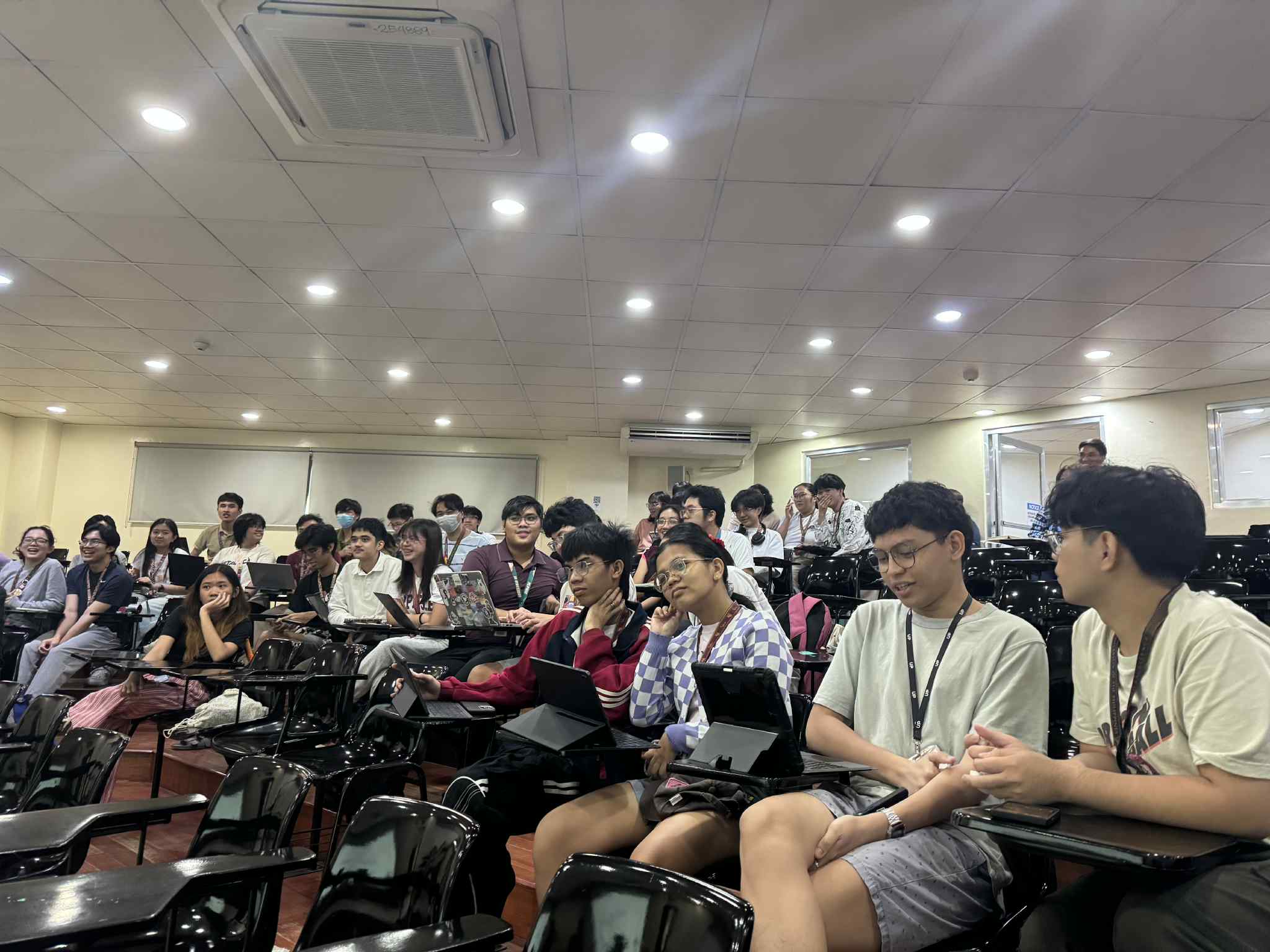
According to Mr. Ybañez, it is important to clarify that natural hazards alone do not create the disasters that people come to know about. Disasters occur when these hazards interact with a community’s exposure to them, compounded by key vulnerabilities that increase people’s susceptibility to their effects. Given this, understanding why the Philippines remains at the top of the World Risk Index requires examining not only the frequency of natural hazards but also the social, economic, and infrastructural factors that amplify the country’s disaster risk.
Due to the ongoing threats caused by climate change and disaster risk in the country, DRRM has been institutionalized as a comprehensive approach in minimizing the impact of hazards on communities, with people’s exposure and vulnerability also taken into account. Backed by the Disaster Risk Reduction and Management Act of 2010 (Republic Act 10121), the approach emphasizes increasing capacity at multiple levels to reduce disaster impact. Building on this, Mr. Ybañez explained how DRRM builds capacity at various levels—from creating enabling environments through policy (societal), ensuring accountability and proper fund use (organizational), to enhancing individual preparedness and skills. At the organizational level, challenges such as the misuse of DRRM funds by some politicians are addressed to ensure resources are properly used. At the individual level, people’s skills, knowledge, and experience are strengthened so they can actively contribute to preparedness and response efforts.
Rather than being about enduring hardship, resilience involves proactive planning, systemic capacity-building, and inclusive development strategies that reduce vulnerabilities over time. In his discussion, Mr. Ybañez also clarified that resilience is not just the ability to bounce back but is built through anticipation, planning, and ongoing risk reduction efforts. While there is no single, universally accepted definition, due to the socio-cultural contexts of local communities, common themes such as environmental losses and disaster-related mass casualty metrics, highlight proactive, rather than reactive, approaches to managing risks.
“With increased capacity, we can reduce the impact of disaster,” Mr. Ybañez emphasized. Strengthening skills, knowledge, and systems across all levels enables communities to better prepare for, respond to, and recover from hazards, ultimately fostering a culture of resilience rather than mere survival. As Iskolars ng Bayan, NSTP students are called to actively contribute to resilience efforts and capacity development. This includes raising awareness, participating in risk assessment activities, supporting local DRRM programs, and promoting sustainable practices that aim to mitigate disaster risks and address climate change.