
by Dainty Clarice Rabang (Education Division), Richard Ybañez (Education Division), and Lea Serrano (Hazard Assessment Team, NOAH Division)
Multi-sectoral partners from across the Philippines convened for the Lokalisasyon: National Multi-stakeholder Summit on Locally Led Disaster Risk Reduction and Management, held on June 10–11, 2026, at Citadines Roces in Quezon City.
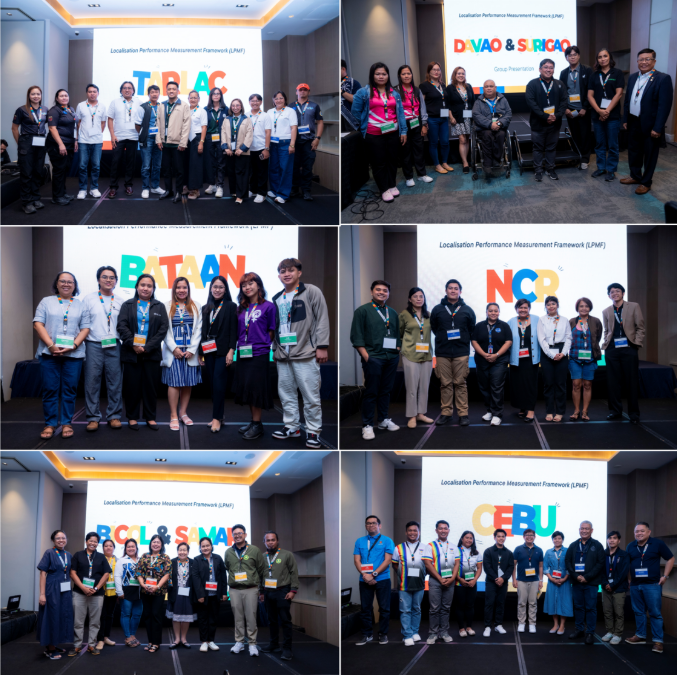
The summit brought together representatives from the academe, local government units (LGUs), civil society organizations (CSOs), and the private sector. Participants came from Luzon, including the National Capital Region, Tarlac, Bataan, and the Bicol Region; Visayas, including Samar and Cebu; and Mindanao, including Davao and Surigao.
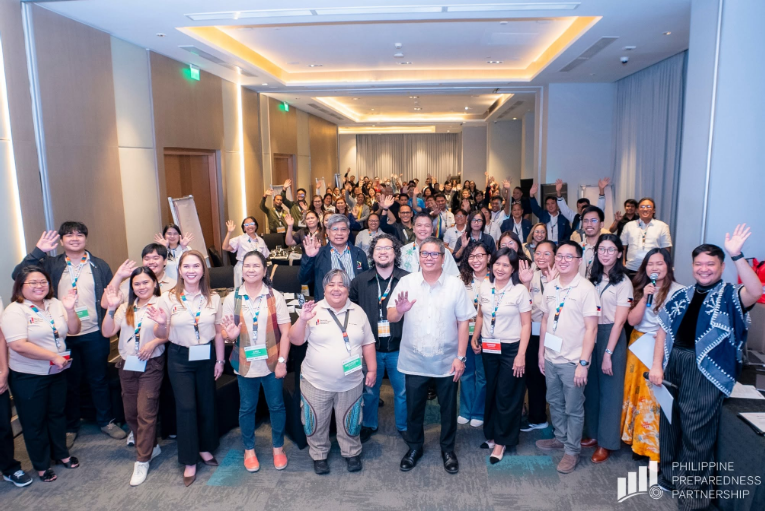
Convened under the Philippine Preparedness Partnership (PhilPrep), the event provided a national platform for local actors to examine how disaster risk reduction and management (DRRM) can more effectively be led, resourced, and sustained at the local level.
Assessing localization in DRRM
A key component of the summit was the use of the Localisation Performance Measurement Framework (LPMF), a tool designed to assess progress in localization across six broad indicators:
- Partnerships
- Funding
- Capacity
- Coordination and complementarity
- Policy, influence, and visibility
- Participation
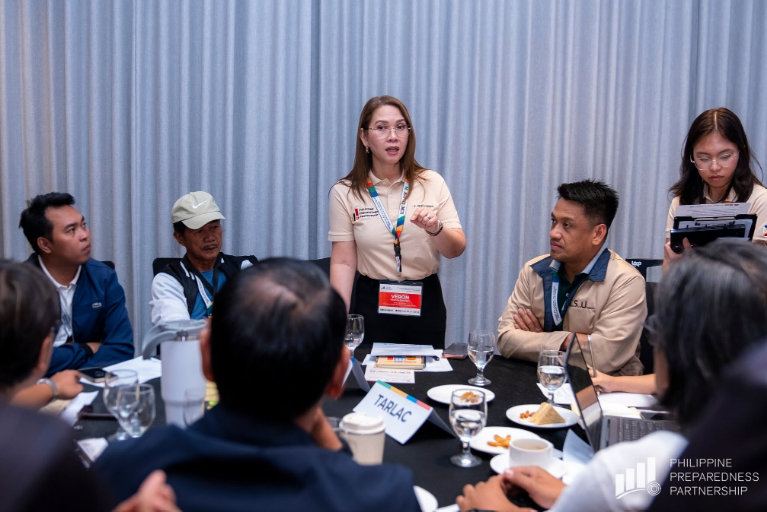
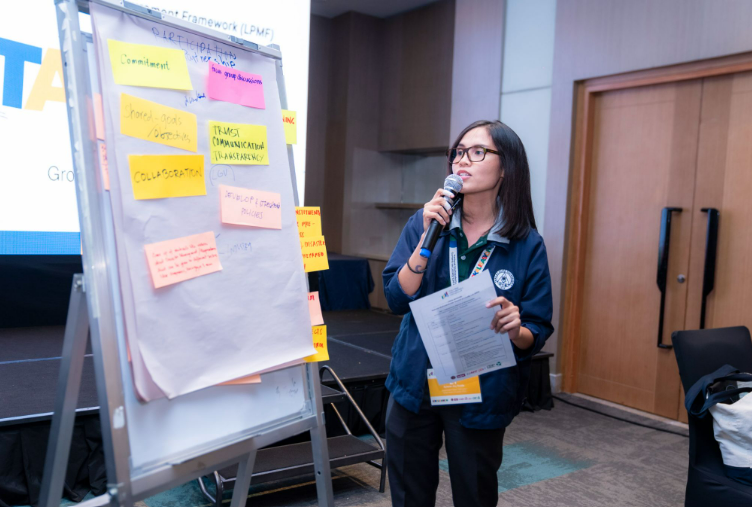
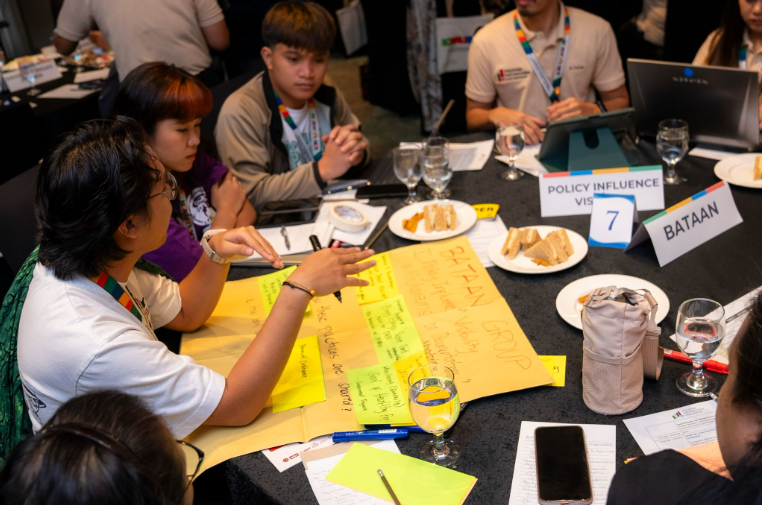
Through World Café-style discussions, participants worked in multi-sectoral groups to assess their local contexts using the LPMF indicators. These conversations enabled participants to identify existing strengths, persistent gaps, and opportunities for improving locally led DRRM in their respective areas.
The assessment was followed by an action-planning session, during which participants translated insights from the discussions into commitments and possible next steps that they could pursue in their own localities.
Strengthening the role of local institutions
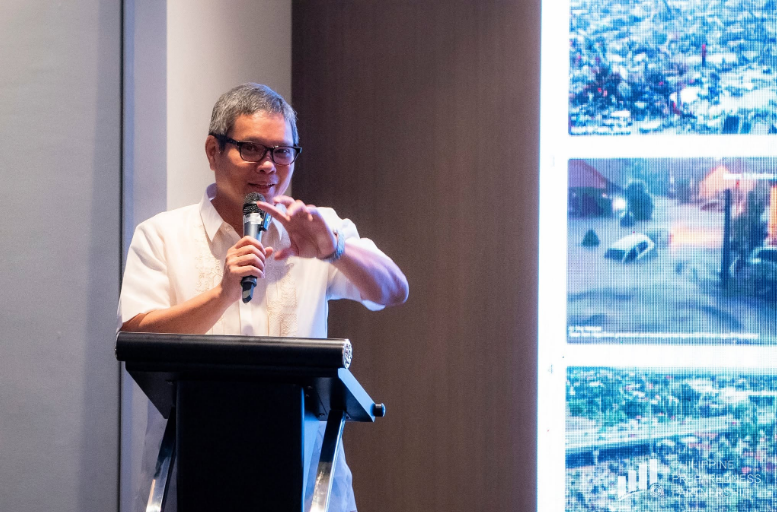
Dr. Alfredo Mahar A. Lagmay, Executive Director of the University of the Philippines Resilience Institute (UPRI) and principal of PhilPrep’s Academe Pillar, delivered the summit’s keynote address. He discussed the Philippines’ disaster context and emphasized the importance of strengthening the role of local academic institutions in DRRM. Dr. Lagmay underscored the vision of empowering local state universities and colleges, as well as UP constituent units, to undertake DRRM research that can directly support evidence-based policymaking and governance in their communities.
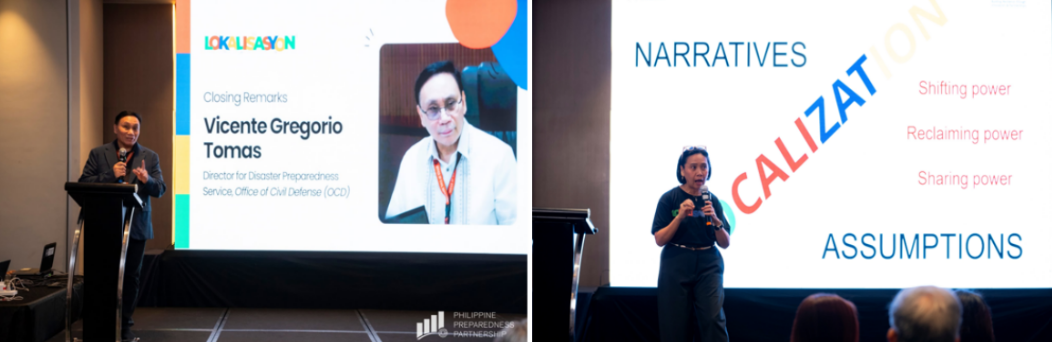
PDRF Executive Director Veronica Gabaldon welcomed the participants on the first day of the summit and highlighted the country’s complex and evolving disaster challenges. Director Vicente Gregorio Tomas of the Office of Civil Defense–Disaster Preparedness Service, in his closing remarks, emphasized the importance of strengthening preparedness, coordination, and institutional capacities before disasters occur. On the second day, Ronilda Co of the Asian Disaster Preparedness Center (ADPC) discussed localization within the broader global humanitarian and development context, emphasizing the need to shift decision-making, resources, and capacities closer to communities.
PDRF Executive Director Veronica Gabaldon welcomed the participants on the first day of the summit and highlighted the country’s complex and evolving disaster challenges. Director Vicente Gregorio Tomas of the Office of Civil Defense–Disaster Preparedness Service, in his closing remarks, emphasized the importance of strengthening preparedness, coordination, and institutional capacities before disasters occur. On the second day, Ronilda Co of the Asian Disaster Preparedness Center (ADPC) discussed localization within the broader global humanitarian and development context, emphasizing the need to shift decision-making, resources, and capacities closer to communities.
Perspectives from sectors and local partners
The summit also featured panel discussions that examined localization from both national and local perspectives.
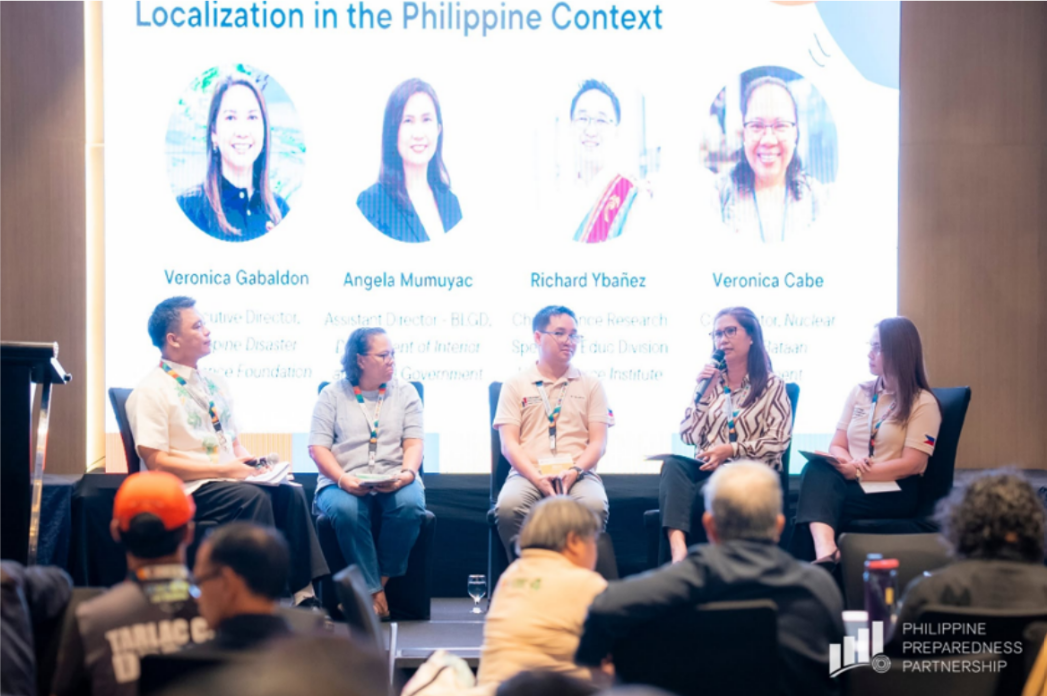
The first panel, “Localization in the Philippine Context,” opened with a presentation by Loreine Dela Cruz, Executive Director of the Center for Disaster Preparedness (CDP). The discussion featured Veronica Gabaldon, Executive Director, PDRF; Angela Mumuyac, Assistant Director of the Bureau of Local Government Development; Richard Ybañez, Chief Research Specialist of the UPRI Education Division; and Veronica Cabe, Coordinator of the Nuclear-Free Bataan Movement. The session was moderated by Michael Vincent Mercado of CDP. The panel discussed the current context and challenges, and how together we can move forward with localization in the Philippines.
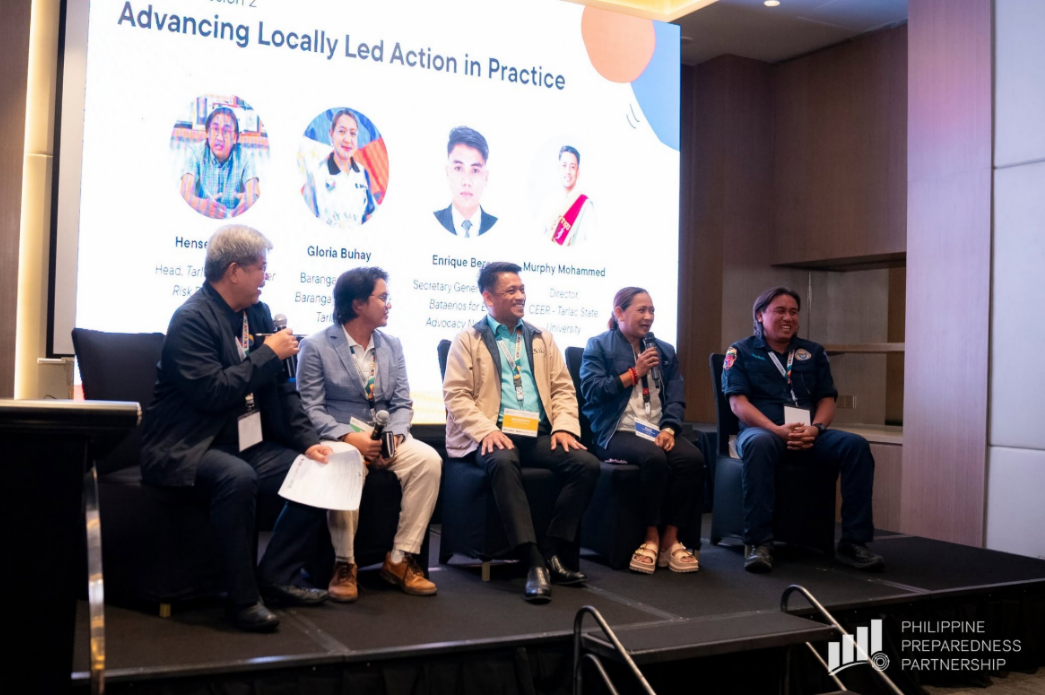
The second panel, “Advancing Locally Led Action Practice: The PhilPrep Talagháy,” focused on the experience of Project Talagháy in Tarlac City. Key partners shared their on-the-ground experiences and reflections on their work with PhilPrep.
The session opened with a presentation by Jeanne Michelle Bayhonan of PDRF, who has worked closely with the Tarlac partners. The panel featured Hensel Quiling, Head of the Tarlac City Disaster Risk Reduction and Management Office; Barangay Captain Gloria Buhay of Barangay San Isidro; Dr. Murphy Mohammed of Tarlac State University; and Enrique Beren of the Young Bataeños for Environmental Advocacy Network. Dr. Emmanuel Luna, UPRI Fellow, moderated the discussion.
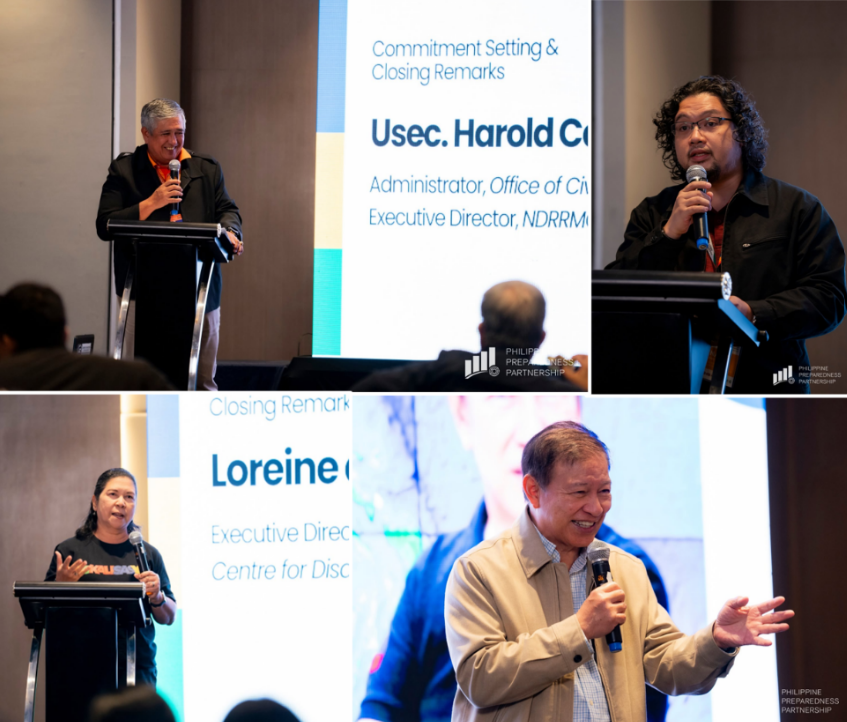
During the closing and commitment-setting session, Undersecretary Harold Cabreros shared reflections from his recent deployment to General Santos City and Davao following the reported magnitude 7.8 Sarangani earthquake. PDRF President Rene Meily emphasized the need to bridge gaps in macro-level, multi-sectoral coordination. Dr. Bernard Alan Racoma, Director of the UPRI Education Division, highlighted the summit’s “five Ks”: Kaalaman, Karanasan, Konteksto, Komunidad, and Katatagan. Speaking on behalf of civil society, CDP Executive Director Loreine Dela Cruz affirmed the sector’s commitment to helping recalibrate power, resources, and trust toward local communities.
A shared commitment to localization
Across regions and sectors, the summit reaffirmed the complementary roles of government, civil society, the private sector, academe, and grassroots communities in DRRM.
LGUs and government agencies were recognized as key enablers that can simplify processes, create enabling policies, and ensure continuity of local initiatives. CSOs play an important role in amplifying community voices and strengthening participation. The private sector can contribute resources, technical solutions, and partnerships, while academic institutions can provide scientific evidence, capacity-building, monitoring, and research support.
The outcomes of the Localization Summit will inform ongoing and future PhilPrep initiatives as well as UPRI’s research, education, and extension programs in support of localized DRRM. By co-convening the summit, UPRI and its partners reaffirm their shared commitment to bringing leadership, resources, and technical capacity closer to communities—ensuring that DRRM policies are not only well designed but also effectively implemented on the ground.
—
PhilPrep Talagháy documentation – Watch how local partners in Tarlac are advancing collaborative, community-centered DRRM through the PhilPrep Talagháy initiative.
https://www.youtube.com/watch?v=sJ5Y84Xa1YQ
Localization Summit documentation – Watch highlights from the Lokalisasyon: National Multi-stakeholder Summit on Locally Led Disaster Risk Reduction and Management.https://drive.google.com/file/d/1geut9DzhqEcyQY4r3yy_l9ZjqCH9yI4_/view?usp=sharing