
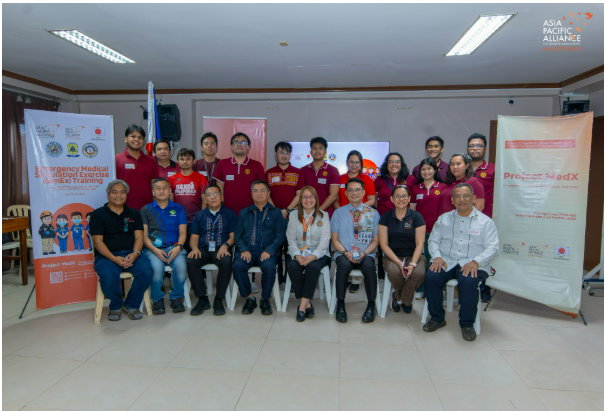
The UP Resilience Institute – Institution Building (UPRI-IB) Division, together with the UP Manila Disaster Risk Reduction and Management in Health (DRRM-H), participated in the Central Luzon Emergency Medical Simulation Exercise (SimEx) held on July 13–14, 2026, at the University of the Assumption (UA) in the City of San Fernando, Pampanga.
The two-day exercise was organized through the collaboration of the Asia Pacific Alliance for Disaster Management Philippines (A-PAD PH), University of the Assumption, Clark DRRMO, Office of Civil Defense Region III, Philippine College of Emergency Medicine, Philippine Medical Association, Philippine Disaster Resilience Foundation, GreenCity Medical Center, Jose B. Lingad Memorial General Hospital (JBLMGH), Mother Teresa of Calcutta Medical Center, City Disaster Risk Reduction and Management Office (CDRRMO) of San Fernando, Eagles Echelon, GuardCom, Cabalen DX3, Our Lady of Fatima University (OLFU), and other partner institutions committed to strengthening emergency preparedness and disaster response.
UPRI and UP Manila DRRM-H were invited to serve as Evaluators and Observers, providing technical guidance and assessment throughout the tabletop and full-scale simulation exercises.
On Day 1, prior to the official opening, Dr. Carlos Primero Gundran led the orientation and briefing of nursing students from the University of the Assumption, who served as simulated patients during the field exercise. The briefing ensured that the student actors understood their assigned injuries, patient profiles, and expected roles, contributing to a more realistic and effective simulation.
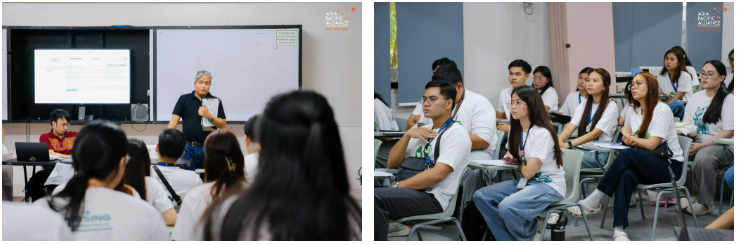
The program formally commenced with opening remarks from the organizers, emphasizing the importance of multi-agency collaboration, interoperability, and preparedness in responding to complex emergency incidents.
During the afternoon session, participants engaged in a tabletop exercise facilitated by Dr. Gundran and the UPRI and UP Manila DRRM-H team. Using mannequins, participating agencies walked through their emergency response strategies, coordination mechanisms, and decision-making processes under simulated disaster conditions.
The CDRRMO then opened the second tabletop exercise, which was followed by an Overview of the Simulation Exercise outlining the three operational modules of the field exercise: Activation, Response, and Post-Activation and De-escalation.
On Day 2, participants conducted the full-scale simulation based on a scenario involving a magnitude 7.2 earthquake with an epicenter affecting Pampanga and producing Intensity VII (Destructive) ground shaking. Authorities in the scenario warned of possible aftershocks and immediately activated emergency response operations.
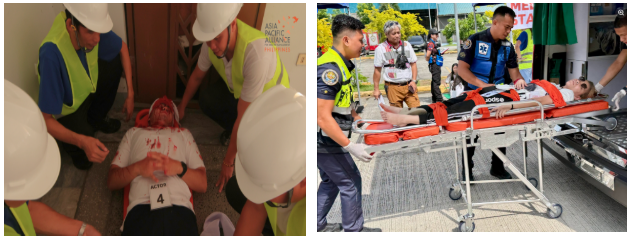
The realistic simulation required participating agencies to coordinate search and rescue, emergency medical services, hospital response, incident command, patient transport, and resource management under challenging disaster conditions.
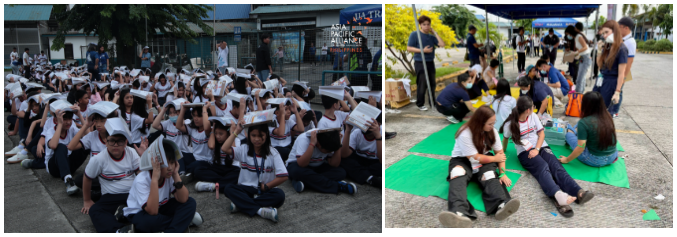
Throughout the exercise, representatives from UPRI, UP Manila DRRM-H, and partner organizations were strategically assigned as observers and evaluators across various operational areas, including the Incident Command Post, triage, treatment, transport, hospital operations, and emergency response teams. Their role was to document observations, identify good practices, and assess opportunities for improvement based on established emergency management principles.
Following the completion of the field exercise, a comprehensive after-action debriefing was conducted with the participation of the simulated patients, observers, evaluators, facilitators, and the University of the Assumption CDRRMO. Participants shared their experiences, lessons learned, and operational insights from the simulation.
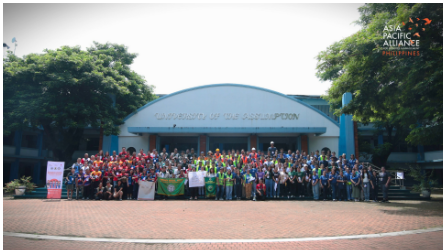
The Central Luzon SimEx reaffirmed the value of joint, multi-sectoral simulation exercises in strengthening emergency medical response. For UPRI and UP Manila DRRM-H, the engagement reinforced the Institute’s continuing role in supporting evidence-based disaster preparedness, with insights from the evaluation feeding into future training and technical assistance across the region.