
By: April Dawn F. Tegelan
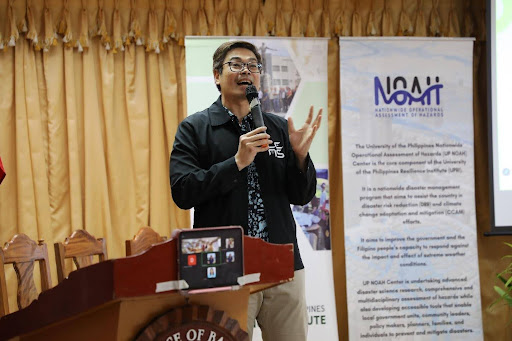
Resilience building in Batanes is not the outcome of a single activity. It is the product of sustained collaboration among local governments, technical experts, civil society, and national partners, working together through a shared process of learning and refinement. This collective journey reached its culmination in the symposium “Empowering Batanes by Formulating Results for Lasting Impacts,” held on 17 April 2026 at the Human Resource Training Center, Provincial Capitol of Batanes in the Municipality of Basco.

As the culminating activity of the project “Bridging Academic Researchers and Vulnerable Island Communities in the Philippines: Enhancing the Climate and Disaster Risk Management Capacities of Municipalities in Batanes,” the symposium brought together representatives from the municipalities of Basco, Mahatao, Ivana, Uyugan, Sabtang, and Itbayat, together with the Provincial Government of Batanes, Civil Society Organizations, regional line agencies, project experts and the APN Batanes Project Team of the University of the Philippines Resilience Institute. More than a closing event, it functioned as a space where technical results, local knowledge, and policy perspectives were brought together to make sense of what the assessments actually mean for planning and action.
One of the most important dimensions of the symposium was the convergence of multiple perspectives. The presence of regional line agencies, civil society organizations, and project experts added depth to the results in a way that goes beyond technical validation. Each brought a different lens to the discussion. Regional line agencies helped situate the findings within national policy directions and implementation realities. Civil society organizations grounded the conversation in lived experience and community-level implications that are often not fully captured in technical assessments. Project experts contributed methodological grounding and comparative perspectives from other contexts. When taken together, these perspectives did not just validate the results, they added layers of meaning to them. The risks were no longer only seen as hazard, exposure and vulnerability metrics, but as realities shaped by governance systems, social conditions, and institutional capacity.
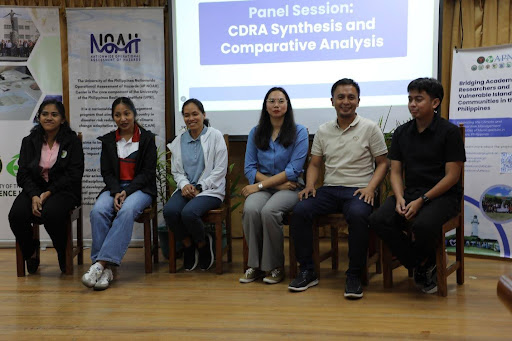
At the center of the symposium was the consolidation of Climate and Disaster Risk Assessment (CDRA) results and Risk Sensitive Policy Interventions (RSPI) across all municipalities. Rather than treating these as separate outputs, the discussion focused on their collective implications for the province. A key moment in this process was the presentation results by local government unit representatives themselves. This reflected not only ownership of the data, but also the growing capacity of local governments to interpret and communicate their own risk profiles.

This was further deepened through the CDRA Synthesis and Comparative Analysis Panel Session, where municipal results were placed side by side to show both shared patterns and distinct local conditions. The discussion made it clear that while each municipality faces different expressions of risk, there are also provincial-level dynamics that require coordinated responses. Exposure, vulnerability, and hazard intersect in ways that cut across administrative boundaries, reinforcing the need for more integrated planning across Batanes.
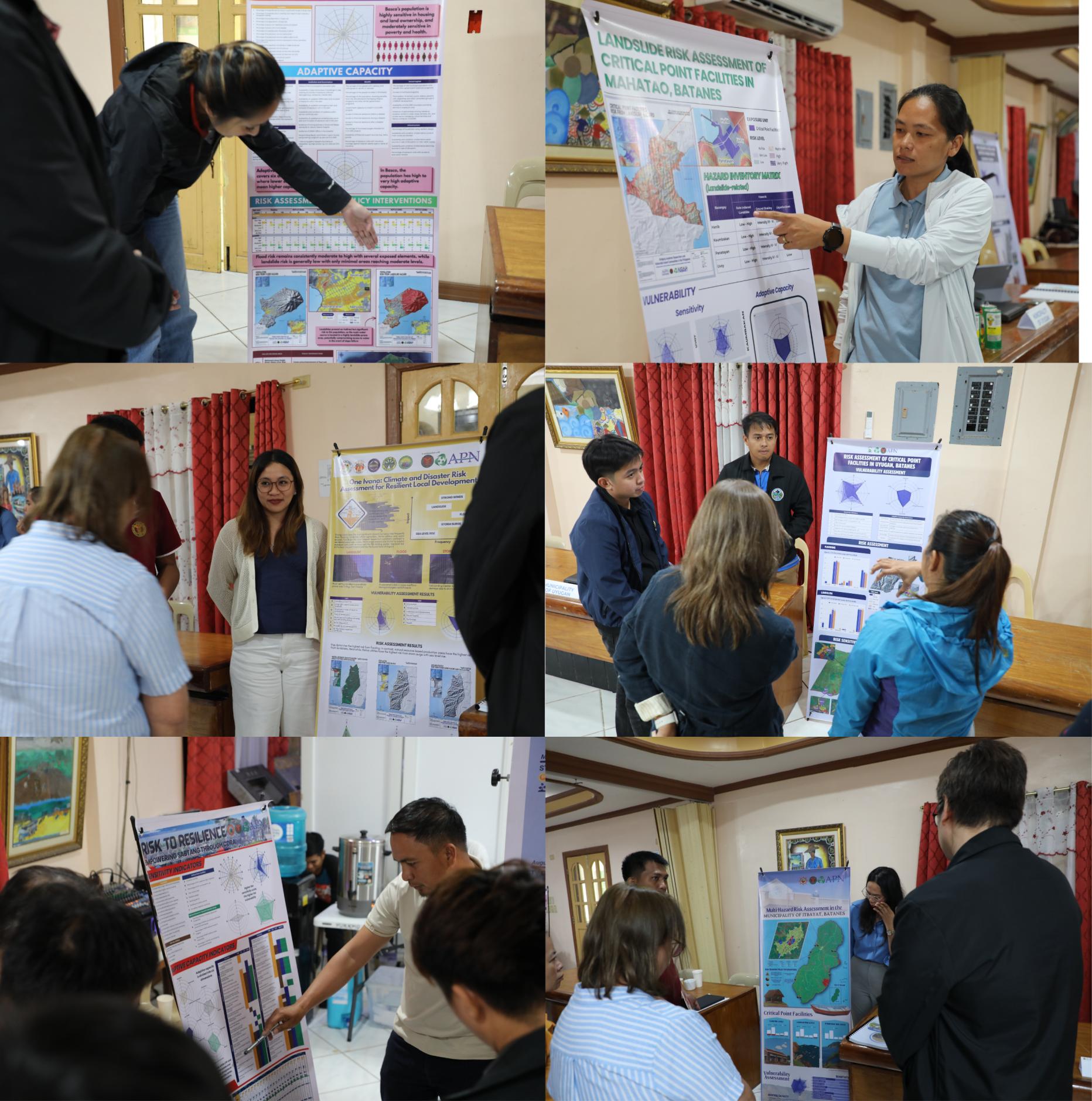
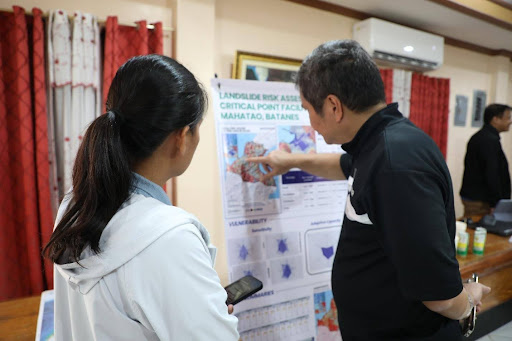
A key part of the symposium was the technical exchange space, where participants moved through booths showcasing posters, maps, and CDRA reports per LGU. These materials were the result of a series of peer-to-peer mentoring sessions conducted on 14, 15, and 19 April, which guided LGU representatives in translating technical outputs into clear and meaningful visualizations. This process was important because it shifted the role of LGUs from simply presenting data to actively shaping how their results are communicated and understood. The exchange allowed participants to compare outputs across municipalities and engage more deeply with how risk is distributed across the province.
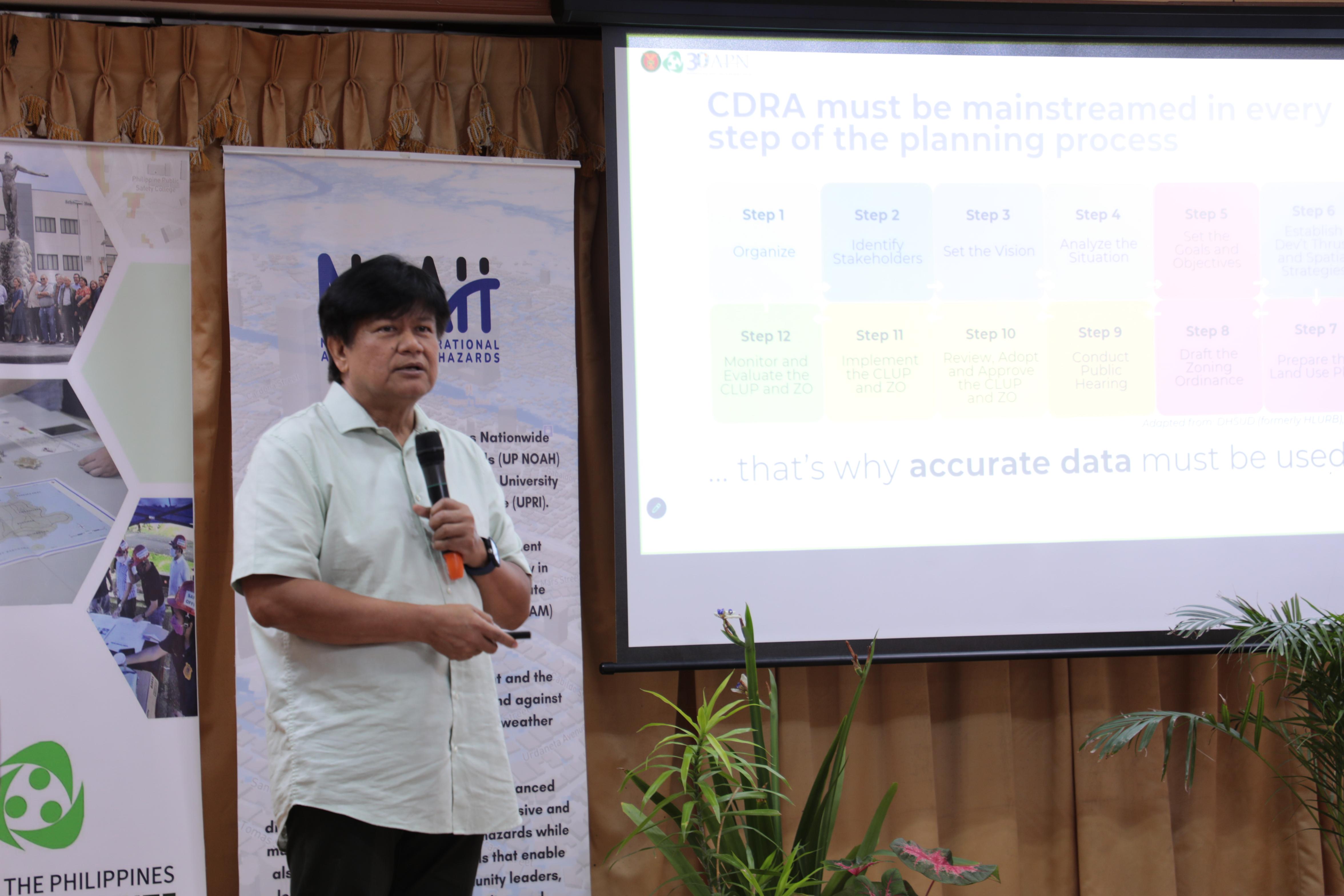
Across all sessions, the symposium consistently returned to one central point. Risk information only becomes meaningful when it informs decisions. Discussions on probabilistic hazard and risk assessment emphasized the need to move beyond single-scenario thinking, especially in a context of increasing uncertainty. Sessions on nature-based solutions and the enabling role of policy further highlighted that resilience is shaped not only by technical understanding, but also by ecological systems and governance structures that determine how interventions are carried out in practice.
The symposium also fulfilled one of the core objectives of the project, which is the learning of early career researchers from the context of Batanes. Throughout the project, they were not only involved in data processing and technical work, but were also immersed in the lived realities of the communities they were studying. This allowed them to understand resilience not only as a technical construct, but as something deeply grounded in local experience, practice, and adaptation. In many ways, Batanes became a learning space where theory and field realities continuously shaped each other.
More than anything, the symposium highlighted the importance of embedding CDRA and RSPI results into local development planning. This was not framed as an additional step, but as the actual pathway through which technical work gains relevance. The outputs only matter if they are translated into planning entry points, investment priorities, and institutional decisions that shape how municipalities move forward.
As the culmination of the project, the symposium reflected the full trajectory of resilience building in Batanes, from assessment and validation to synthesis and application. It showed that the strength of the process lies not only in the academic aspect of the outputs, but in the collective effort to interpret, refine, and use them in a way that is grounded in local realities.
In the end, what the symposium made clear is that resilience is not just about producing knowledge. It is about how it is bridged with communities. That process, in Batanes, is inherently shared, iterative, and continuously shaped by both science and lived experience.