
A hundred teachers from both public and private schools joined ‘Project ALERTO: Advancing Learning and Education on Resilience Through Outreach,’ a two-day capacity building on disaster risk reduction and climate change conducted on May 12 to 13, 2026 at the Sabang Pavilion, Bulan, Sorsogon. The training addressed Domain 1 of the Philippine Professional Standards for Teachers on ‘Content Knowledge and Pedagogy.’
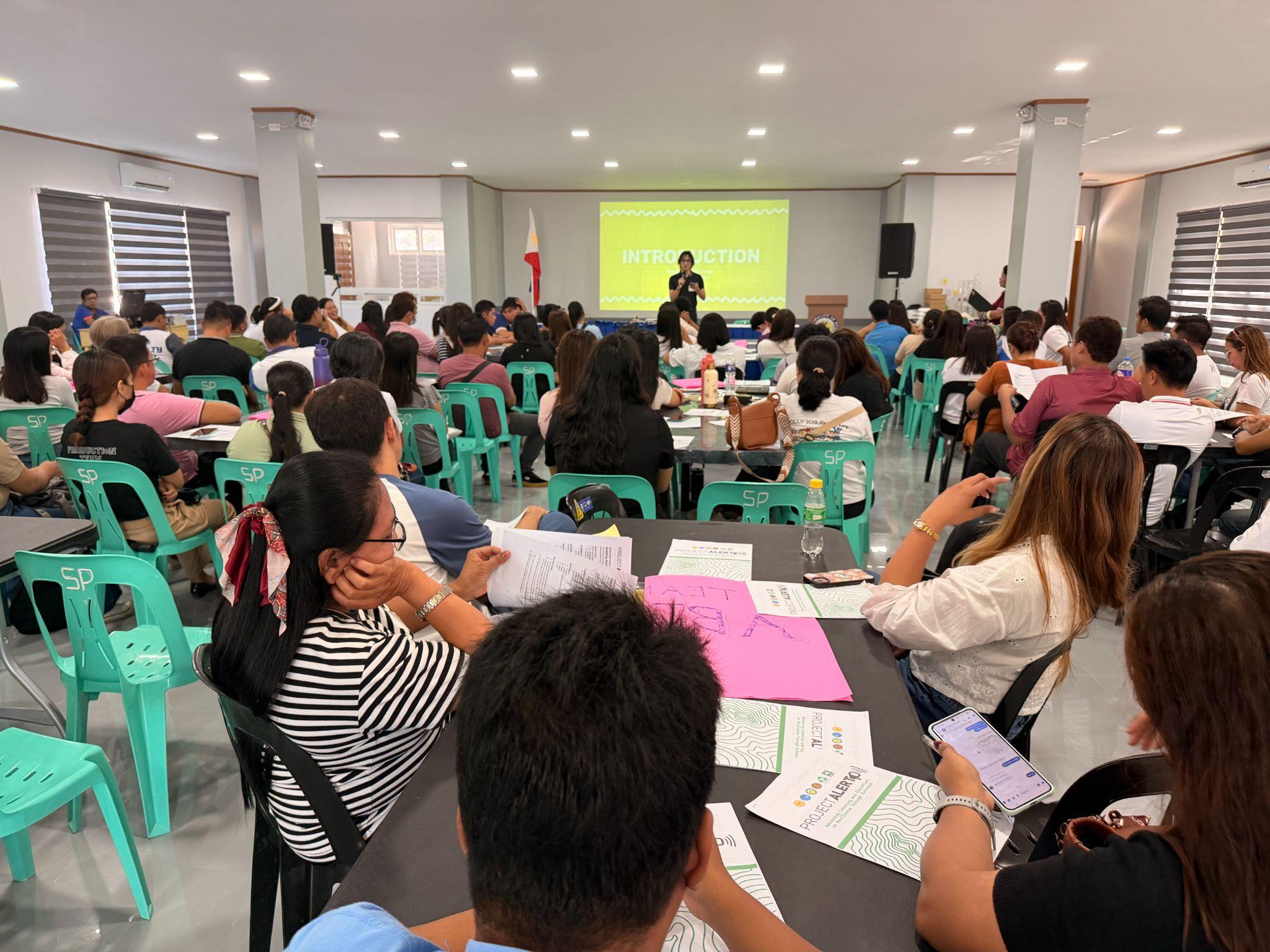
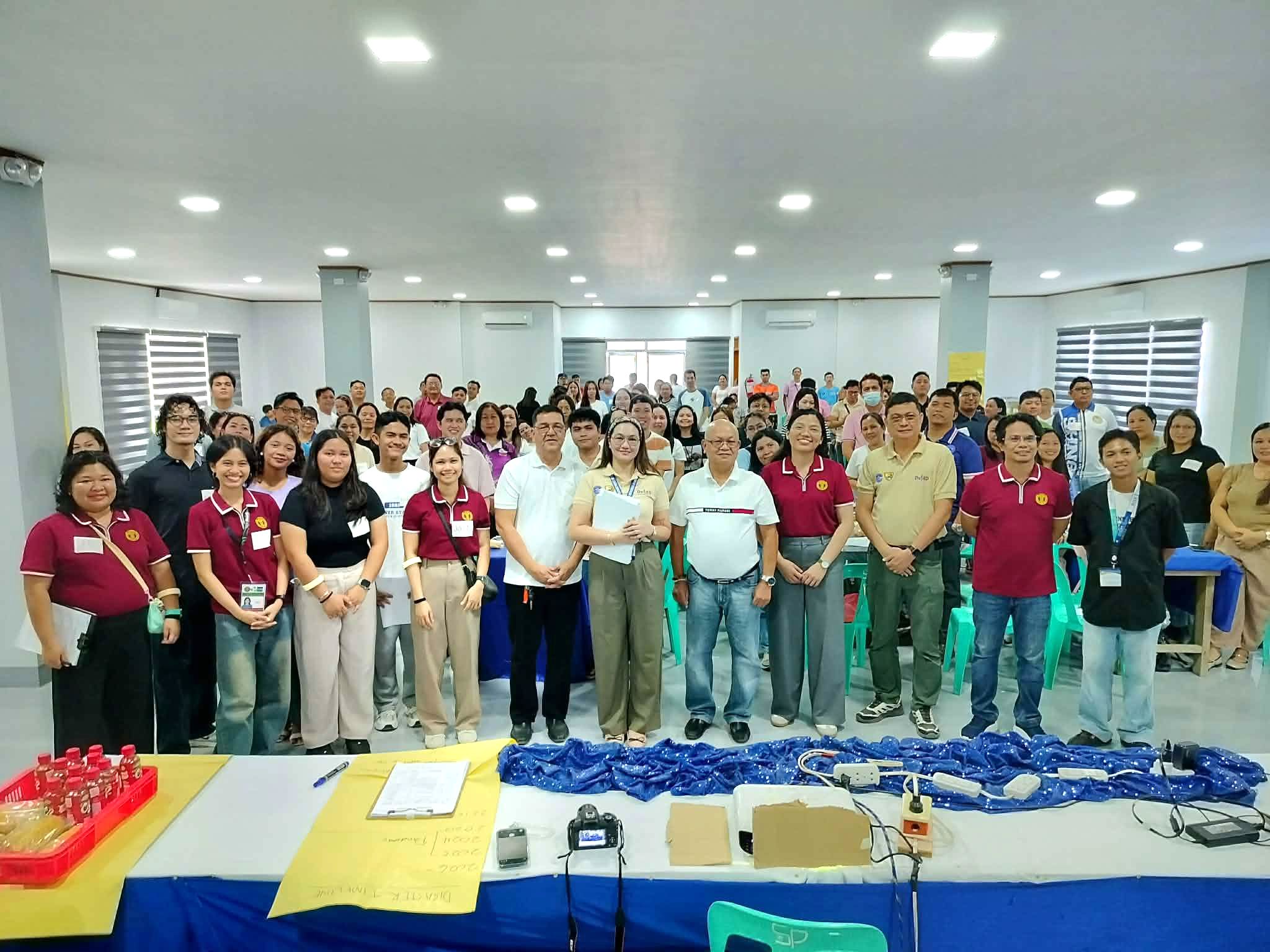
The initiative was led by Project Wings PH Head Raymond Gallego in partnership with the Department of Education Sorsogon and Bulan Municipal Disaster Risk Reduction and Management Office and with support from Mayor Romeo A. Gordola. Members of the Knowledge Sharing Division, Education Division and Hazard Assessment Team served as resource persons for the capacity building together with volunteer-facilitators from the youth organization, Operation SEA.
The activity started with the Disaster Timeline facilitated by Supervising Researcher Chris Sanchez where participants were instructed to map out disasters they can recall in chronological order. The activity was designed to elicit stories and recall firsthand experiences which may be similar with other participants. It was followed by the lecture on Natural Hazards and DRRM/CCA Concepts as discussed by Dr. Likha Minimo, Director of the Knowledge Sharing Division.
The second activity called Headlines from the Future was guided by Supervising Design Specialist Kel Almazan where participants were asked to envision headlines that reflect their vision of Bulan twenty years from now. To achieve their imagined future, Dr. Likha Minimo introduced applications that teachers may use to explain hazards found in Bulan, including the NOAH Studio and Geo Risk PH.
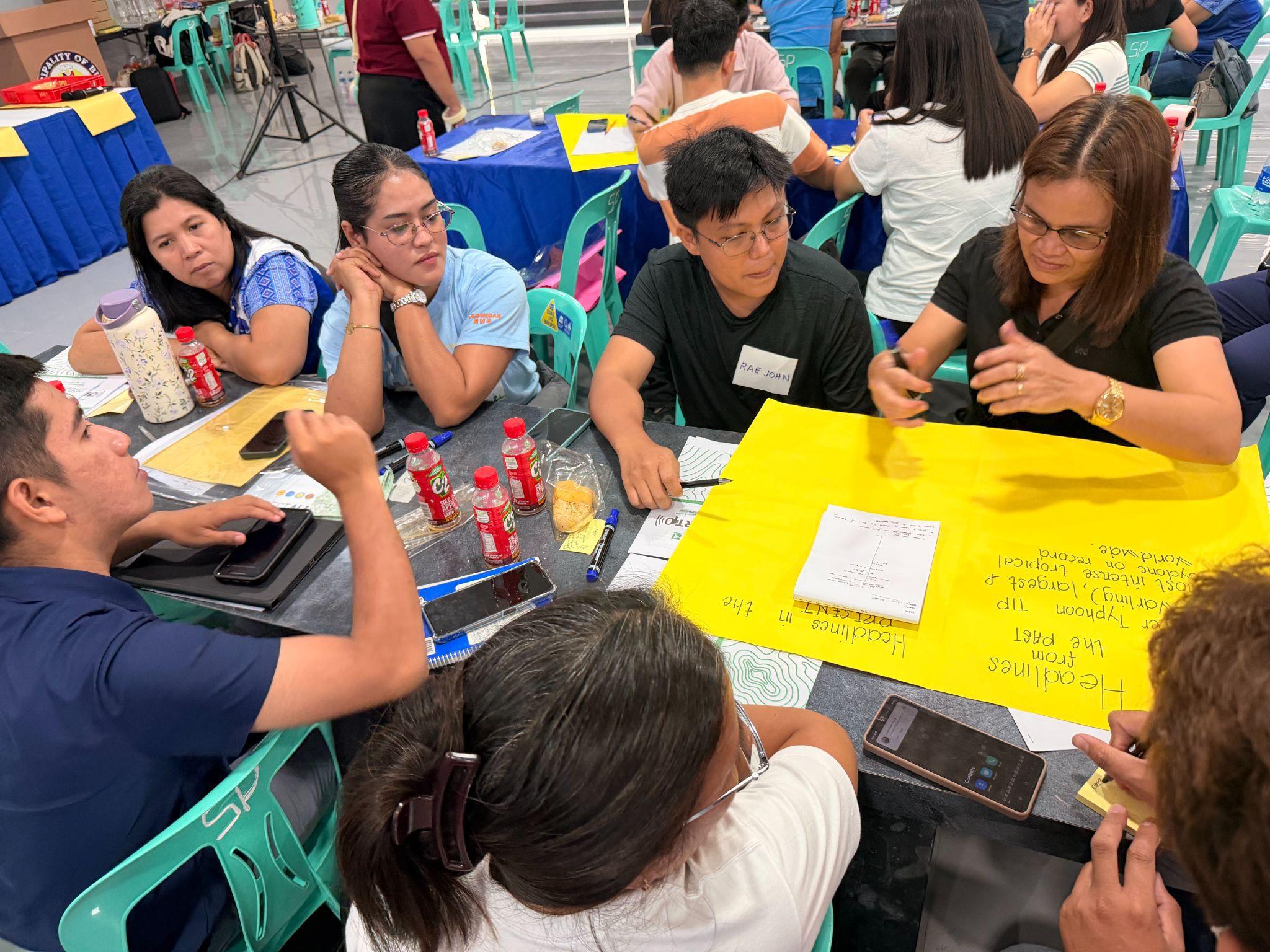 Teachers brainstorming on their vision for Bulan
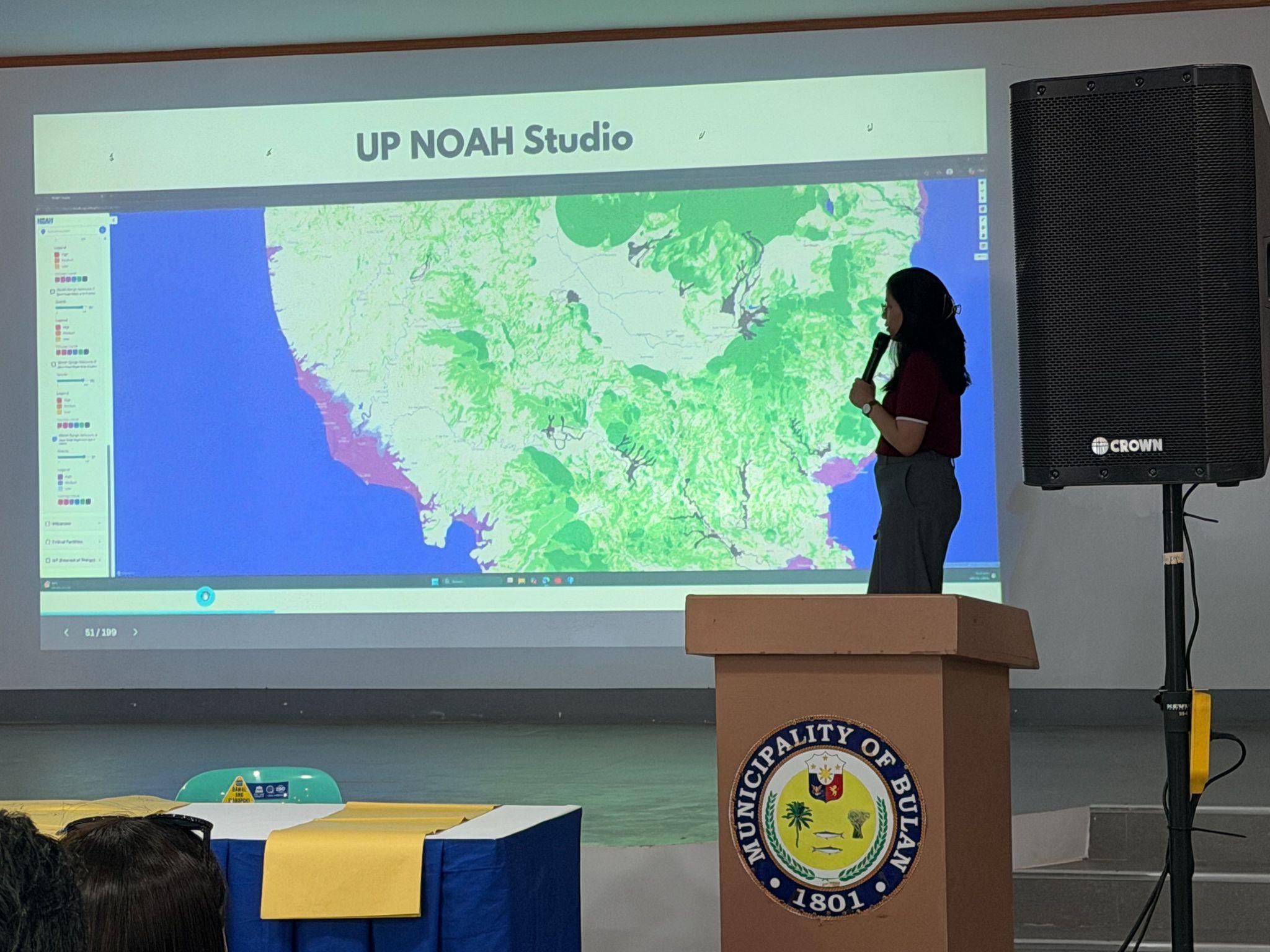 Dr. Likha Minimo presenting the NOAH Studio
Senior Research Associate Evangeline Ortiz of the Education Division and Senior Science Research Specialist Jolly Sulapas of the Hazard Assessment Team explained the low-cost educational materials that demonstrate different science concepts, such as resonance and slope stability. Before the workshop, the training team consulted Mr. Eligio Jr. Obille and Mr. Anthony Guiller Urbano from the National Institute for Science and Mathematics Education Development on the effective use of these materials in line with the curriculum. These include the Ashfall Model, Eraser Slide, Slinky Earthquake Waves, Bagyo in a Bottle and the BOSS Model. During the workshop, teachers quickly assembled the materials which they also took home with them for use in their own classrooms.
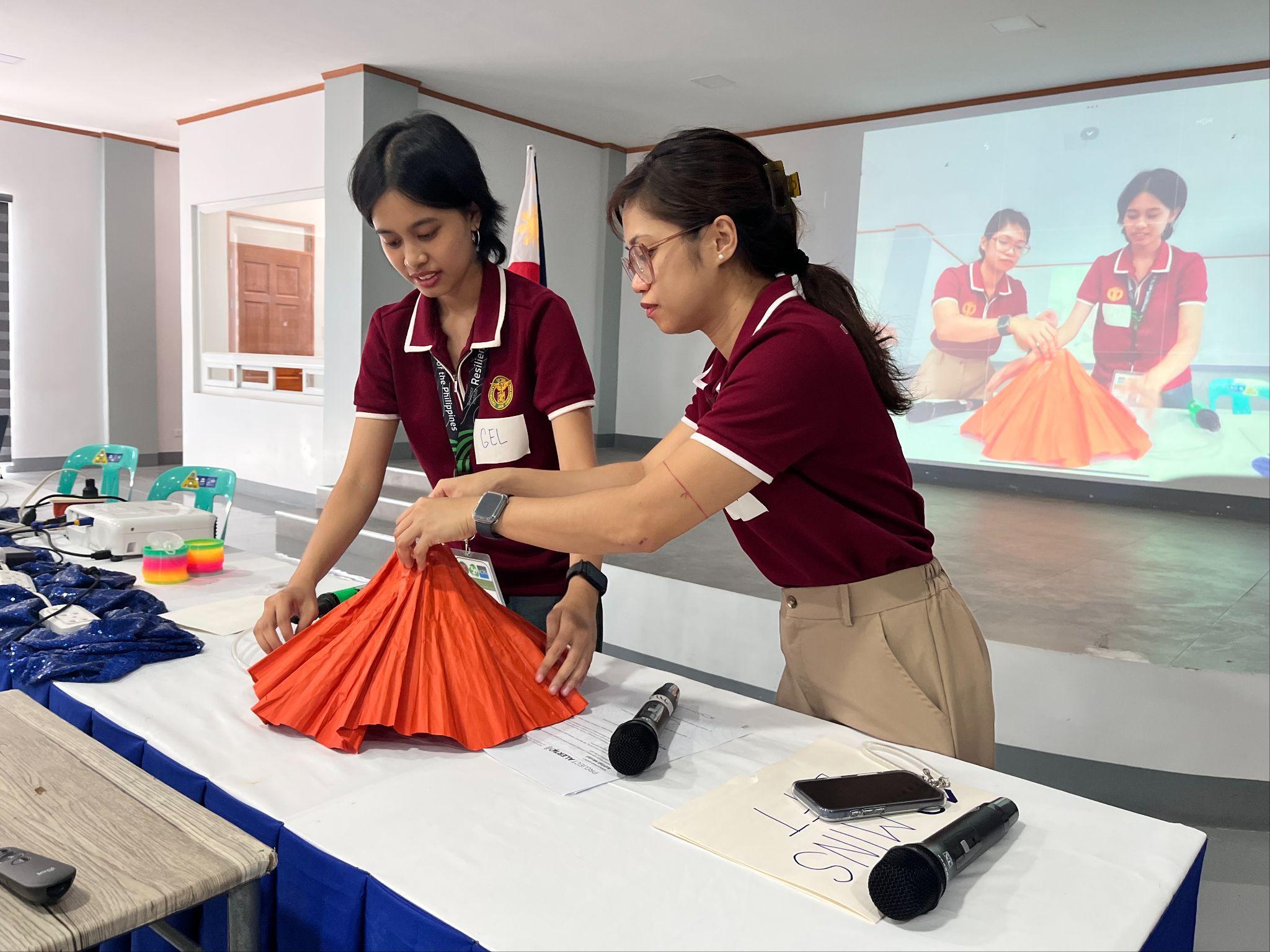 Ms. Gel Ortiz and Ms. Jolly Sulapas explaining the Ashfall Model
To emphasize the importance of natural resources, PhD student at Eötvös Loránd University Ms. Naomi Irapta delivered a lecture on Geodiversity. At the end of the first day, the teachers were tasked to apply their learning and prior knowledge into short-form content through the STEM Reels activity.
Dr. Likha Minimo started the second day with a discussion of the Ridge-to-Reef Approach. These concepts should be understood by those who have high exposure to hazards which led to the Pagsasalin ng Katatagan activity with Chris Sanchez. Participants went around the room to translate terms representing the Ridge-to-Reef approach into the Bikol language. He highlighted the value of translations in helping communities prepare for disasters.
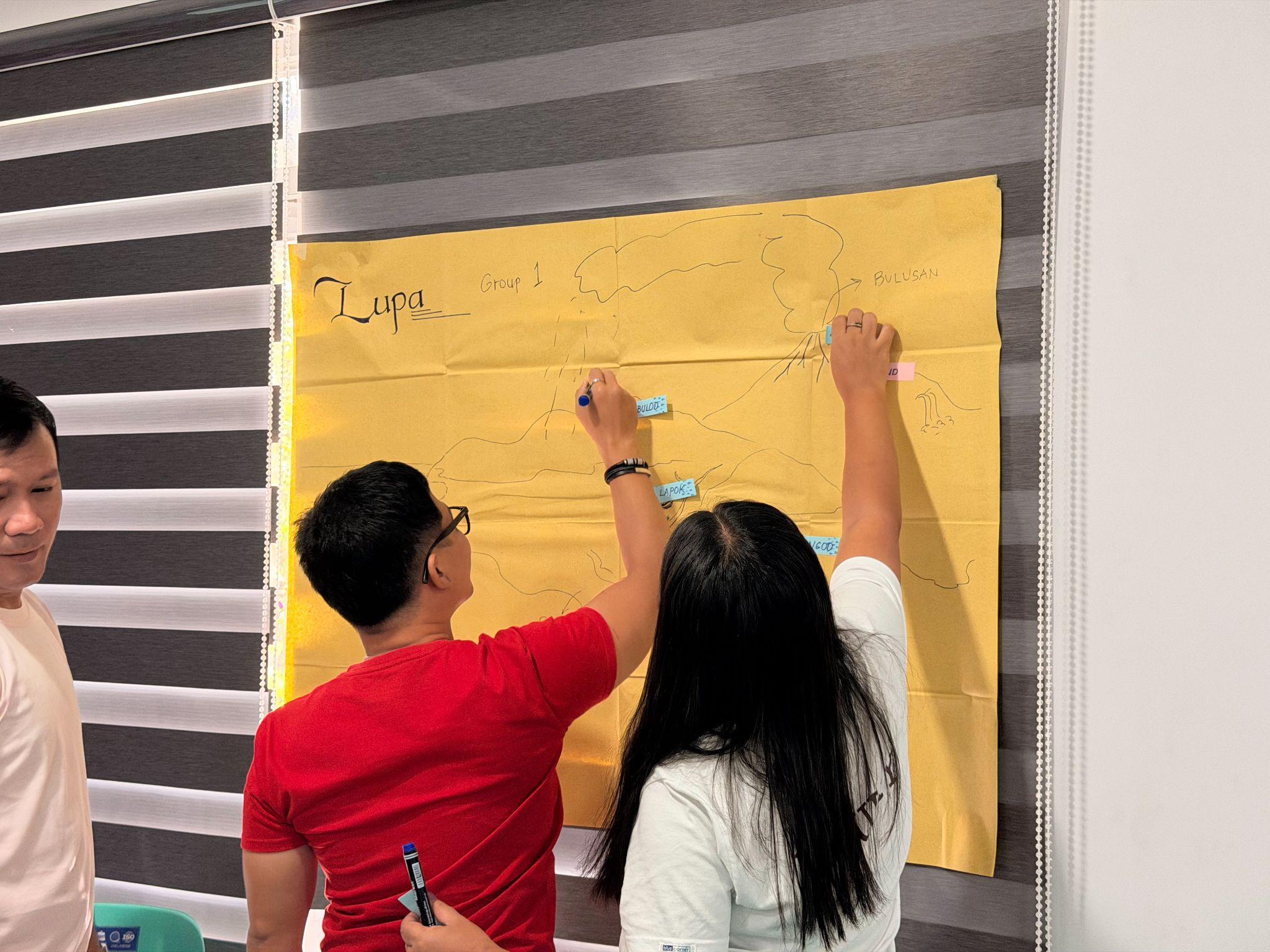 Participants adding their own translations of the Ridge-to-Reef approach
The UPRI Creative Outputs were also shared with the teachers to highlight different ways in teaching disaster risk reduction and climate change adaptation, from boardgames to performances.
Vulnerabilities vary depending on resources available to individuals. In the session on the Sustainable Development Goals, Dr. Likha Minimo stressed that climate action is intertwined with the issue of inequality. To navigate privilege and inequality, Kel Almazan focused on participatory tools that can be used in the classroom to analyze societal issues related to disaster risk reduction and climate change adaptation.
As a culminating activity, the participants had to prepare an 8-minute presentation discussing Earth Resources, Earth Systems, and Earth Processes. Even with limited time and resources, teachers were able to showcase their creativity. One group opened the activity with a dance number, another brought their own experiment demonstrating the different properties of soil while another group gamified Earth systems. Ms. Bernadette Bedis and Mr. Joseph John Perez of DepEd Sorsogon, Mr. Antonio Gilana of the Bulan DRRMO, and Dr. Likha Minimo served as the panel of reactors for the group presentations.
Sir Joseph John Perez of DepEd Sorsogon closed the event by mulling over the attention that should be given to science and reminding teachers that there should always be ‘konsensya’ in ‘siyensya’ as instrumental in shaping the minds and hearts of the next generation.