
By Dainty Rabang (Education Division), Richard Ybañez (Education Division), Lea Serrano (Hazard Assessment Team, NOAH Division), Patricia Reyes (Knowledge Sharing Division)
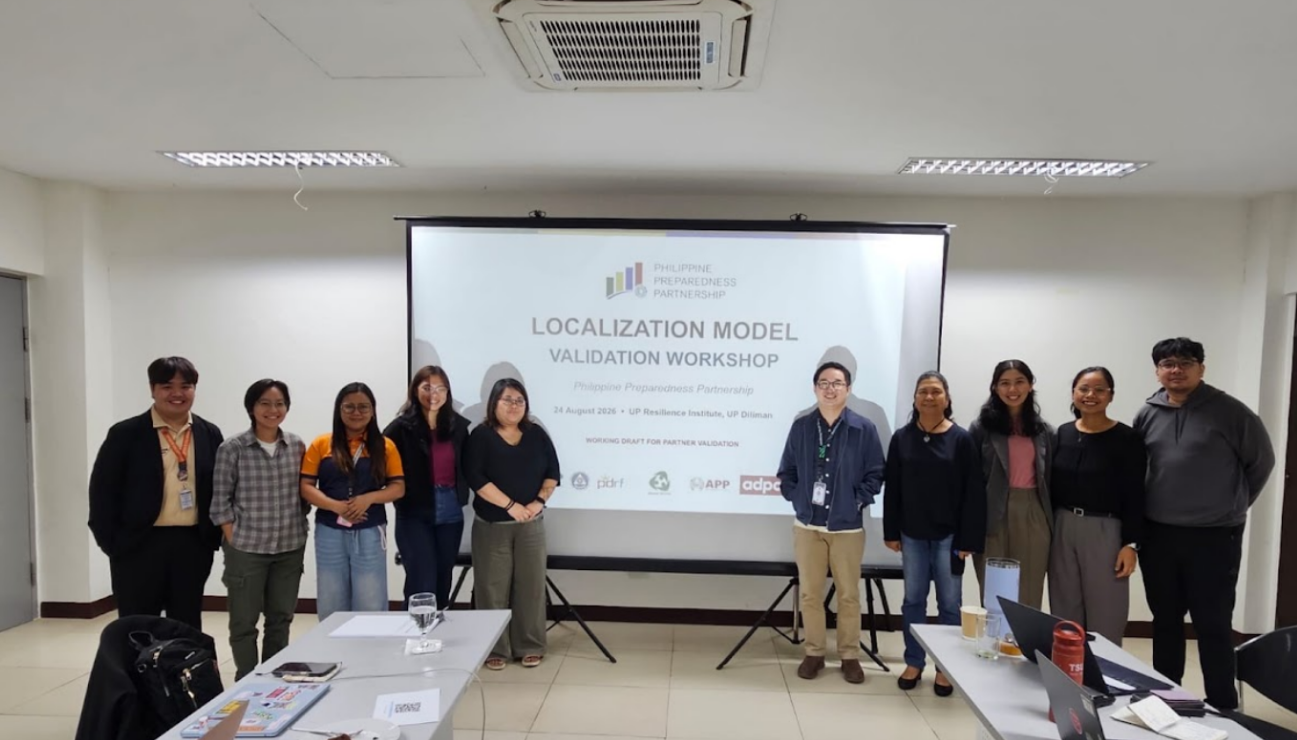
Quezon City — The University of the Philippines Resilience Institute (UPRI) facilitated the Localization Model Validation Workshop of the Philippine Preparedness Partnership (PhilPrep) on 21 August 2026 at the UP Resilience Institute Building in Quezon City.
The workshop brought together representatives of PhilPrep’s four partner institutions: the UP Resilience Institute, Office of Civil Defense (OCD), Philippine Disaster Resilience Foundation (PDRF), and Center for Disaster Preparedness (CDP). The activity provided a venue for partners to validate and refine the PhilPrep Localization Framework, ensuring that it reflects the partnership’s multi-stakeholder perspective, collective experience, and shared commitment to locally led disaster resilience.
PhilPrep defines localization as:
“Empowering local multi-stakeholder actors—cities, municipalities, and barangays—to become leaders and champions in building safer, more resilient communities that contribute to a sustainable future.”
The framework builds on the experience of Project Talagháy, implemented in Tarlac from February 2025 to June 2026. As the first project jointly implemented by all four PhilPrep partners, Project Talagháy served as an empirical case for understanding how the partnership can support localization across different levels of governance.
Lessons from Project Talagháy, together with key informant interviews, synthesis of implementation reports, and the inputs from the June 2026 PhilPrep National Localization Summit, informed the development of the Localization Framework. The framework is intended to guide PhilPrep partners in contextualizing and operationalizing localization in disaster risk reduction and management (DRRM) initiatives throughout the Philippines.
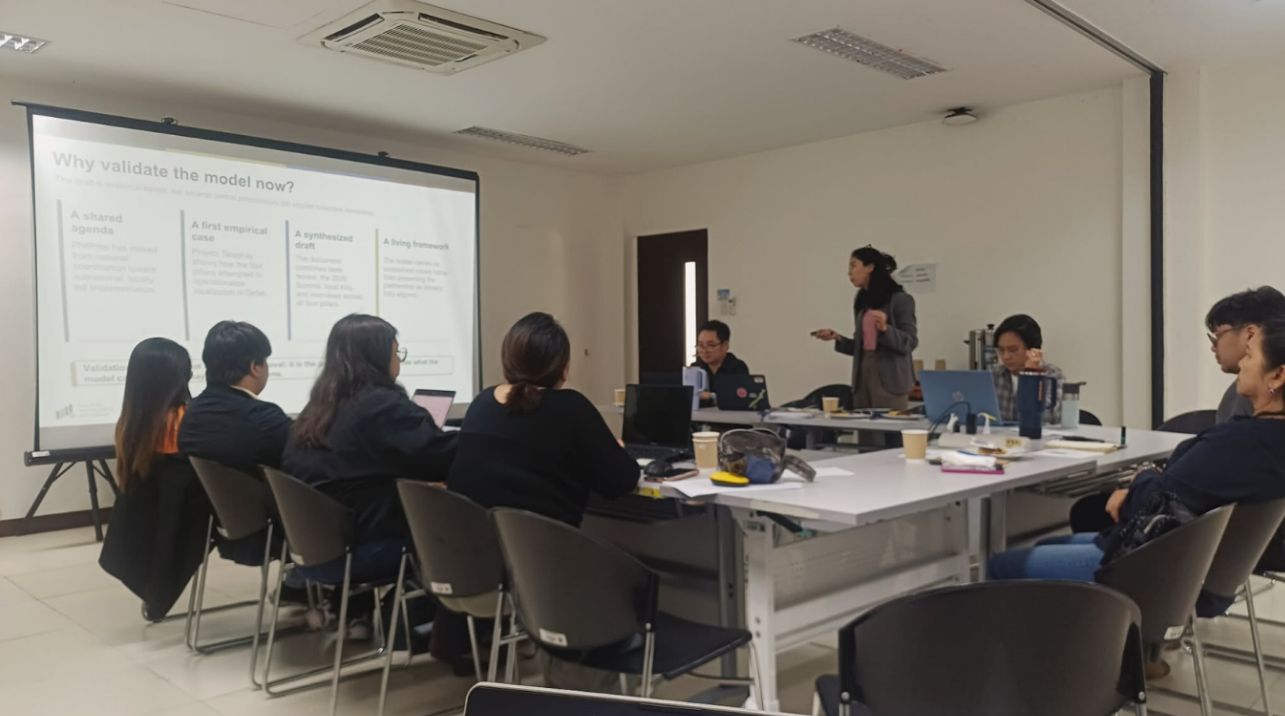
Through the validation workshop, the partners reviewed how the framework can strengthen collaboration among government, academe, civil society, the private sector, and local communities. It also emphasized the importance of enabling local actors to lead preparedness and resilience-building efforts that respond to their own contexts, capacities, and priorities.

This initiative is supported by the Asian Disaster Preparedness Center (ADPC) through the Asian Preparedness Partnership (APP), a regional multi-stakeholder network that brings together national preparedness partnerships in Cambodia, Lao PDR, Myanmar, Nepal, Pakistan, the Philippines, and Sri Lanka.
As the Philippines’ national preparedness partnership, PhilPrep is a multi-sectoral quadripartite partnership composed of the Office of Civil Defense, UP Resilience Institute, Philippine Disaster Resilience Foundation, and Center for Disaster Preparedness. PhilPrep works to empower and support local actors by enabling leadership at all levels, helping communities build safer, more resilient, and self-reliant futures.
Related Links:
PhilPrep through UP Resilience Institute installed Internet of Things Flood and Earthquake Sensors in Tarlac City. https://resilience.up.edu.ph/philprep-through-up-resilience-institute-installed-internet-of-things-flood-and-earthquake-sensors-in-tarlac-city/