
The UP Resilience Institute (UPRI) welcomed participants from Batches 10 and 11 of the Philippine Public Safety College (PPSC) for an educational visit focused on strengthening their understanding of disaster risk reduction and management and climate change adaptation and mitigation (DRR-CCAM).
The visit provided an opportunity for the PPSC participants to learn more about UPRI’s work in advancing science-based disaster and climate resilience, as well as the Institute’s role in translating research, technology, and risk information into practical applications for government and communities.
Learning About UPRI’s Innovations and Initiatives
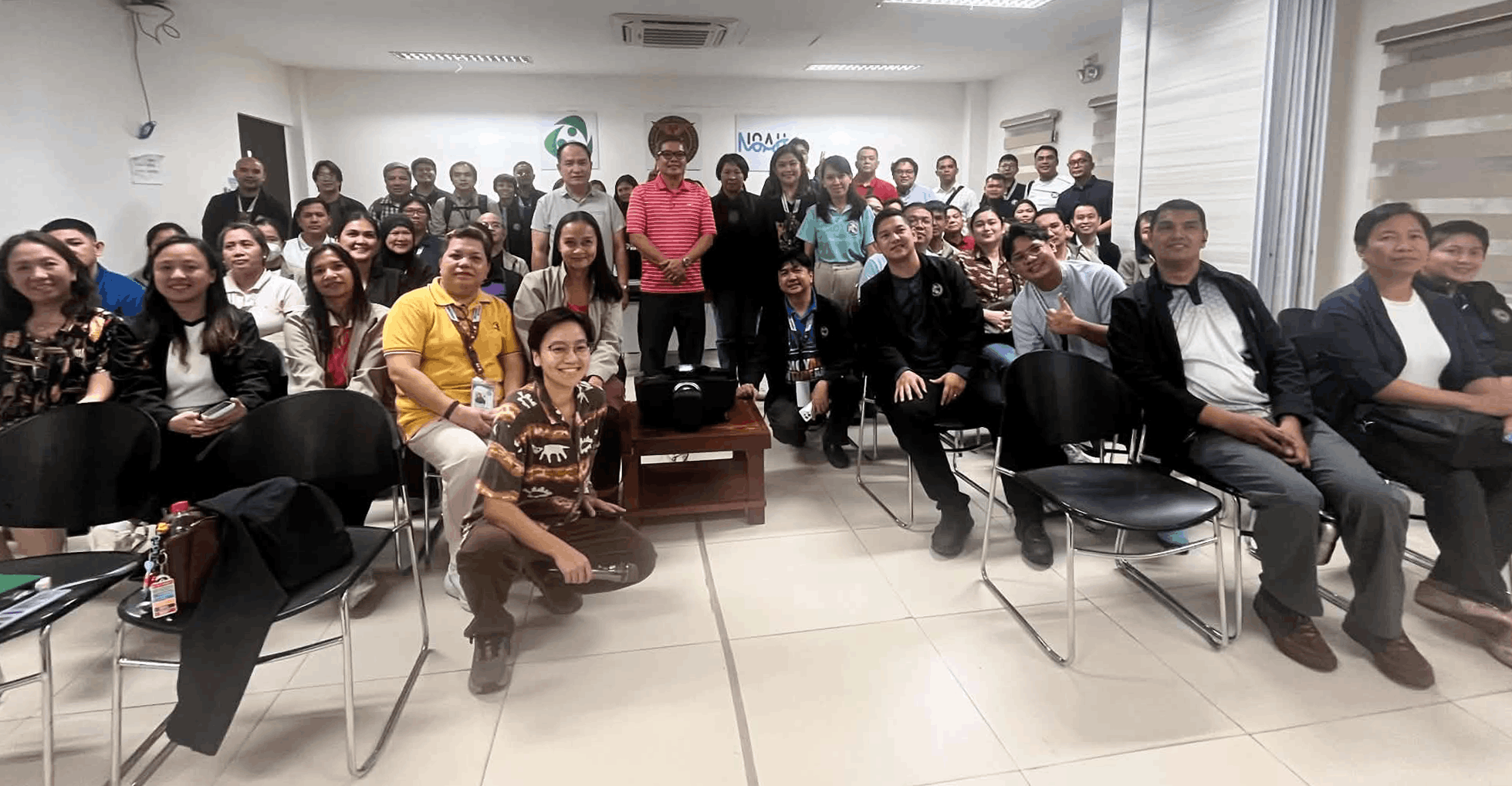
PPSC Batch 10 and 11 with Dr. Mahar Lagmay
During the visit, the participants were introduced to UPRI’s recent innovations, research initiatives, and programs in DRR-CCAM. The presentations highlighted how scientific research, geospatial information, technology, and risk analytics can support decision-making and strengthen preparedness and resilience.
The participants were also given an overview of the different programs and initiatives being undertaken across UPRI, providing them with a broader understanding of how the Institute brings together science, technology, policy, knowledge sharing, and partnerships in addressing disaster and climate risks.
This was followed by a walkthrough of UPRI’s offices and divisions, allowing the participants to gain a closer look at the people and teams behind the Institute’s various research, technical, knowledge-sharing, and innovation activities.
Comparing Disaster Risk Management in the Philippines and Japan
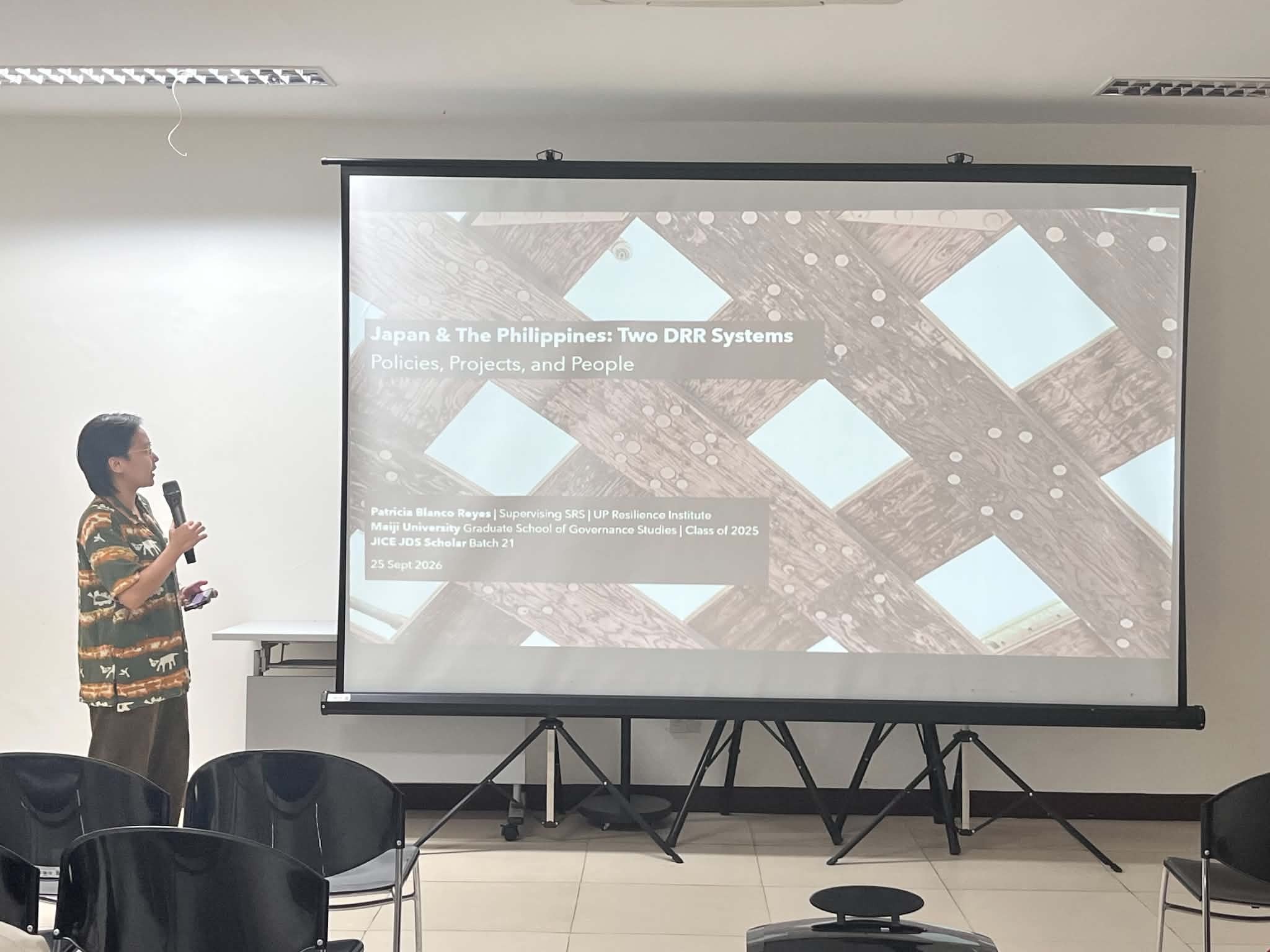
Supervising Science Research Specialist Patricia Reyes presents a comparison of the DRR systems in Japan and the Philippines
As part of the learning exchange, Patricia Reyes of UPRI’s Knowledge Sharing Division also facilitated a discussion comparing the disaster risk management systems of the Philippines and Japan.
The discussion looked beyond differences in policies and institutions and explored how disaster risk management is reflected in infrastructure projects, community preparedness, disaster education, volunteerism, and the everyday practices of the people. It also highlighted the importance of understanding the respective contexts of the two countries when examining approaches to disaster resilience.
The session served as a useful introduction for the participants as they prepare for their upcoming field trip to Japan, where they will have the opportunity to observe and learn from Japan’s disaster risk management practices firsthand.
Strengthening Knowledge Exchange for Resilience
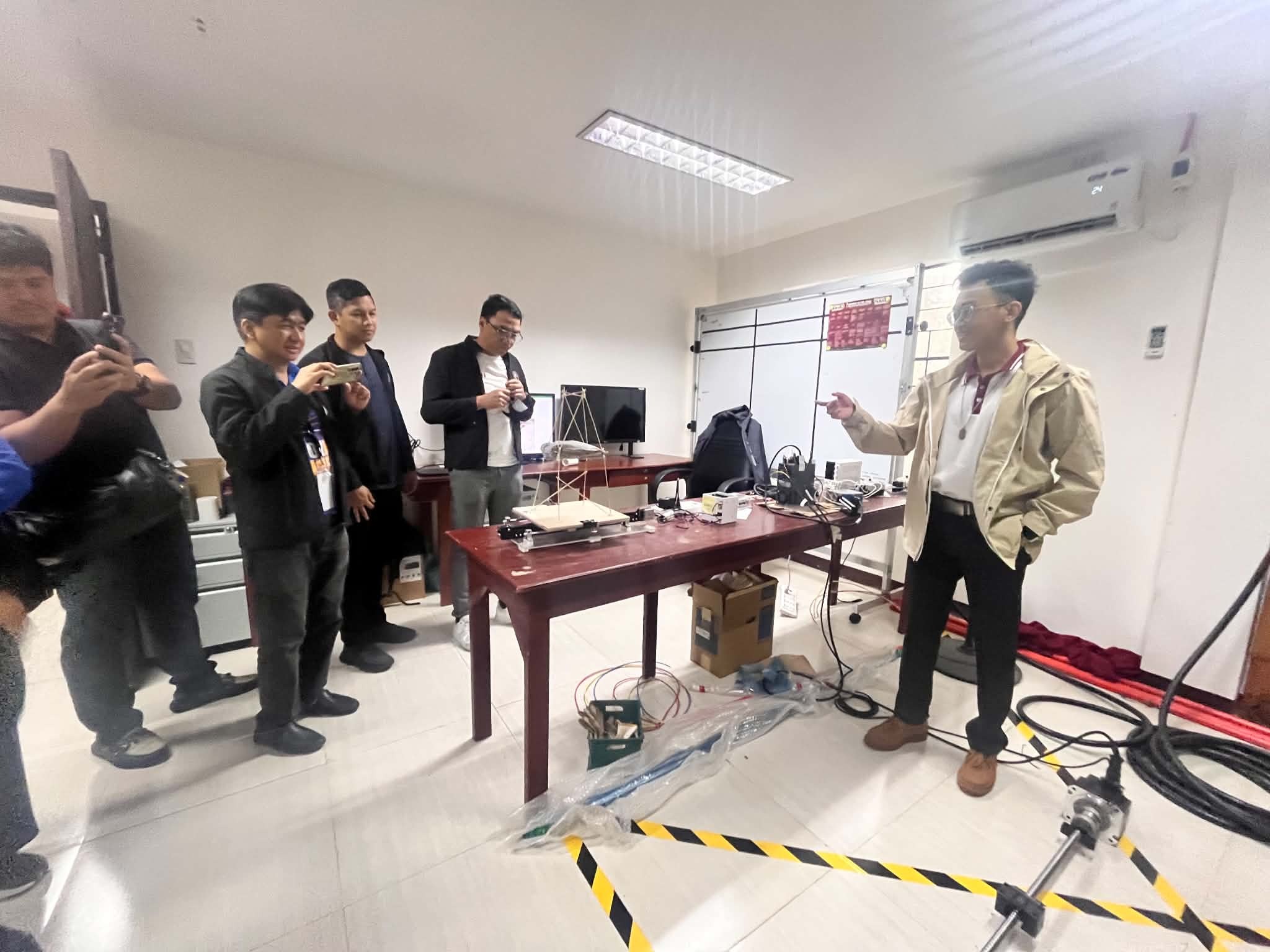
John Christian Cabang presents the latest development of the shake table with PPSC
The educational visit reflects the importance of knowledge exchange and continuous learning among public safety and disaster risk management professionals. For UPRI, engagements such as this provide an avenue to share scientific knowledge and innovations while also learning from the experiences and perspectives of practitioners working on the front lines of public safety.
Through these engagements, UPRI continues to support the development of a stronger community of practitioners who can use science, risk information, and evidence-based approaches to inform disaster preparedness, response, recovery, and climate resilience efforts across the Philippines.