
by Keanu John Pelitro, Aira Joy Delos Angeles, Klara Bilbao, and Dr. DJ Darwin Bandoy
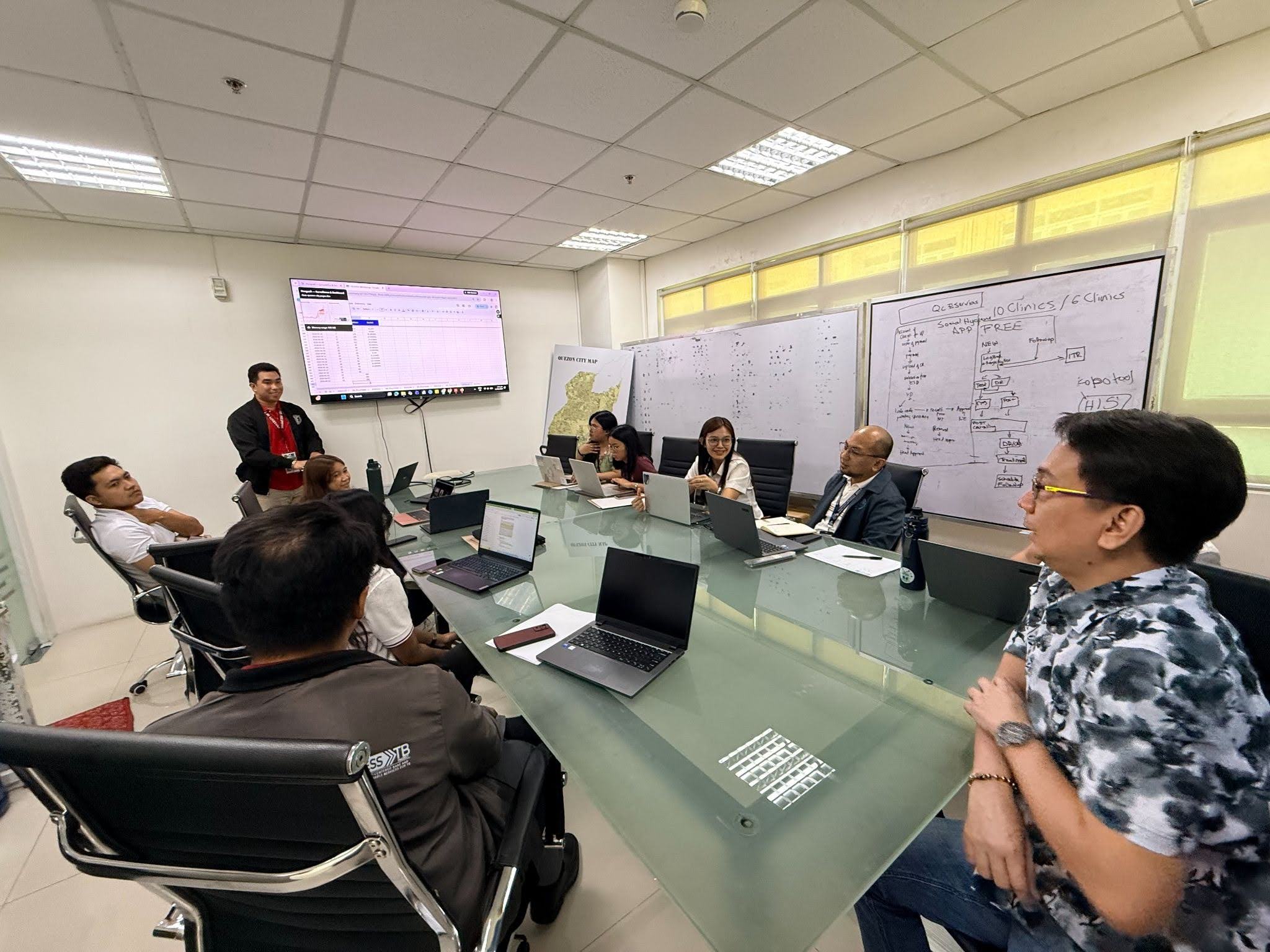
Quezon City, June 11, 2026 — Strengthening local dengue surveillance requires not only scientific evidence but also practical tools that can support timely public health decision-making. In line with this goal, the University of the Philippines Resilience Institute–Research and Creative Work (UPRI-RCW) conducted a technical orientation on the DengueR (Dengue Risk) Dashboard with the Quezon City Epidemiology and Surveillance Division (QCESD). The activity introduced the dashboard’s forecasting and decision-support capabilities while providing a venue for technical discussions and operational feedback to support its application in local dengue surveillance.
The orientation forms part of UPRI-RCW’s continuing work under the Center for Climate and Health glObal Research on Disasters (CORD) Project. This international research initiative advances anticipatory action by developing science-based tools and strategies to address climate-sensitive health risks. UPRI-RCW is one of the consortium members of the CORD Project, which is coordinated by Tufts University and brings together seven universities from climate-vulnerable regions in Africa and Asia. Through collaborations with practitioners, policymakers, and local government partners, the project supports the development of research-based approaches that strengthen disaster preparedness, public health, and community resilience.
The meeting was attended by Dr. Rolando Cruz, Chief Epidemiologist of the Quezon City Epidemiology and Surveillance Division, together with members of the QCESD team. Representing UPRI-RCW were Dr. DJ Darwin Bandoy, who joined virtually, Junior Project Assistant Mr. Keanu John Pelitro, members of the RCW team, and two interns assigned to the division.
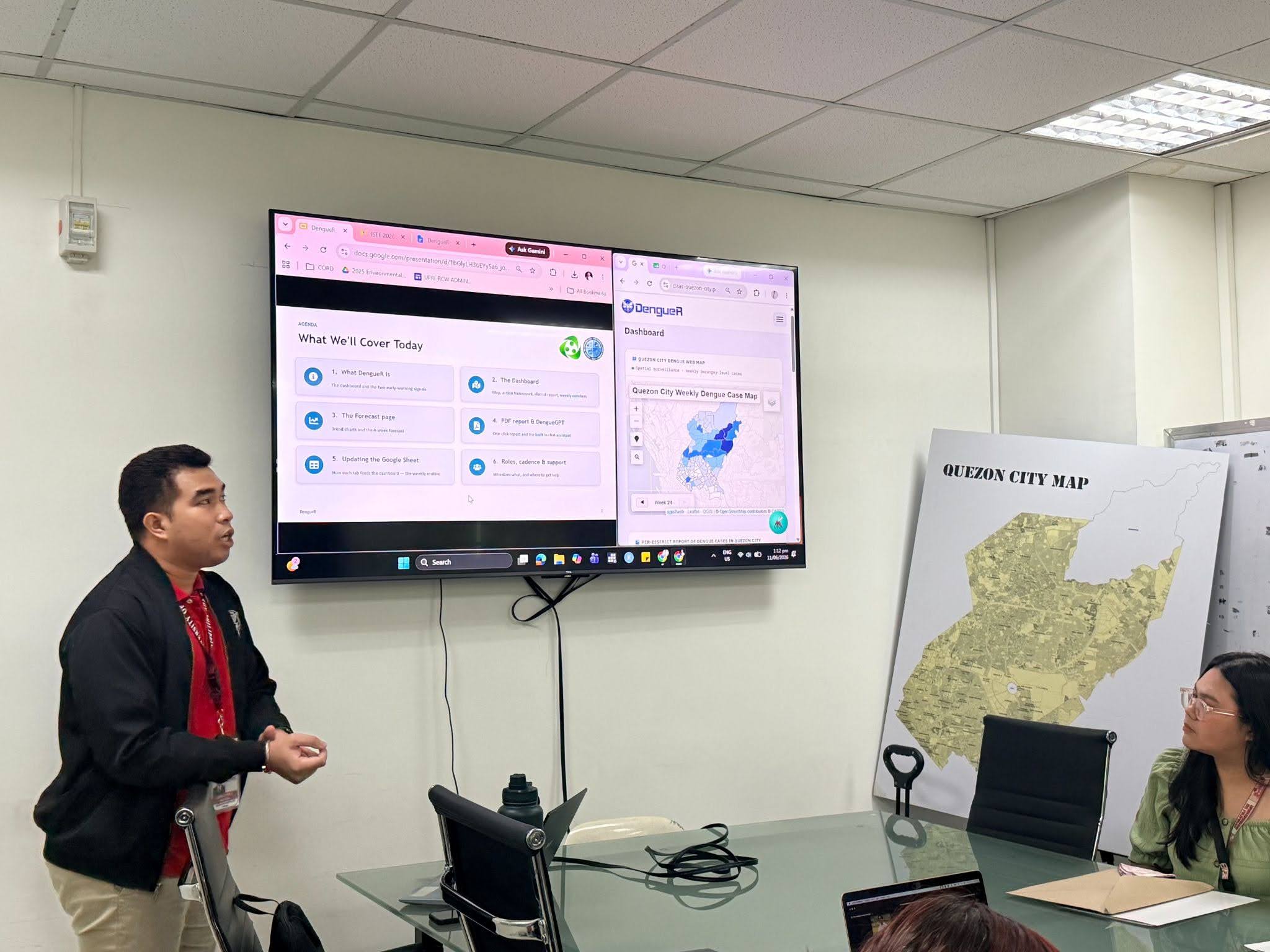
Leading the technical orientation, Mr. Pelitro guided participants through the DengueR Dashboard, demonstrating how its interface and analytical tools can support local government units (LGUs) and barangays in monitoring dengue trends, generating forecasts, and informing timely interventions. The session introduced the dashboard’s key modules and discussed how its features could complement existing dengue surveillance processes within the Quezon City Health Department.
Mr. Pelitro also presented the scientific foundations of DengueR, highlighting the research behind its forecasting capabilities. He explained the application of transmission acceleration (TA) as an early indicator of dengue outbreaks and discussed the studies that established rainfall thresholds and accumulated weekly rainfall as complementary inputs for dengue forecasting. He likewise presented the comparative performance of the transmission acceleration approach against conventional outbreak detection methods, demonstrating its potential to identify outbreaks earlier while requiring relatively low computational resources.
To demonstrate the dashboard’s practical applications, Mr. Pelitro simulated scenarios in which transmission acceleration exceeded established thresholds and addressed questions from the QCESD team regarding rainfall inputs and forecasting outputs. The discussion also explored the potential integration of daily rainfall data into the platform while emphasizing that dengue case data remain the primary basis for forecasting, with rainfall serving as a complementary predictor.
The orientation also featured demonstrations of the dashboard’s case density mapping, forecasting, report generation, and DengueGPT modules. Participants discussed potential enhancements, including the integration of Quezon City-specific health resources into DengueGPT and future sessions to familiarize users with updating and maintaining the system.
Beyond demonstrating the platform’s capabilities, the orientation served as a technical consultation between researchers and local public health practitioners. Members of the QCESD team shared recommendations to further improve the dashboard’s operational applicability, including incorporating population density into barangay-level case density maps, integrating updated census information, adding historical filtering options for district-level reports, refining forecast visualizations, and improving report generation for barangay-level dissemination.
Participants also discussed aligning the dashboard’s Anticipatory Action Framework with Quezon City’s existing dengue response protocols, including intervention phases, clustering strategies, chemical control measures, ovitrap deployment, and other operational guidelines. These discussions highlighted the importance of ensuring that the dashboard supports not only early warning but also locally relevant public health actions.
The orientation reflects UPRI-RCW’s continuing collaboration with the Quezon City Health Department under the CORD Project to strengthen science-based dengue surveillance and anticipatory public health action. By combining research findings with operational insights from local health practitioners, the initiative supports the continued refinement of DengueR as a decision-support tool for local governments.