Article Written By: Maria Regina Jimenez, David Josh Concepcion, & Edward Andrew Dionido
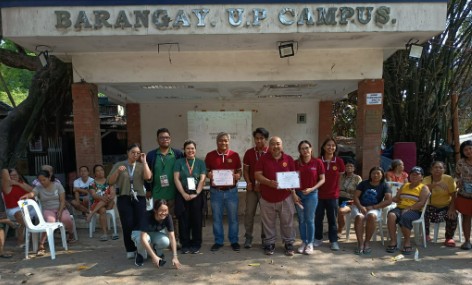
On March 23, 2026, an NSTP-CWTS community-based disaster preparedness activity in partnership with UP Vanguard Inc. was conducted at the Basketball Court of Pook Arboretum, Diliman, Quezon City. The program aimed to enhance household resilience and strengthen community response capabilities during flood-related emergencies. UPRI NOAH knowledge products were introduced by Janice Aldea, IT Officer I, and Erika Joy Del Rosario, Junior Project Assistant, while flood occurrence and risks were discussed by Glenn Sabio, Supervising Researcher. The flood simulation activity, which aims to test existing disaster preparedness and response, was facilitated by Edward Andrew A. Dionido, Science Research Specialist II, David Josh C. Concepcion, Junior Project Assistant, and Maria Regina L.M. Jimenez, Junior Project Assistant of the UP Resilience Institute – Institution Building Division, under the supervision of their director, Dr. Carlos Primero D. Gundran. The community members actively engaged in participatory discussions and situational simulations to better understand their roles before, during, and after a flood event.
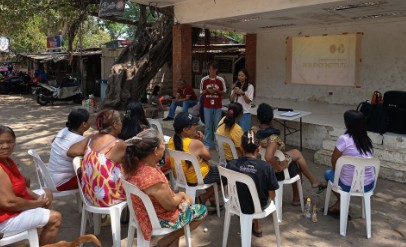
The session began with an interactive dialogue to understand the participants’ backgrounds, occupations, and disaster-related experiences. Most community members shared that they typically stay either at home or at work during regular days, with some engaged in small businesses or private sector jobs, and a few involved in local governance or community organizations. Many participants had prior experience with flooding, describing that water levels usually reach knee height and eventually subside. Given that most houses are single-story, residents are more vulnerable to flood damage, prompting them to use sandbags or cement barriers and elevate appliances as precautionary measures. Households with vulnerable members, such as senior citizens, children, and pets, face added challenges during emergencies, and it was noted that formal disaster response protocols, including first aid knowledge and coordination with the local government, remain limited within the community. In terms of preparedness, the community admitted that efforts are often inconsistent, with some maintaining go bags containing necessities like food, clothing, medicine, and emergency tools, but these are not always complete or regularly updated—indicating a reliance on reactive rather than proactive planning.
During the flood drill simulation, participants were exposed to a real-time scenario of continuous rainfall and rising floodwaters. At the initial stage, only a few chose to evacuate early to a known evacuation center, while the majority opted to stay, believing their area was not highly flood-prone and expressing concerns about overcrowded and uncomfortable evacuation conditions. As the situation escalated and local authorities initiated rescue operations, most participants stated they would only evacuate when conditions became severe. Communication challenges were also identified, as not all family members were aware of each other’s contact details or evacuation plans. While participants expressed willingness to help neighbors, they preferred relying on trained rescuers due to limited skills in first aid and search and rescue. Experiences shared about evacuation centers highlighted issues such as overcrowding, heat, and limited resources– although basic systems for registration and medical assistance were acknowledged. Participants emphasized the importance of bringing essential items in go bags, including food, medicine, money, flashlights, batteries, whistles, and important documents.
As the simulation progressed, additional challenges such as security concerns and resource shortages were introduced. Reports of looting prompted some families to leave members behind to guard their homes, illustrating the difficult balance between safety and property protection. Delays in the delivery of relief goods led to food shortages, reinforcing the importance of adequate and individualized preparedness. Some participants also noted the use of herbal remedies when medical supplies are insufficient. In the recovery phase, participants discussed returning home, cleaning debris, and assessing damages, though knowledge of formal discharge protocols from evacuation centers was limited. Overall, the activity highlighted both strengths and gaps in the community’s disaster preparedness, showing resilience and cooperation but also revealing the need for improved and early evacuation decisions, better household preparedness, enhanced communication systems, and more training in emergency response.