
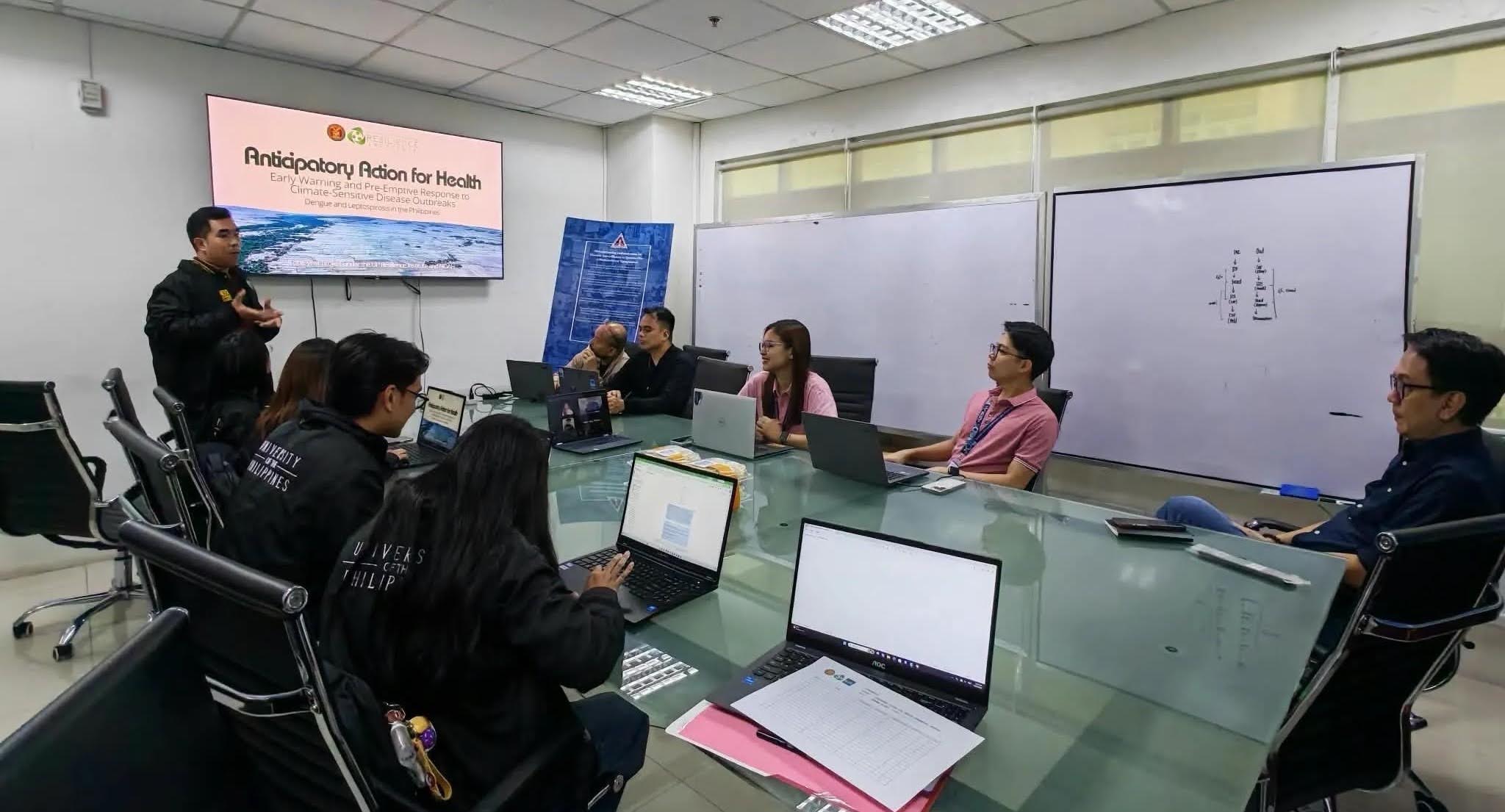
The Quezon City Epidemiology and Surveillance Division (QCESD) and the University of the Philippines Resilience Institute (UPRI) held an alignment meeting on September 25, 2026, at QCESD to discuss the continuing collaboration on dengue surveillance and the expansion of related research efforts to leptospirosis.
The meeting builds on the ongoing work of QCESD and UPRI on dengue surveillance, including the use and further development of the DengueR Dashboard and the DengueR Dashboard Prospective Report. Discussions also covered the Anticipatory Action for Health (AAH) Project, which includes dengue and leptospirosis as areas for the development of early warning and anticipatory approaches.
Strengthening Dengue Surveillance and Data Collaboration
The teams discussed ongoing work related to the DengueR Dashboard, including the integration of additional epidemiological information to support analysis of dengue patterns. They also discussed how surveillance data may be examined alongside rainfall, flooding, and other relevant information to better understand changes in dengue incidence across different areas of Quezon City.
The alignment also covered the continuing coordination between QCESD and UPRI, including the use of surveillance information and early warning signals to support timely public health action.
Data sharing and data privacy were likewise among the key areas discussed. The teams considered updates to the Data Sharing Agreement (DSA) and the development of data privacy guidelines for the use of more detailed location-based information. These discussions are intended to support research and analysis while ensuring appropriate safeguards for sensitive data.
Expanding Research to Leptospirosis
Building on the existing dengue collaboration, the meeting also discussed the leptospirosis research pipeline under the AAH Project. The discussions considered how disease surveillance may be examined together with environmental and exposure information, including rainfall and flooding, to better understand factors associated with leptospirosis cases.
The teams also discussed the need to consider a range of factors in examining leptospirosis, including public health and disaster risk reduction measures and cases that may not be directly associated with flood exposure. These considerations will help inform the continuing development of the research approach.
Quezon City is one of the pilot sites under the AAH Project, alongside Puerto Princesa. The project seeks to develop and pilot approaches that can support earlier identification of disease risks and inform anticipatory public health action.
Through continued alignment, QCESD and UPRI are strengthening the link between disease surveillance, research, and data use. The expansion of the collaboration to include leptospirosis builds on their ongoing work on dengue and supports broader efforts to develop evidence-informed approaches to climate-sensitive and other public health risks.
Related post: QCESD Facebook Post