
Written by: Ma. Shara Micah Oliquino with data extraction support from Gabriel Tan, UPRI Education Division
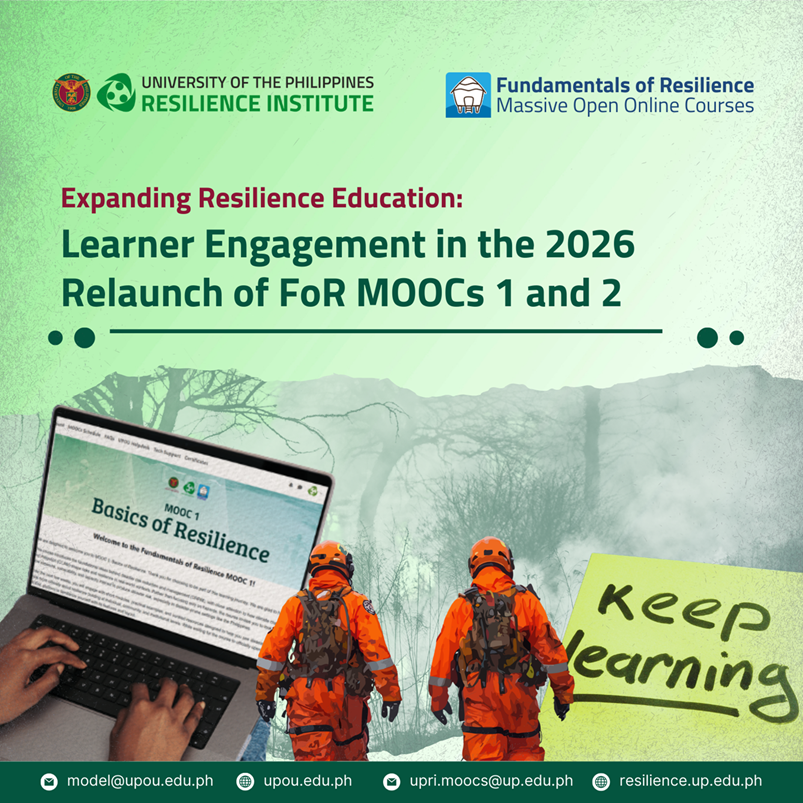
From 26 January to 20 February, the UP Resilience Institute relaunched the first cycle of MOOC 1: Basics of Resilience and MOOC 2: Hazard and Risk Assessment Fundamentals for this year. These courses are the first two offerings under the Fundamentals of Resilience Massive Open Online Courses (FoR MOOCs), a recurring resilience education program of the Institute, in collaboration with the UP Open University.
In this cohort, participants represented a wide range of backgrounds across geographic locations, gender identities, work affiliations, age groups, years of professional experience, highest educational attainment, and employment status.
Notably, this run is especially significant as the Institute formally gained support from the Department of Education (DepEd) and the Department of Social Welfare and Development (DSWD). Both agencies encouraged their personnel and key stakeholders to enroll in the courses as part of their personal and professional development in resilience-building and capacity strengthening.
With an overall 18,622 enrollees for MOOC 1 and 17,590 enrollees for MOOC 2, this run recorded the highest number of learner enrollees yet since the program’s inception in 2024. This milestone highlights the Institute’s continued commitment to making resilience education more accessible, inclusive, and meaningful to learners from diverse sectors and communities.
ABOUT THE LEARNERS OF MOOCS 1 AND 2
Geographic Reach of Learners
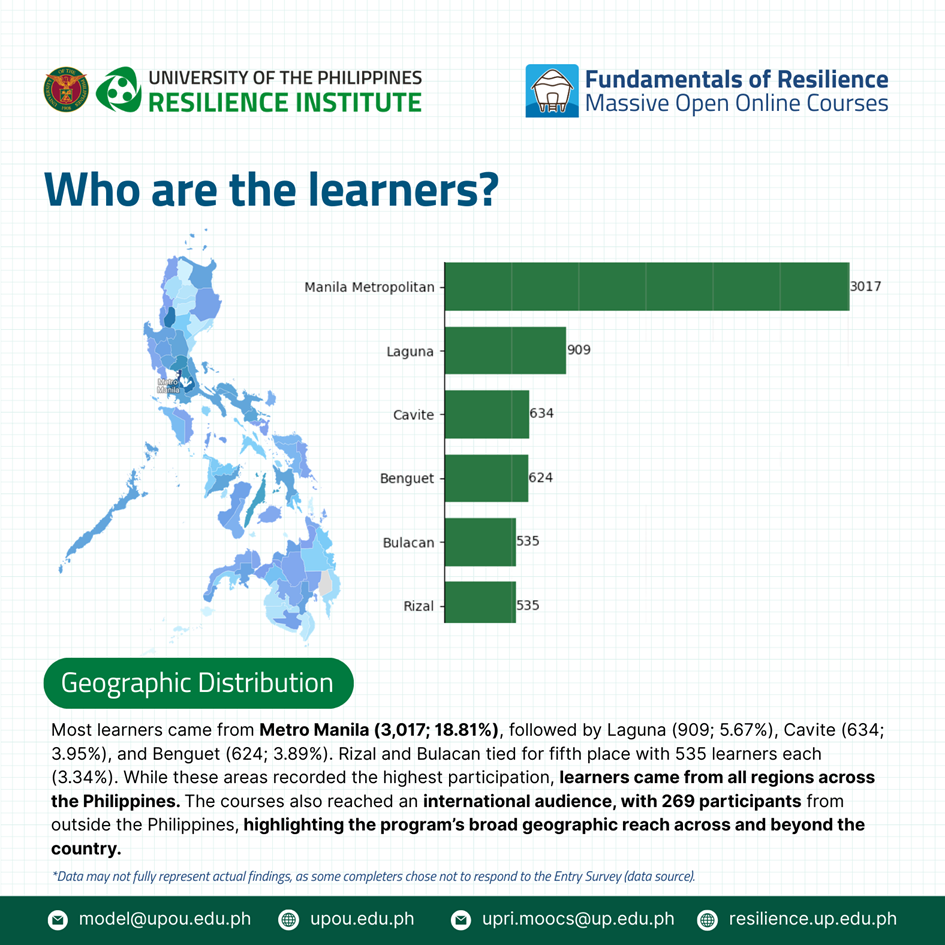
For this run, a significant percentage of learners came from Metro Manila, with 3,017 participants (18.81%), making it the area with the highest representation. This was followed by Laguna, which recorded 909 participants (5.67%). Cavite and Benguet accounted for 634 (3.95%) and 624 (3.89%) participants, respectively. Coming in fifth highest are Rizal and Bulacan, with 535 participants each (3.34%), resulting in a tie between the two provinces. While these provinces represent the largest share of enrollees, participation was nationwide, with learners coming from all regions of the Philippines, reflecting the program’s broad domestic reach.
It is also worth noting that the courses attracted participants from the international community, with 269 learners coming from outside the Philippines. Overall, the data show that the courses continue to reach learners from various regions across the country and beyond, reflecting their broad and diverse reach.
Gender Identity of Learners
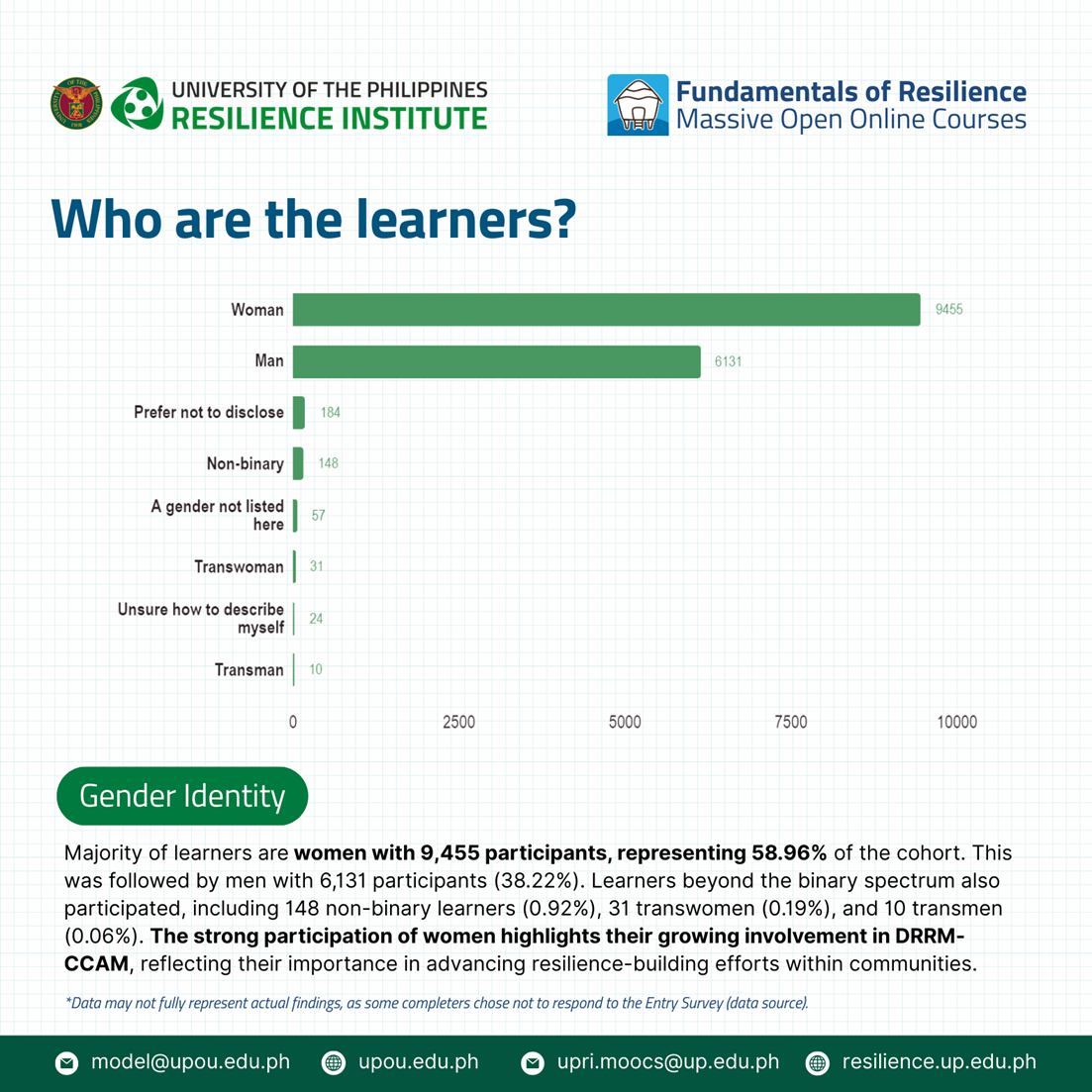
In terms of gender identity, learners who identify as women represented more than half of the sample population, with 9,455 participants (58.96%). This was followed by 6,131 learners (38.22%) who identified as men. Learners beyond the binary spectrum also participated in the courses, with 148 participants (0.92%) identifying as non-binary. Meanwhile, 31 participants (0.19%) identified as transwomen, and 10 participants (0.06%) identified as transmen.
With a majority of women enrolled in the course, the FoR MOOCs have attracted strong participation from women leaders. This highlights their active engagement in learning about disaster risk reduction and management (DRRM) and climate change adaptation and mitigation (CCAM), and reflects their important role in advancing resilience-building efforts within communities. The observed gender distribution may also be influenced by the professional backgrounds of the participants, particularly from sectors where women represent a large portion of the workforce.
Work Affiliation of Learners
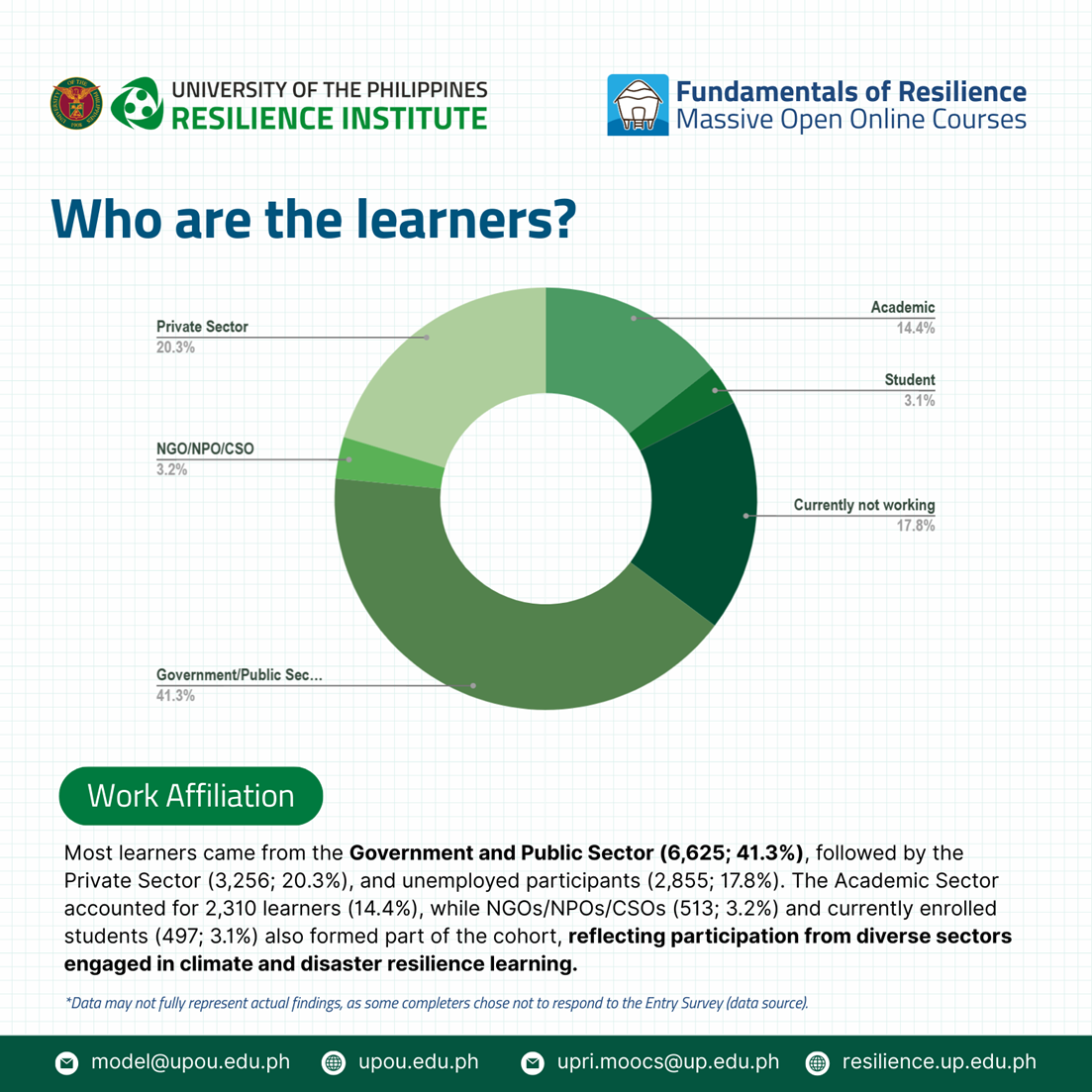
Regarding the work affiliation, the cohort was largely represented by learners working or involved in the Government and Public Sector, comprising 6,625 participants (41.3%). This was followed by 3,256 learners (20.3%) from the Private Sector. Coming in third are learners who are currently unemployed, comprising 2,855 participants (17.8%). The Academic Sector ranks fourth with 2,310 participants (14.4%). Meanwhile, learners from NGOs/NPOs/CSOs accounted for 513 participants (3.2%), while currently enrolled students comprised 497 participants (3.1%).
Compared with previous runs of the FoR MOOCs, this cohort demonstrates a substantial increase in participation from the Government and Public Sector. For instance, during the 16 June to 11 July 2025 relaunch, government-affiliated learners represented 361 participants, representing 28.7% of the overall sample population for that batch. In the subsequent run from 13 October to 10 November 2025, the number slightly increased to 410 participants, accounting for 51.6% of the sample population for that batch. In contrast, the current run recorded 6,625 participants from the government sector, representing 41.3% of the overall enrollees, a major increase compared with previous cohorts. This growth can largely be attributed to the formal endorsement from key government institutions that supported the FoR MOOCs, which encouraged greater participation from the sector.
Participation from the private sector was also notably high, indicating a growing awareness among industries of the importance of strengthening disaster preparedness and mitigation efforts. Although a large share of learners came from professional sectors such as government institutions, private organizations, academia, and civil society groups, the courses also remained accessible to individuals who are currently unemployed but are motivated to enhance their knowledge and skills in climate and disaster resilience.
Age Distribution of Learners
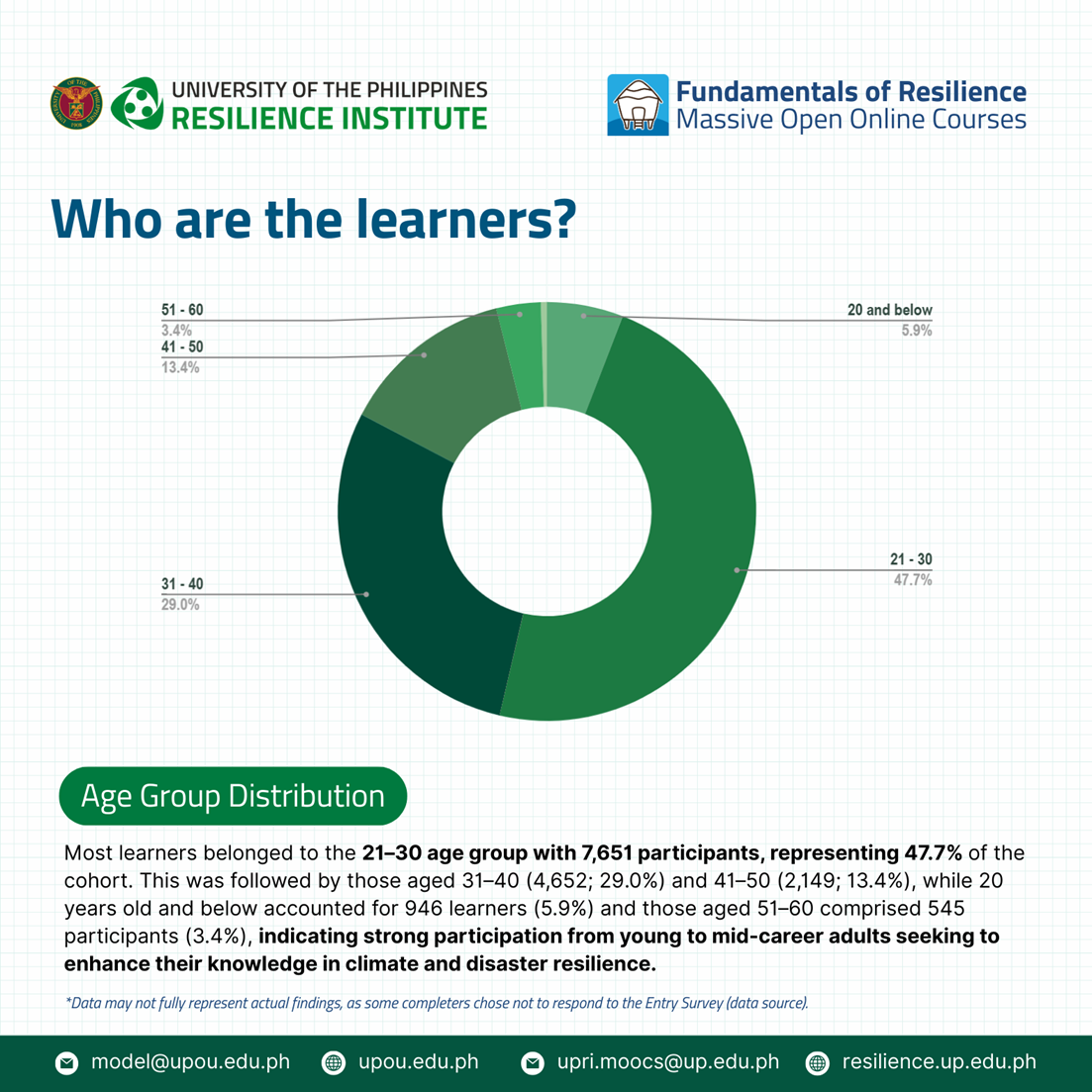
In terms of age group distribution, a large percentage of learners fall within the 21–30 age bracket, accounting for 7,651 participants (47.7%). This was followed by learners aged 31–40, comprising 4,652 participants (29.0%), and those aged 41–50, with 2,149 participants (13.4%). Meanwhile, 946 learners (5.9%) are 20 years old and below, while 545 participants (3.4%) belong to the 51–60 age group.
The high representation of learners within the 21–40 age range indicates that the FoR MOOCs strongly appeal to individuals in the early to mid-stages of their professional careers. At this stage, many participants are actively seeking opportunities to expand their competencies and engage in continuous learning, particularly in fields related to climate and disaster resilience. At the same time, participation from older age groups demonstrates that the courses also support lifelong learning, providing opportunities for individuals at different career stages to deepen their understanding of resilience-related issues.
Years of Professional Experience of Learners
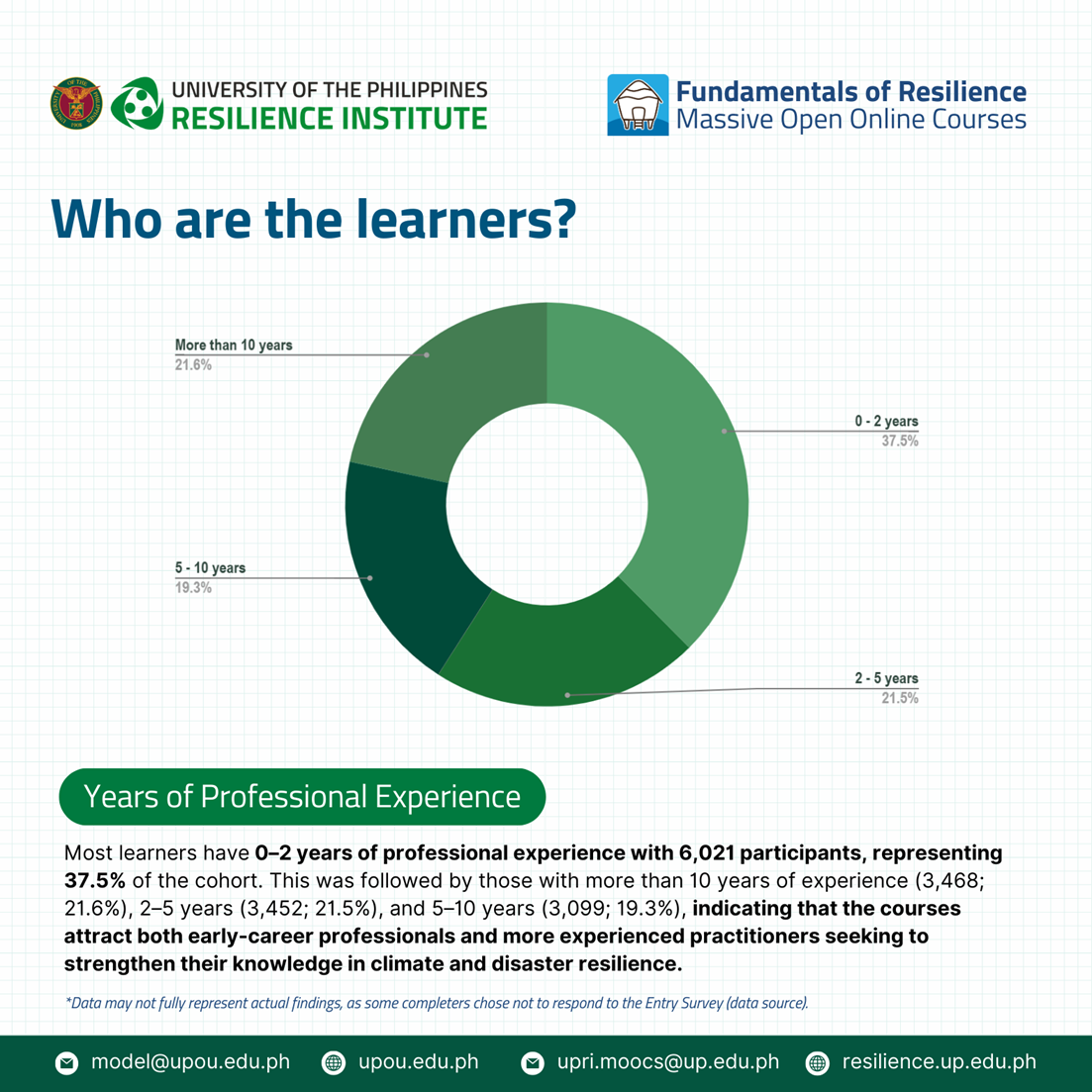
In relation to years of professional experience, the cohort was largely represented by learners with 0–2 years of professional experience, accounting for 6,021 participants (37.5%). This was followed by individuals with more than 10 years of professional experience, comprising 3,468 participants (21.6%). Closely following were learners with 2–5 years of professional experience, represented by 3,452 participants (21.5%). Lastly, those with 5–10 years of professional experience accounted for 3,099 participants (19.3%).
The data suggests that the courses are particularly valuable to early-career professionals, as the largest proportion of learners have 0–2 years of professional experience (37.5%). A study by Cagiltay et al. (2024) on exploring MOOC learners’ behavioural patterns found that the primary motivations of adult learners enrolling in MOOCs are the pursuit of knowledge and professional development. This also indicates that individuals at the beginning of their careers may rely on these courses to build foundational knowledge and skills in climate and disaster resilience. At the same time, the presence of participants with longer professional experience, particularly those with more than 10 years, shows that the courses also support continuous professional development for more experienced practitioners, whether or not their occupations are related to DRR-CCAM.
Highest Educational Attainment of Learners
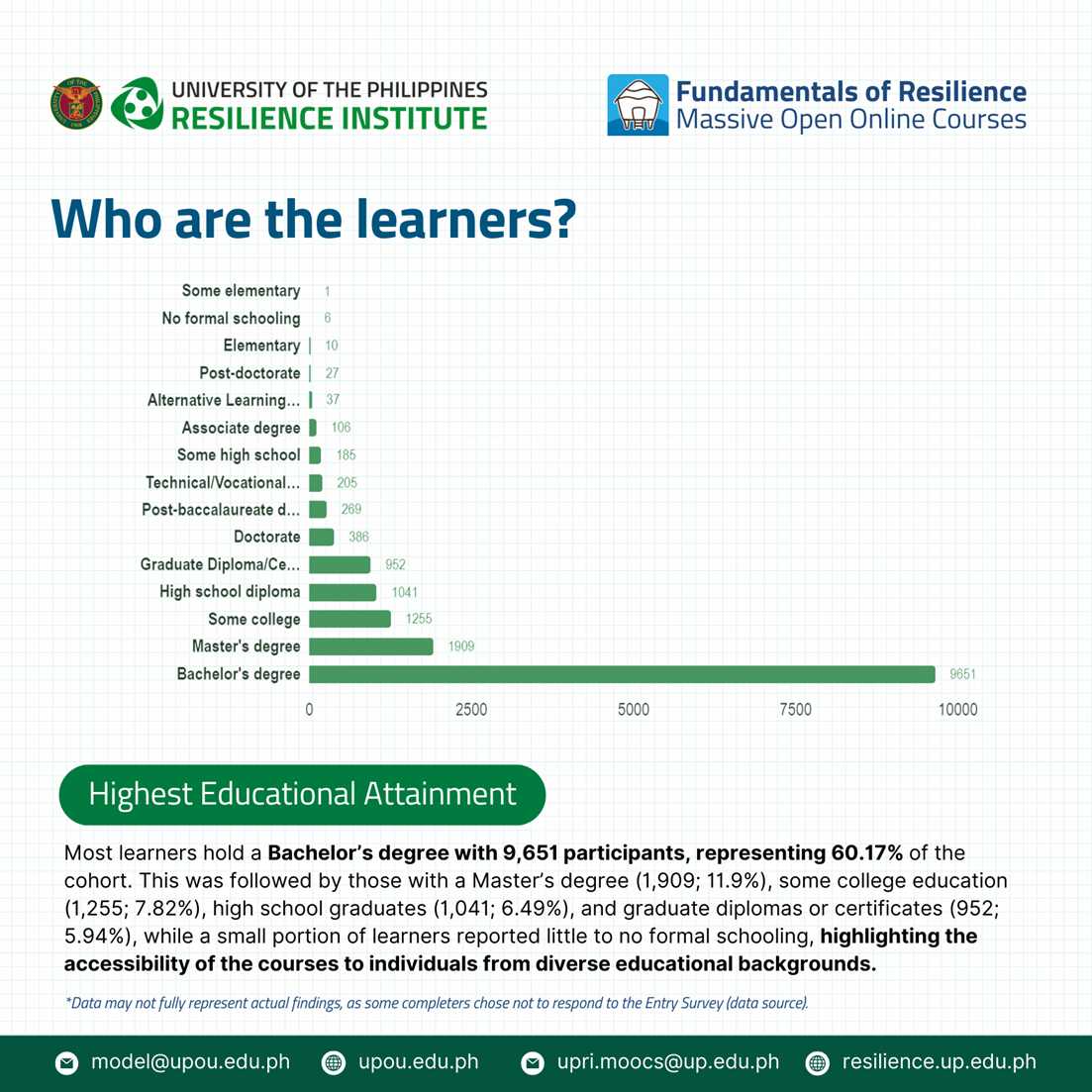
In terms of highest educational attainment, the majority of learners hold a Bachelor’s degree, with 9,651 participants (60.17%). This was followed by learners with a Master’s degree, accounting for 1,909 participants (11.9%). The third-largest group consists of learners with some college education, represented by 1,255 participants (7.82%). High school graduates and graduate diploma or certificate holders account for 1,041 (6.49%) and 952 (5.94%) participants, respectively. Notably, the cohort also includes individuals with little to no formal education, indicating the inclusivity and accessibility of the courses to learners from diverse educational backgrounds.
The results show that college graduates make up a large proportion of participants, suggesting that many learners pursue the courses to strengthen their professional competencies in resilience education as they transition into or progress within the workforce. Learners with postgraduate qualifications, such as a Master’s degree, likewise appear to use the courses to support their continued professional and academic development. At the same time, the presence of participants with limited or no formal education demonstrates how the courses address the learning needs of a broad and diverse audience. This underscores the importance of making knowledge on DRR-CCAM widely accessible, as understanding resilience and hazard risks is a fundamental competency relevant to all members of society. Ultimately, these MOOCs are designed to be inclusive and meaningful for learners regardless of their educational background.
Employment Status of Learners
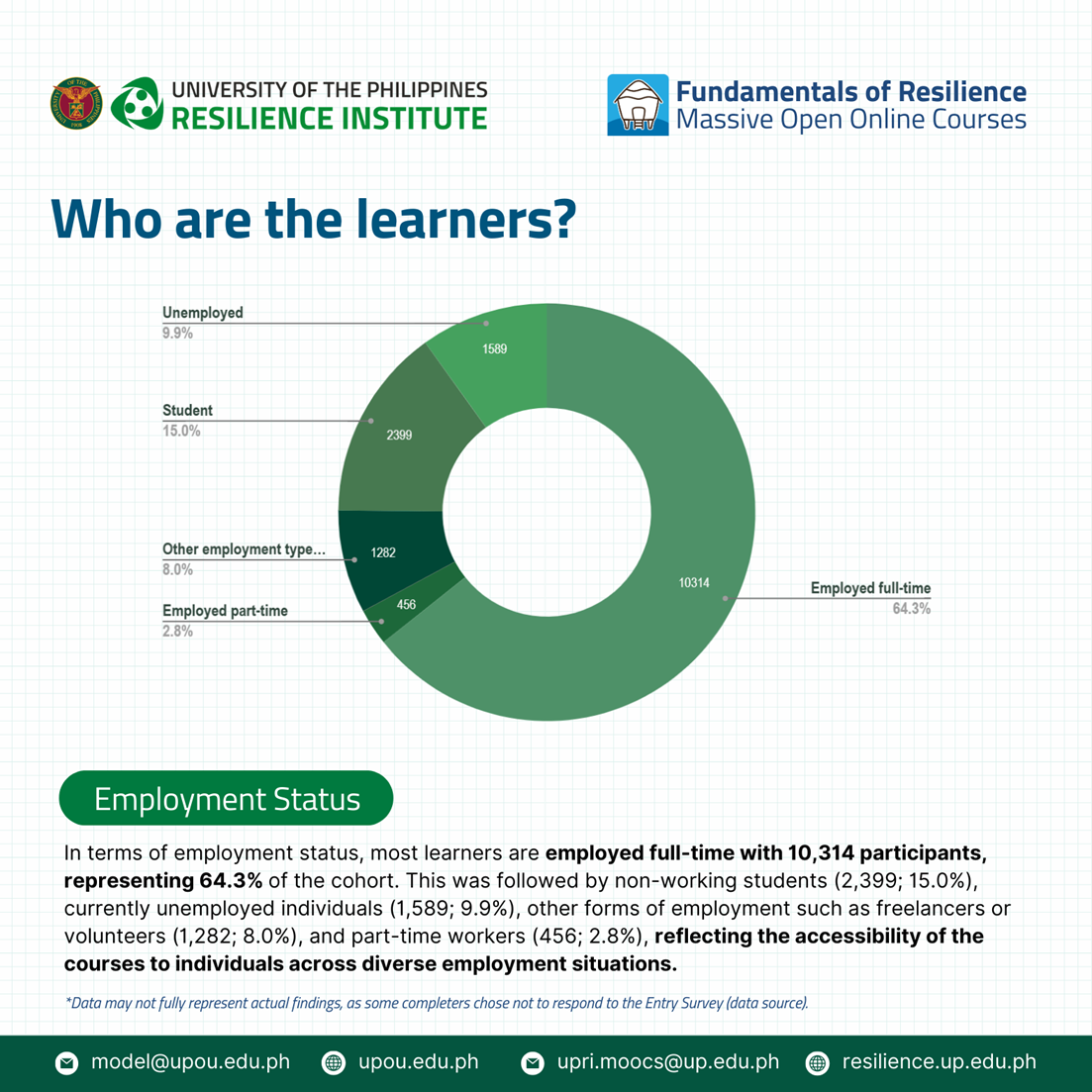
The cohort’s demographic profile in terms of employment status also shows the diversified background of learners who enrolled in the courses. More than half of the total sample population are employed full-time, with 10,314 participants (64.3%). This was followed by non-working students, who accounted for 2,399 participants (15.0%). The third largest group consists of currently unemployed individuals, with 1,589 responses (9.9%). Meanwhile, 1,282 participants (8.0%) fall under other types of employment (e.g., volunteers, freelancers, consultants, interns, seasonal workers, etc.), while 456 participants (2.8%) are employed part-time.
The data indicates that the courses are particularly relevant to individuals engaged in full-time employment across various institutions and sectors. At the same time, participation from students and currently unemployed individuals demonstrates the courses’ accessibility to learners in different employment situations. For students, the courses may serve as opportunities to explore learning areas related to disaster resilience while still in school, allowing them to build foundational knowledge that can later be applied in their future careers. Meanwhile, for those who are currently unemployed, the courses provide a means of continuing education and skills development while seeking employment opportunities. Overall, the free, accessible, and inclusive nature of the courses enables individuals from diverse employment status to engage in resilience education.
Participation of Key Government Stakeholders: DepEd and DSWD
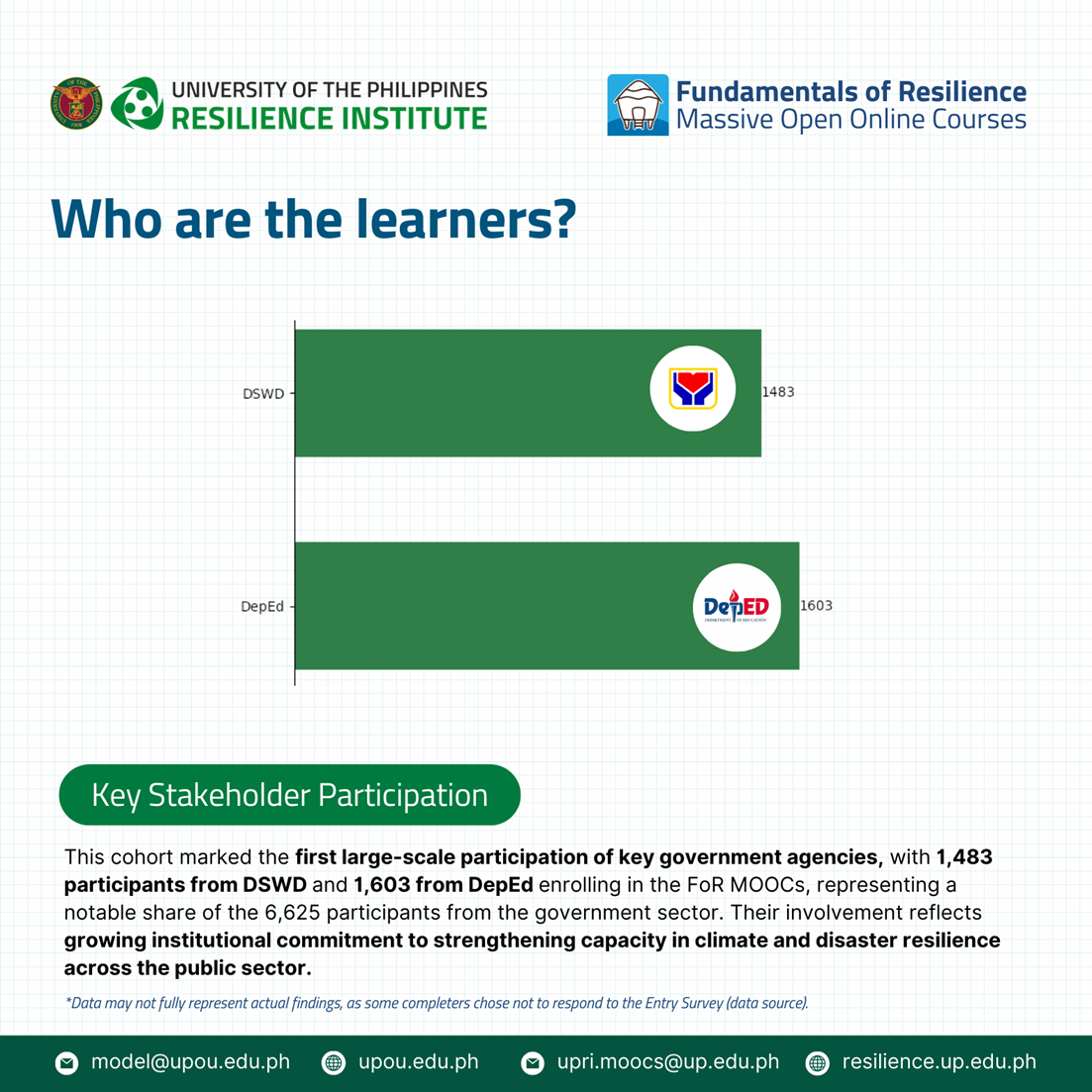
As previously mentioned, this cohort is particularly significant because, for the first time since the official launch of the FoR MOOCs in 2024, the courses saw strong participation from key personnel and stakeholders of the Department of Education (DepEd) and the Department of Social Welfare and Development (DSWD). These two national government agencies play crucial roles in implementing policies related to basic education, social welfare, and community development. Their participation in the courses formed part of their respective institutions’ capacity-building initiatives in resilience work.
The UP Resilience Institute acknowledges these institutions for their support of the FoR MOOCs. Through this institutional support, the Institute was able to accommodate 1,483 enrollees from DSWD and 1,603 enrollees from DepEd, representing a notable share of the 6,625 participants from the government sector and contributing significantly to the high number of total enrollees in both MOOC 1 and MOOC 2.
This development marks a significant step toward advancing the Institute’s goal of expanding resilience education at the national level. Moving forward, the FoR MOOCs aim to further engage other government agencies and stakeholders, reinforcing the idea that strengthening climate and disaster resilience requires collective and collaborative efforts across sectors.
WAYS FORWARD: SUSTAINING RESILIENCE EDUCATION EFFORTS
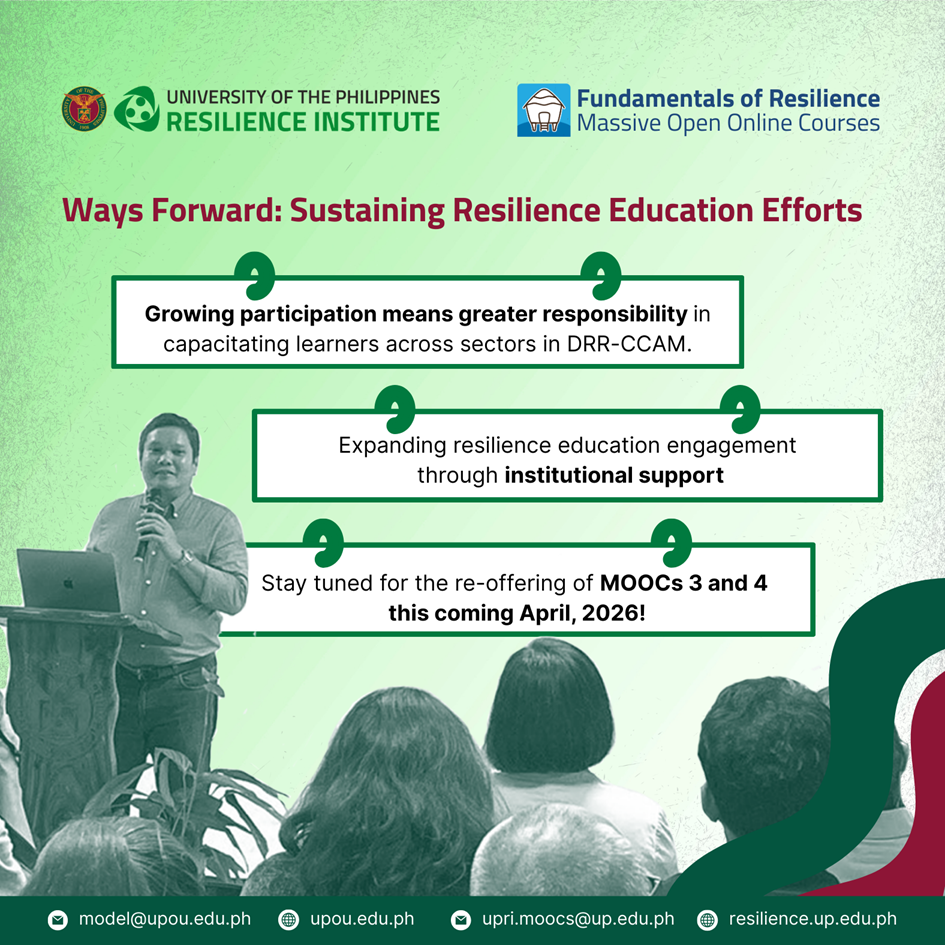
The conclusion of this launch marks only the beginning of a continued commitment to promoting resilience education and strengthening national capacity for climate and disaster preparedness. The growing number of participants reflects an equally expanding responsibility to capacitate individuals from diverse sectors and backgrounds.
In line with this, the Institute remains committed to expanding the reach of the FoR MOOCs and encouraging more stakeholders to take part in resilience-building efforts. From April to May 2026, MOOC 3: Overview of Policies and Strategies for Climate and Disaster Resilience and MOOC 4: Resilience Strategies Across the Four Pillars will be relaunched, continuing the Institute’s efforts to equip learners with the knowledge and skills needed to strengthen climate and disaster resilience in their respective communities and sectors.
Everyone is encouraged to stay tuned to the Institute’s official social media channels for updates on upcoming course offerings.
Related links:
Learning Resilience Made Free, Inclusive, and Nationwide: Takeaways from the 2025 Relaunching of the Basics of Resilience MOOCs 3 and 4. https://resilience.up.edu.ph/learning-resilience-made-free-inclusive-and-nationwide-takeaways-from-the-2025-relaunching-of-the-basics-of-resilience-moocs-3-and-4/
Empowering Action Through Education: Basics of Resilience MOOCs Relaunched for NDRM 2025. https://resilience.up.edu.ph/empowering-action-through-education-basics-of-resilience-moocs-relaunched-for-ndrm-2025/
The Basics of Resilience MOOC expands its reach in early 2025! https://resilience.up.edu.ph/the-basics-of-resilience-mooc-expands-its-reach-in-early-2025/
Over 17,000 enrolled in UP’s online course on resilience. https://resilience.up.edu.ph/over-17000-enrolled-in-ups-online-course-on-resilience/
Relaunched of the Basics of Resilience: A continued program for accessible, inclusive, and multidisciplinary DRR and CCAM education. https://resilience.up.edu.ph/relaunched-of-the-basics-of-resilience-a-continued-program-for-accessible-inclusive-and-multidisciplinary-drr-and-ccam-education/
UP’s online course on resilience concludes with over 11,000 enrollees. https://resilience.up.edu.ph/ups-online-course-on-resilience-concludes-with-over-11000-enrollees/
UPRI, UPOU’s free course on Basics of Resilience kicks off with 2,100 enrollees. https://resilience.up.edu.ph/upri-upous-free-course-on-basics-of-resilience-kicks-off-with-2100-enrollees/