
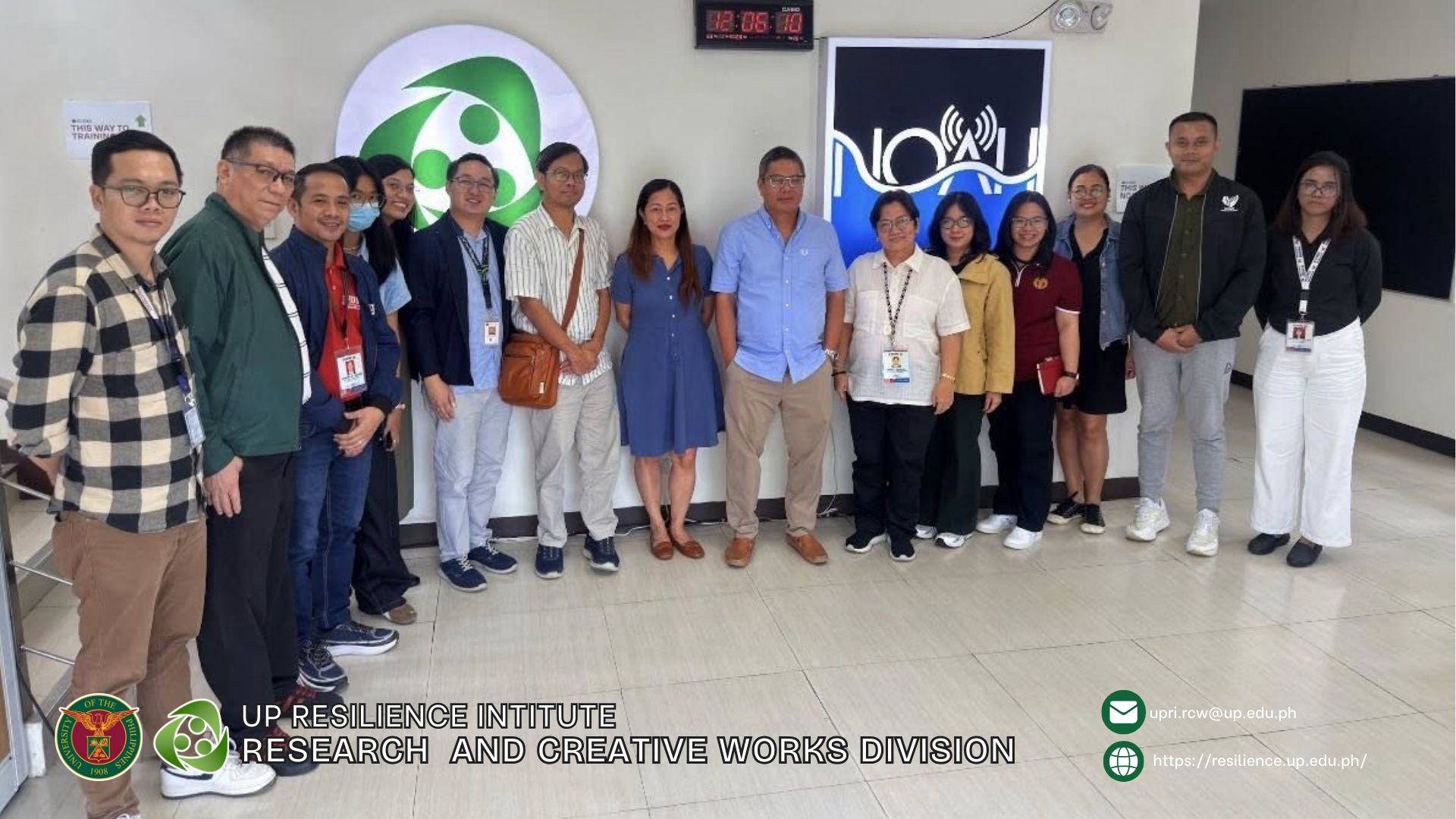
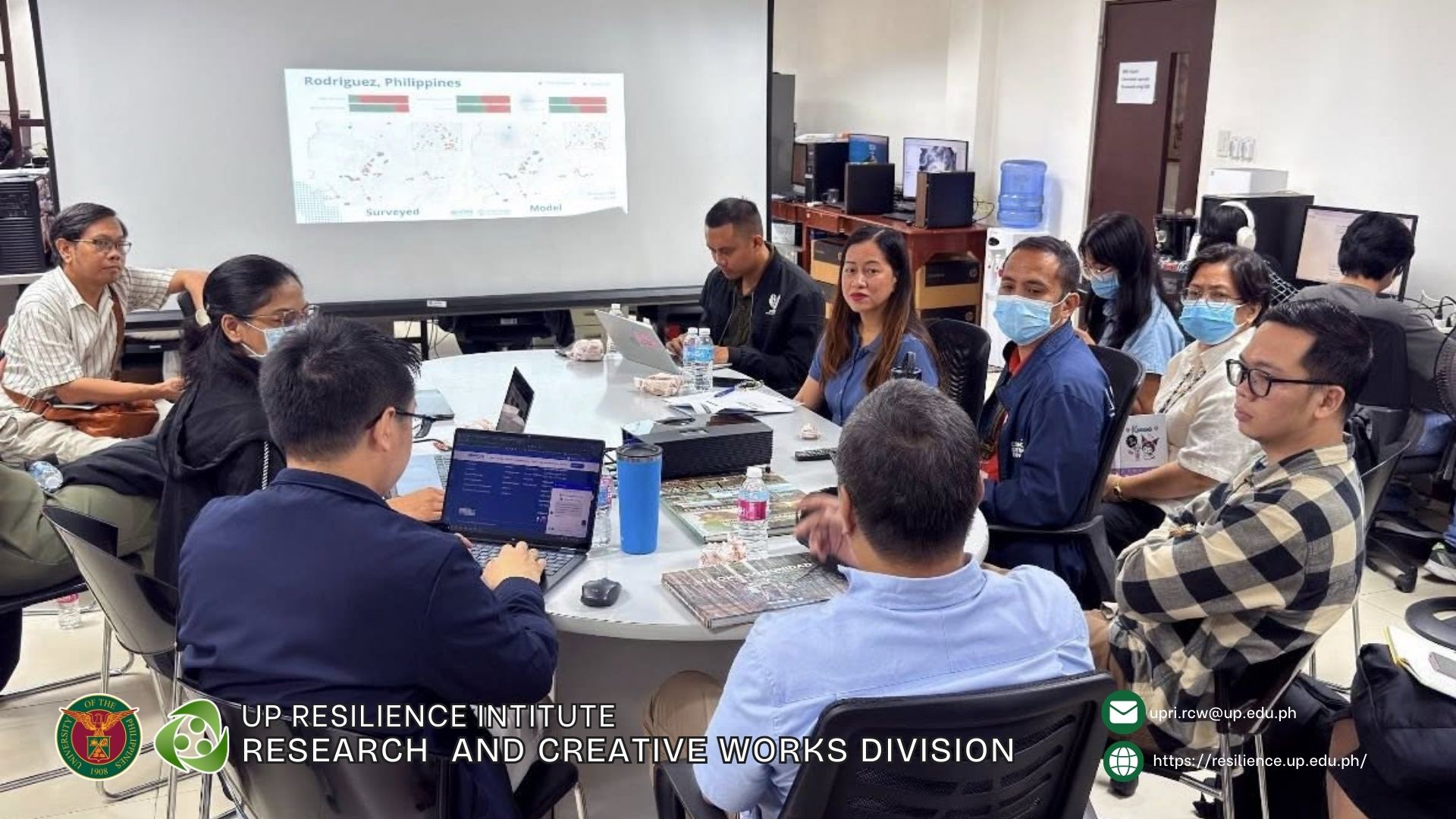
January 23, 2026 — The University of the Philippines Resilience Institute (UPRI) and the Department of Social Welfare and Development (DSWD), through its KALAHI-CIDSS Program, held an exploratory meeting to identify potential areas of collaboration aimed at strengthening community resilience nationwide. The discussions focused on how scientific knowledge, risk information, and academic expertise can support government-led, community-driven development initiatives. The engagement reflects a shared recognition of the growing climate and disaster risks faced by communities across the country. It also highlighted the importance of evidence-based and inclusive approaches to resilience-building.
The DSWD delegation was led by KALAHI-CIDSS National Program Manager Atty. Bernadette Mapue-Joaquin, together with DSWD MIMAROPA Officer-in-Charge Benchie B. Gonzales, represented by Deputy Regional Program Manager Engr. Raymond Libarra. The UP Resilience Institute was represented by Executive Director Dr. Mahar Lagmay, together with Division Directors Dr. Dj Darwin Bandoy of Research and Creative Work, Dr. Likha Minimo of Knowledge Sharing, and Dr. Carlos P. Gundran of Institution Building. Also present were Division Chiefs Richard Ybañez of the Education Division and Sonny Ongkiko of Institution Building, along with NOAH senior and junior researchers. The UPRI team shared the Institute’s ongoing work in disaster risk reduction, climate change adaptation, and risk-informed planning. Discussions explored how these approaches can complement the implementation of KALAHI-CIDSS programs on the ground.
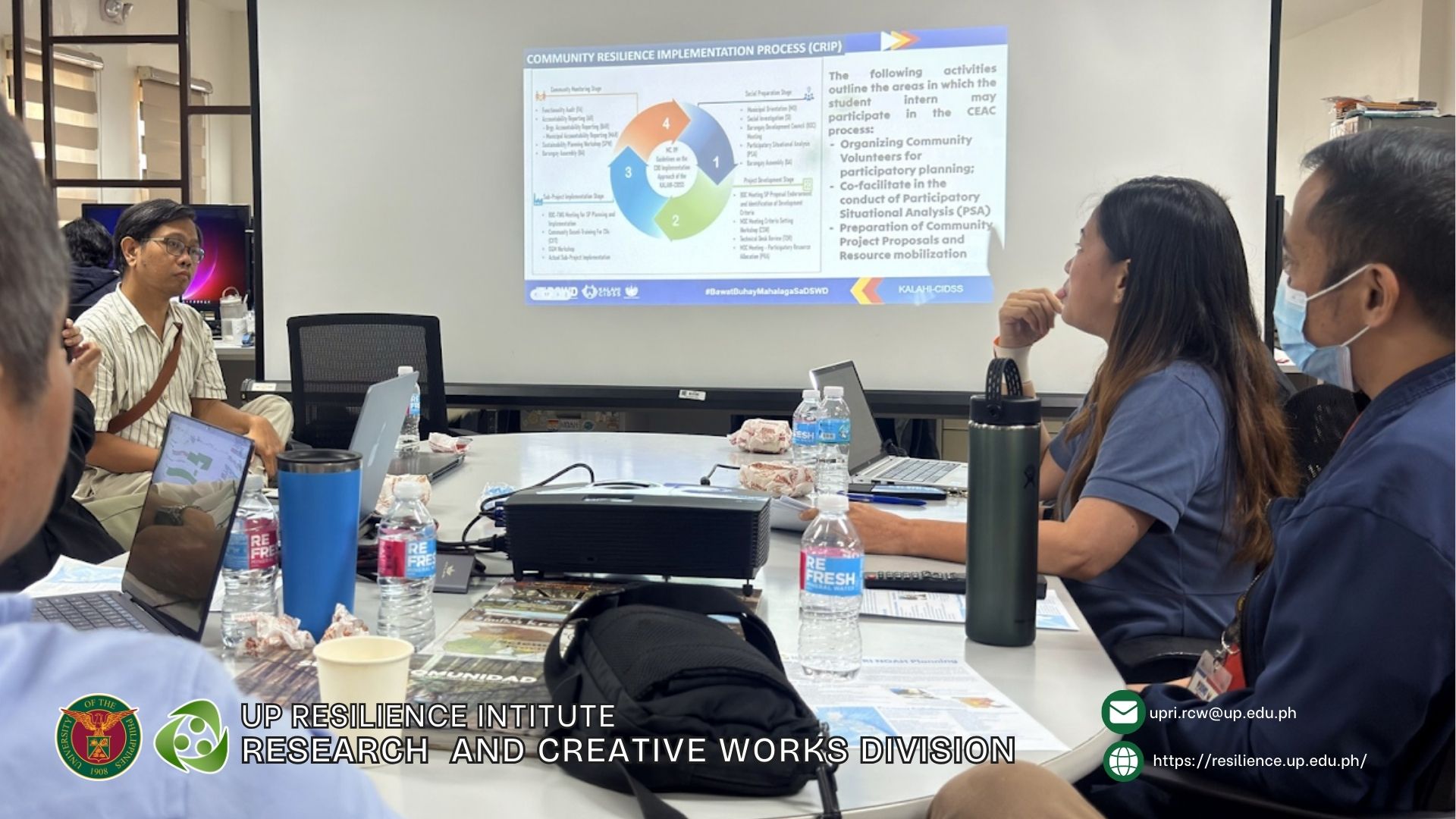
Particular attention was given to the Panahon ng Pagkilos: Philippine Community Resilience Project (PCRP), a newly launched KALAHI-CIDSS modality to be implemented from 2026 to 2030. From the UPRI perspective, priority areas for collaboration include capacity-building on disaster risk reduction and climate change adaptation, technical assistance for risk-informed local planning, and joint research and documentation. The Institute also confirmed its participation as a member of the National Steering Committee for the Academe Advisory Council, reinforcing the role of the academe in national resilience initiatives. While formal agreements are still being finalized, both UPRI and DSWD are committed to pursuing immediate collaborative activities. These include knowledge sharing, advisory support, and the application of science-based tools in community resilience programs.
The exploratory meeting was facilitated through the coordination of DSWD MIMAROPA Region, whose initiative helped convene national partners for the discussion. Through this collaboration, UPRI aims to contribute to resilience planning that is both science-driven and grounded in community participation. The partnership underscores the value of linking national government programs with academic expertise from the University of the Philippines. Moving forward, UPRI looks forward to sustained collaboration with DSWD KALAHI-CIDSS in support of safer, more resilient Filipino communities.