
On April 28, 2026, UP Resilience Institute (UPRI) conducted a Disaster Risk Reduction Management (DRRM) Training for 30 personnel and Sisters of the Good Shepherd (RGS) during the final day of the General Assembly of the St. Mary Euphrasia Integrated Development Foundation, Incorporated (SMEIDFI) in Quezon City. SMEIDFI attendees hailed from Good Shepherd Convent from various regions and communities. The UPRI contingent was composed of representatives from the Institution Building (IB) Division and National Operational Assessment of Hazards (NOAH) WebGIS.
The program was opened with a prayer and song centered on caring for the environment led by representatives from SMEIDFI. Mr. Patrick Ryan Bello of IB synthesized the opening activity by discussing the scope of UPRI and of IB, relating it to the prayer. He also shared a passage from Genesis about human’s responsibility of nurturing the environment as God gave them dominion, and Pope Francis’ encyclical on Caring for our Common Home “Laudato Si’”.
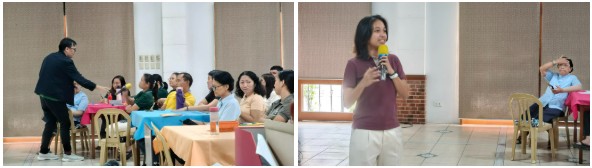
Mr. Franklin Joshua Gali engaged the participants in an interactive lecture where he gave the floor to the attendees to share their insights on some slides. He shared DRRM concepts such as the Disaster Risk Formula, expounding on each component, and the 3 Ps of disaster preparedness (Plan, Prepare, Practice). He also clarified the misconception surrounding the term “natural disasters”,emphasizing that while natural hazards cannot be prevented, disasters are often intensified by vulnerabilities and lack of preparedness. He concluded the lecture by stressing that although hazards are inevitable, their impacts can be mitigated through preparedness, awareness, and resilience-building measures.
Ms. Erika Joy Del Rosario led an interactive NOAH walkthrough and demonstration, guiding the participants through the platform’s key features and applications. Using the Good Shepherd Convent as a reference site, she demonstrated how to navigate the platform and interpret hazard information in their locality. She also showed how to access preparedness information, such as safety reminders and recommended emergency kit contents for various hazards. She further introduced NOAH Studio, an advanced feature within the platform, which includes tools for typhoon tracking, flood impact forecasting, pinpointing of active and inactive volcanoes and identifying critical facilities across localities. She concluded the demonstration by giving the participants, including the RGS Sisters and SMEIDFI personnel, the opportunity to explore the platform firsthand.
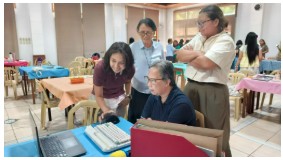
Ms. Maria Regina Jimenez and Mr. David Josh Concepcion facilitated a tabletop exercise to assess the participants’ knowledge and practice on Flood Preparedness. They started by conducting a profiling of the participants to better understand the background of the attendees. They then provided guide questions per scenario (pre-flood, peri-flood, post-flood) to delve deeper on the participant’s understanding and experience.
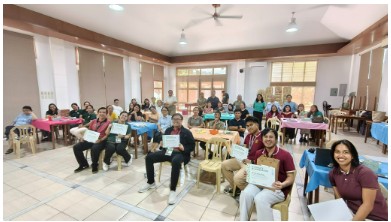
Mr. Edward Andrew Dionido synthesized the responses of the participants during the tabletop exercise, emphasizing that the Good Shepherd Convent already has prior well-informed protocols to respond to floods. He also pointed out that SMEIDFI and the Good Shepherd Convents help fill gaps in government response capacities. This was reflected in experiences shared by participants, where some SMEIDFI program beneficiaries were not provided refuge in LGU-managed evacuation centers because of capacity constraints. In response, the convents identified other alternative centers that could provide safety and security for their program participants. The convents also prepared meals for their program participants who did not receive any food stub in the evacuation centers.
Ms. Dianne Balatero, SMEIDFI Mission Development Coordinator, formally closed the program and thanked UPRI for the timely DRRM Training. They reiterated that their experiences from the workshop, as well as the previous flood and typhoon incidents, are helpful in drafting a disaster preparedness plan.
Overall, the DRRM Training highlighted the importance of preparedness, local-knowledge, and science-based tools in building resilient communities. Through discussions, demonstrations, and participatory activities, the participants gained practical insights that can support disaster planning and strengthen the preparedness of the community.