
On May 25 and 26, 2026, the Institution Building Division, headed by Dr. Carlos Primero Gundran and composed of Science Research Specialist II Edward Andrew A. Dionido, Senior Project Assistant Patrick Ryan Bello, and Junior Project Assistants Franklin Joshua G. Gali, David Josh C. Concepcion, Jerzyne Anne A. Corpuz, Jonathan David Maligalig and Maria Regina L.M. Jimenez, together with Information Technology Officer I Janice Carpo-Aldea, NOAH WebGIS Representative, facilitated the Disaster Risk Reduction Management (DRRM) Training for the personnel of the Small Business Corporation held at the 139 Corporate Center. The activity aimed to strengthen the participants’ knowledge and capacity in disaster preparedness, emergency response, communication protocols, and resilience-building through lectures, demonstrations, and interactive exercises.
Mr. Gali formally opened the training by presenting the topic “Basics of Resilience.” His discussion focused on the fundamental concepts of disaster risk reduction, including disaster, hazard, exposure, vulnerability, risk, and capacity. He emphasized that disasters are not solely caused by natural hazards but are greatly influenced by the vulnerability and preparedness of communities and organizations. He further highlighted the importance of understanding risks and strengthening capacities in order to build resilience and reduce the impacts of disasters in the workplace and community.
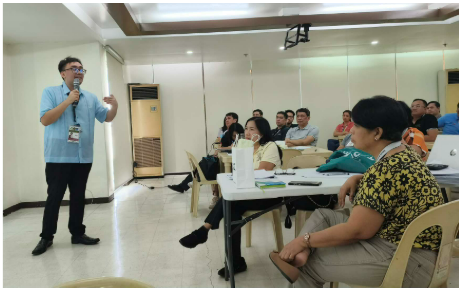
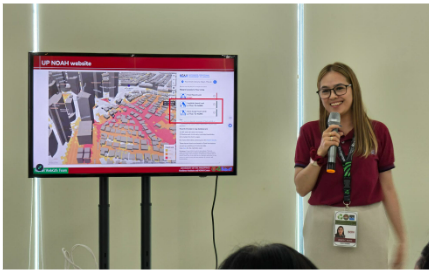
Following the discussion, Mrs. Carpo-Aldea presented a brief background of Project NOAH and its role in disaster risk reduction and management in the Philippines. She explained how the platform was developed to provide accessible and science-based hazard information to communities, institutions, and local government units. She also demonstrated the features and functions of the NOAH Studio mobile application and website, guiding the participants on how to access hazard maps, rainfall data, flood advisories, and other relevant information useful for preparedness and decision-making during emergencies. The participants actively engaged during the demonstration and raised questions regarding the practical applications of the platform in their respective offices and areas.
Subsequently, Mr. Concepcion and Ms. Jimenez facilitated a tabletop exercise designed to simulate a fire incident occurring within the 139 Corporate Center. The exercise allowed participants to apply the concepts discussed during the earlier sessions by identifying hazards, assessing risks, determining evacuation procedures, and coordinating response actions during the simulated emergency. Participants were grouped accordingly and encouraged to discuss their roles, responsibilities, and immediate actions during the incident. The facilitators also introduced situational injects to test the participants’ decision-making, coordination, and problem-solving skills under pressure. The activity highlighted the importance of teamwork, situational awareness, and adherence to established emergency protocols.
Mr. Bello then discussed the communications plan and emphasized its critical role during disasters and emergency situations. His presentation covered the communication plan, communication flow and structure, call tree systems, communication types, and the proper use of two-way radios. He also introduced standard radio communication procedures, including the use of pro-words and break words, to ensure clear, concise, and efficient transmission of information during emergencies. The discussion underscored the importance of timely and accurate communication in maintaining coordination among response teams and minimizing confusion during actual incidents.
To reinforce the concepts discussed, the Institution Building Division facilitated an emergency communications activity wherein participants were placed in a simulated earthquake scenario. During the exercise, participants were tasked to relay information and coordinate with various teams using two-way radios while responding to evolving emergency situations. Several injected scenarios were introduced throughout the activity, requiring participants to properly communicate urgent concerns, casualty reports, requests for assistance, and operational updates to designated teams. The exercise enabled participants to practice proper radio etiquette, improve coordination, and experience the challenges of emergency communication in a dynamic environment.
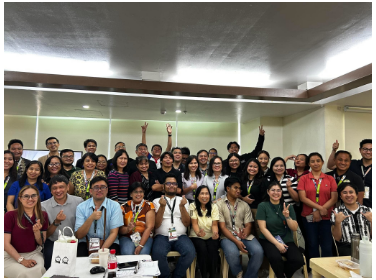
The first day of the DRRM training concluded successfully with active participation and engagement from the personnel of the Small Business Corporation. The sessions and activities provided valuable knowledge and practical experience that enhanced the participants’ understanding of disaster preparedness, emergency response, and organizational resilience. The training also strengthened coordination among participants and emphasized the importance of preparedness, communication, and collaboration in ensuring safety during emergencies.
Mr. Bello formally opened the second day of the training by providing a comprehensive recap of the discussions, workshops, and activities conducted during Day 1. He revisited the key concepts of resilience, disaster risk reduction and management, hazard and risk assessment, emergency communications, and the use of the NOAH platform. He also highlighted the lessons learned from the tabletop and emergency communications exercises, emphasizing the importance of preparedness, coordination, and effective communication in managing emergencies and disasters.
Ms. Corpuz then facilitated the session on the Overview of the Public Service Continuity Plan (PSCP) and Business Continuity Plan (BCP). She discussed the importance of continuity planning in ensuring that critical government and organizational functions remain operational during and after emergencies, disasters, and other disruptive incidents. She emphasized that continuity planning enables organizations to identify vulnerabilities, prepare for potential disruptions, and implement strategies that minimize operational downtime and service interruptions.
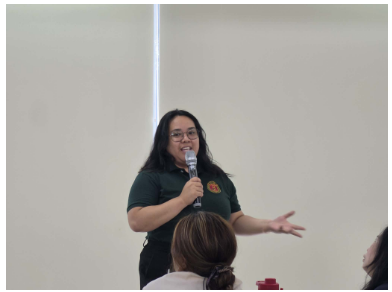
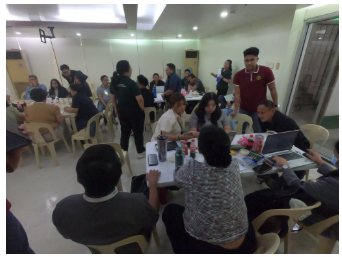
Following the lecture, Ms. Corpuz facilitated a risk assessment workshop wherein participants identified potential hazards and risks affecting their respective offices and operational areas. Participants assessed the potential impacts of identified hazards across the key impact areas of People, Place, Process, Partners, Public, and Information and Communication Technology (ICT). They then conducted a risk analysis by evaluating the likelihood and severity of each identified hazard. The workshop also included a risk evaluation and control activity wherein participants identified existing control measures, assessed their effectiveness, and proposed additional mitigation strategies to further reduce organizational risks and vulnerabilities.
Subsequently, Mr. Gali presented the topic on mission essential functions (MEFs), resource requirements, and continuity strategies. He emphasized the importance of identifying and prioritizing critical organizational functions that must continue during emergencies and disruptions. He explained that understanding these functions allows organizations to allocate resources effectively, maintain essential services, and ensure operational continuity during crises. To reinforce the concepts discussed, Mr. Gali facilitated a workshop on Mission Essential Functions (MEFs), Essential Supporting Activities (ESAs), and Continuity Strategies. During the activity, participants identified their respective departments, divisions, and units, as well as their organizational functions. These functions were classified as mission or non-mission functions and further categorized as essential or non-essential based on their importance during emergencies and disaster situations.
Participants also identified the functional requirements, inputs, and outputs necessary for the performance of each function. They determined recovery time objectives and assessed the potential organizational impacts should critical functions be disrupted or not performed. Discussions included the possible regulatory, operational, reputational, and infrastructural consequences of service interruptions. Additionally, participants identified the minimum resource requirements needed to sustain operations, including personnel, facilities, processes, partners, budget and funding, and information and communication technology resources. The workshop further highlighted the importance of protecting vital records, ensuring personnel availability, maintaining facilities and equipment, and strengthening communication and technology systems as part of organizational continuity planning.
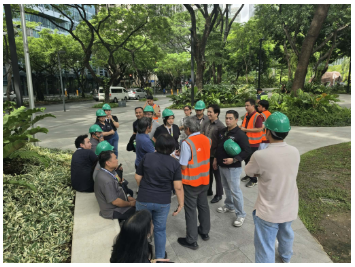
Following the workshop sessions, the participants took part in an earthquake drill designed to evaluate their preparedness and response procedures during a simulated seismic event. Upon the activation of the alarm, participants executed the prescribed earthquake response procedures and evacuation protocols. The exercise allowed facilitators to observe the participants’ adherence to established safety procedures, coordination mechanisms, and evacuation practices. To further test their decision-making and response capabilities, the facilitators introduced a missing-person scenario during the exercise. Participants were required to coordinate search and accountability efforts while maintaining overall safety and communication procedures. The injected scenario challenged participants to adapt to evolving emergency conditions and highlighted the importance of accountability systems, coordination, and situational awareness during disaster response operations.
After the earthquake drill, Dr. Gundran delivered a lecture on the Incident Command System (ICS). His presentation focused on the importance of establishing a standardized management structure during emergencies to ensure effective coordination, communication, and resource management. He discussed the principles, organizational structure, and key functions of the incident command system, including the roles and responsibilities of the incident commander, command staff, and general staff positions. Dr. Gundran emphasized that the Incident Command System provides a clear chain of command and facilitates efficient decision-making during incidents of varying scales and complexity. He highlighted how the proper implementation of ICS helps organizations maintain order, reduce confusion, and improve overall response effectiveness during emergencies. Through practical examples and discussions, participants gained a better understanding of how ICS principles can be applied within their organization to strengthen emergency management and business continuity efforts.
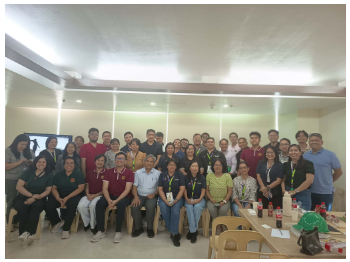
The second day of the DRRM training concluded successfully with active participation and engagement from the personnel of the Small Business Corporation. The lectures, workshops, and practical exercises enhanced the participants’ understanding of continuity planning, risk assessment, emergency preparedness, and incident management. The activities reinforced the importance of proactive planning, organizational resilience, and coordinated response mechanisms in ensuring the continuity of operations and the safety of personnel during emergencies and disasters.
The second day of the DRRM training concluded successfully with active participation and engagement from the personnel of the Small Business Corporation. The lectures, workshops, and practical exercises enhanced the participants’ understanding of continuity planning, risk assessment, emergency preparedness, and incident management. The activities reinforced the importance of proactive planning, organizational resilience, and coordinated response mechanisms in ensuring the continuity of operations and the safety of personnel during emergencies and disasters.