
The Institutional Building (IB) Division of the University of the Philippines Resilience Institute (UPRI) conducted a two-day Emergency Preparedness Plan (EPP) Workshop for the College of Human Kinetics (CHK) on June 9 and 10, 2026, at the UP Diliman campus. Around 30 participants from different offices and units of CHK attended the activity.
The Institutional Building (IB) Division of the University of the Philippines Resilience Institute (UPRI) conducted a two-day Emergency Preparedness Plan (EPP) Workshop for the College of Human Kinetics (CHK) on June 9 and 10, 2026, at the UP Diliman campus. Around 30 participants from different offices and units of CHK attended the activity.
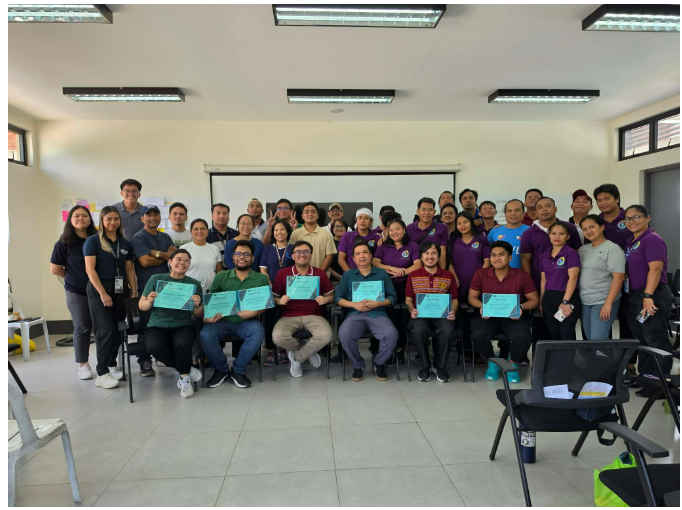
The Emergency Preparedness Plan is based on the guidelines of the Office of Civil Defense (OCD) under the Public Service Continuity Plan (PSCP). The workshop aimed to help CHK develop an Emergency Preparedness Plan that will guide the college before, during, and after emergencies and disasters.
The first day of the workshop opened with welcome remarks from Administrative Officer James Lester P. Edrozo on behalf of CHK. He also provided an overview of the College of Human Kinetics, including its population and the different buildings under its jurisdiction. This gave the UPRI facilitators a better understanding of the college and its operations.
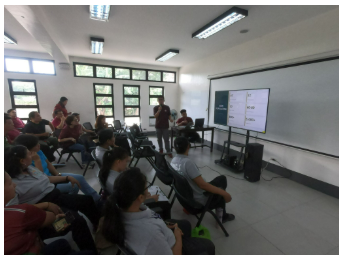
Following the overview, Jonathan David Maligalig introduced the Emergency Preparedness Plan and discussed its importance in ensuring that the college can continue its essential functions during emergencies. He also presented the results of the rapid assessment conducted in CHK in June 2024.
Maria Regina Jimenez then discussed the purpose, objectives, and scope of the Emergency Preparedness Plan. After the lecture, participants took part in a workshop where they identified and developed objectives for their own EPP.
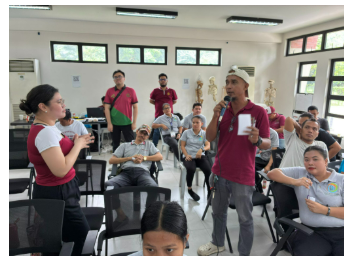
The next session focused on hazard identification and was facilitated by Jerzyne Anne Corpuz. During the workshop, participants identified possible hazards that could affect CHK, particularly earthquakes and flooding. They also discussed the effects of these hazards on the college’s 5Ps: People, Place, Process, Partners, Public, and ICT.
In the afternoon, Science Research Specialist Franklin Joshua Gali discussed continuity of operations. His lecture covered Mission Essential Functions (MEFs), impact analysis, and continuity strategies. During the workshop, participants identified the essential functions of their offices and assessed the possible effects if these functions could not continue during a disaster. They also developed strategies to ensure that these functions could continue even during emergency situations.
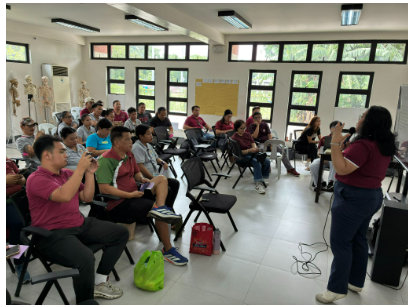
The final session for Day 1 was facilitated by Dr. Carlos Primero Gundran, Director of the IB Division. He discussed the Incident Command System (ICS) and emphasized the importance of having an Incident Management Team (IMT). Participants learned about the roles and responsibilities of key IMT members, including the Incident Commander, Safety Officer, Liaison Officer, Public Information Officer, Student Wellness Officer, Operations Section Chief, Logistics Section Chief, Planning Section Chief, and Finance and Administration Section Chief.
During the workshop, participants assigned personnel to these positions and identified alternate personnel who could take over if primary personnel were unavailable during an emergency. After organizing the IMT, participants also formed the seven response teams of CHK: Evacuation Team, Search and Rescue Team, First Aid Team, Communications Team, Security Team, Salvage Team, and Firefighting Team.
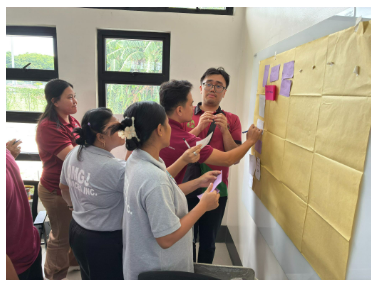
The second day of the workshop began with a recap of the previous day’s activities led by David Josh Concepcion.
Patrick Ryan Bello then discussed emergency communications and highlighted the importance of effective communication during emergencies. Participants also took part in a short demonstration and workshop on the proper use of two-way radios.
The next session was facilitated by Edward Dionido, Science Research Specialist of the IB Division. He discussed activation and deactivation protocols and explained when emergency response procedures should be activated or terminated. During the workshop, participants were given different emergency scenarios and discussed the actions they would take and how they would respond to each situation.
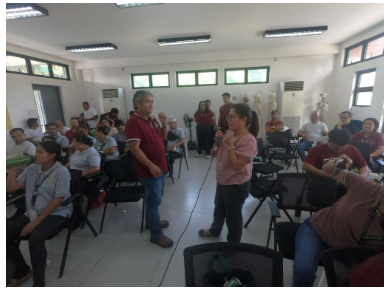
To conclude the workshop, Jonathan David Maligalig presented the final session on integrating the outputs from the various workshops. Participants reviewed and consolidated their outputs, which will serve as the foundation of the College of Human Kinetics’ Emergency Preparedness Plan.
The two-day workshop provided CHK personnel with the knowledge and tools needed to strengthen their preparedness and response capabilities. Through lectures, discussions, and hands-on workshops, participants were able to develop key components of their Emergency Preparedness Plan and improve the college’s readiness for future emergencies and disasters.