Article Written By: Jerzyne Anne Corpuz
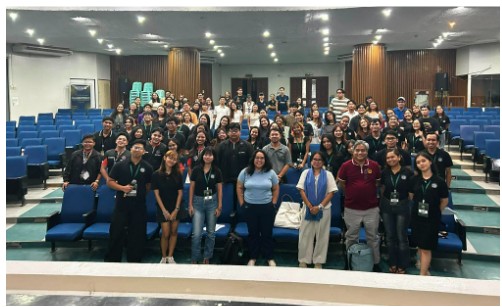
On April 23, 2026, the UP Resilience Institute (UPRI) was invited as a resource speaker for the symposium titled “DANAS! Examining Institutional Responses to Educational Continuity in Times of Calamity,” held at the CAS Building Auditorium, University of the Philippines Los Baños.
The program started by singing the national anthem, followed by the opening message of John Andrei Solido, the event head. His message focuses on the objective of the symposium, which aims to examine the impact of natural hazards on education in the Philippines, assess institutional responses and policies, analyze long-term learning losses, and promote climate-responsive and accountable solutions.
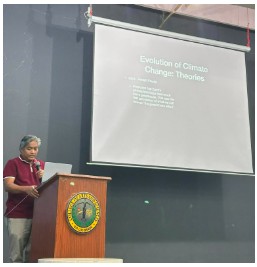
This was followed by the presentation of Dr. Gundran on “Disaster Risk Reduction, Climate Change Action, and the Education Sector.” His discussion explained how climate change intensifies hazards such as typhoons, floods, earthquakes, and even human-induced risks, which significantly disrupt classes and school operations. He emphasized that most schools in the Philippines have experienced disasters, resulting in class suspensions, damaged infrastructure, and long-term learning losses. The presentation also highlighted existing government and institutional responses, including programs and alternative modes of learning delivery. However, despite these frameworks, challenges remain due to uneven implementation, limited resources, and insufficient training. Dr. Gundran further underscored the long-term consequences of repeated disruptions, such as reduced academic performance, increased inequality, and broader social impacts. He concluded by calling for stronger civic engagement, enhanced climate literacy, and more resilient education systems to ensure continuity and sustainability.
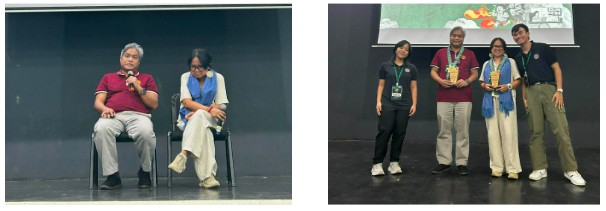
The next presenter was Dr. Katherine B. Buenaflor from Ateneo de Manila University. She discussed the critical role of environmental and local governance in shaping students’ lived experiences during climate-related disruptions. Her presentation highlighted how local policies directly influence the safety, preparedness, and continuity of education in schools. She emphasized that students are not merely passive recipients of these policies but are significantly affected by how local governments implement disaster risk reduction measures, allocate resources, and respond to emergencies.
Afterward, an open forum was held, providing students and other participants the opportunity to ask questions and engage with the presenters. The program concluded with an awarding ceremony, a photo opportunity, and closing remarks.