Article Written By: Jeryzne Anne Corpuz
On April 10, 2026, Dr. Carlos Primero D. Gundran of the UP Resilience Institute (UPRI) was invited as a resource speaker at the Maritime Security Symposium and Seminar (MSSS) 2026, themed “Maritime Security in Southeast Asia: Navigating Continuity and Change through ASEAN,” held at Tejeros Hall, Camp General Emilio Aguinaldo, Quezon City, in a hybrid format. The event gathered military officers, public health experts, academics, and government representatives to examine enduring realities and emerging challenges in Southeast Asia, with a focus on how ASEAN can advance regional resilience and stability.
The program opened with the Philippine National Anthem and opening remarks by Vice Admiral (VADM) Jose Ma. Ambrosio Q. Ezpeleta, PN. The morning session then featured Panel 1: Enduring Regional Realities, where three speakers discussed maritime security, geopolitical dynamics, and ASEAN governance, followed by an open forum for both in-person and online attendees.
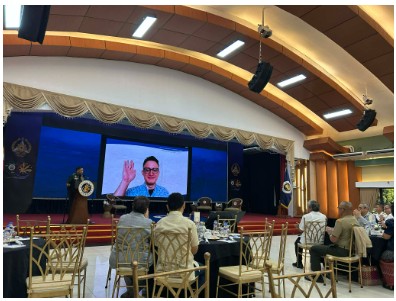
The afternoon session featured Panel 2: Emerging Threats and Regional Security Outlook. Following the presentations of the first two speakers, Dr. Gundran, titled “Climate Change and Disaster Preparedness: Security Implications for Southeast Asia,” which centered on the growing intersection of climate change and maritime security. He discussed how sea-level rise threatens naval bases, ports, and coastal surveillance systems, while increasingly powerful typhoons disrupt military operations and damage critical assets. The Naval Base was cited as a concrete example, identified as facing a HIGH storm surge hazard level, underscoring the immediate and tangible risks to Philippine naval infrastructure.
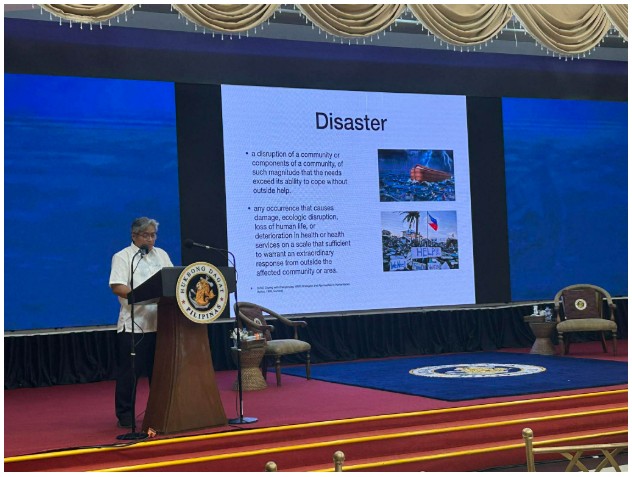
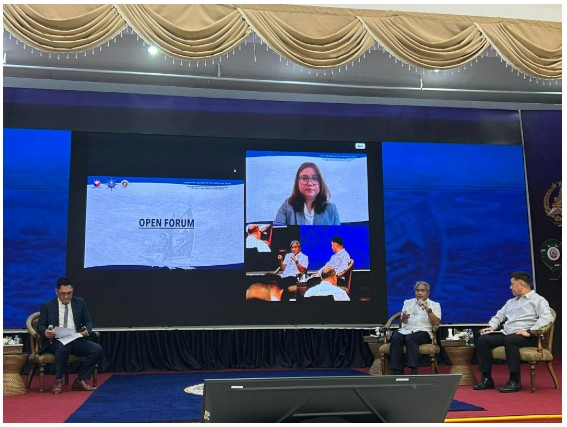
Dr. Gundran further elaborated on broader climate-induced regional security concerns, including the simultaneous impact of cross-border disasters on multiple ASEAN states, the potential destabilization of maritime borders due to climate refugee movements, and the ways in which environmental stress amplifies resource competition in contested areas such as the West Philippine Sea. He argued that Humanitarian Assistance and Disaster Response (HADR) is rapidly transitioning from a secondary mission to a core operational mandate of the Philippine Navy and the Armed Forces of the Philippines (AFP). In closing his presentation, he called for climate-resilient naval infrastructure, the integration of Disaster Risk Reduction and Climate Change Adaptation (DRR-CCA) frameworks into defense modernization plans, and the strengthening of inter-agency coordination and ASEAN-wide cooperation. A forum session followed, enabling further exchange between the speakers and participants.
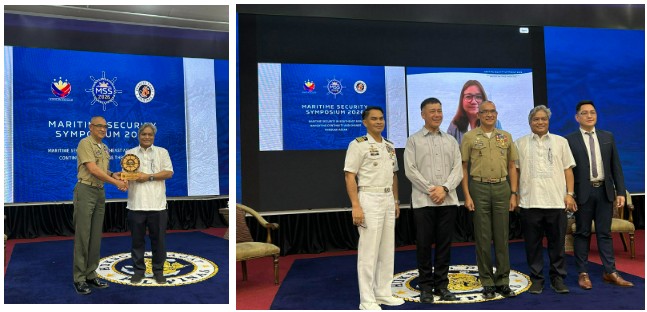
The symposium concluded with an awarding ceremony honoring all resource speakers for their valuable contributions. A synthesis of the day’s key discussions was then presented, drawing together insights from both panels and highlighting the critical intersections of maritime security, climate change, and regional resilience. Closing remarks formally concluded the MSSS 2026.