
By Ma. Shara Micah Oliquino, UP RI Education Division
Following the historic relaunch of the Fundamentals of Resilience (FoR) MOOC 1: Basics of Resilience and MOOC 2: Hazard and Risk Assessment Fundamentals earlier this year (January to February 2026), which recorded the highest enrollment figures since the program’s inception in 2024, the June to July 2026 offering sustained the program’s strong momentum. While the earlier relaunch attracted a record-breaking number of enrollees, the succeeding cycle achieved higher completion rates, recording 46.33% for MOOC 1 and 39.03% for MOOC 2. These results suggest that learner engagement remained strong beyond the record setting relaunch, with a greater proportion of participants successfully completing the courses.
The latest offering also reflected the continued diversity of the FoR MOOCs community. Learners came from a wide range of regions, professions, educational backgrounds, and sectors, highlighting the broad reach and accessibility of the courses. From disaster risk reduction practitioners seeking to deepen their expertise to members of the general public who wish to apply evidence-based approaches to resilience in their everyday lives, learners recognized the value of the educational opportunities provided by the courses. This continued participation across diverse sectors reaffirms the relevance of the FoR MOOCs as an inclusive platform for resilience education and capacity development.
LEARNERS’ DEMOGRAPHIC PROFILE
a) Geographic Distribution
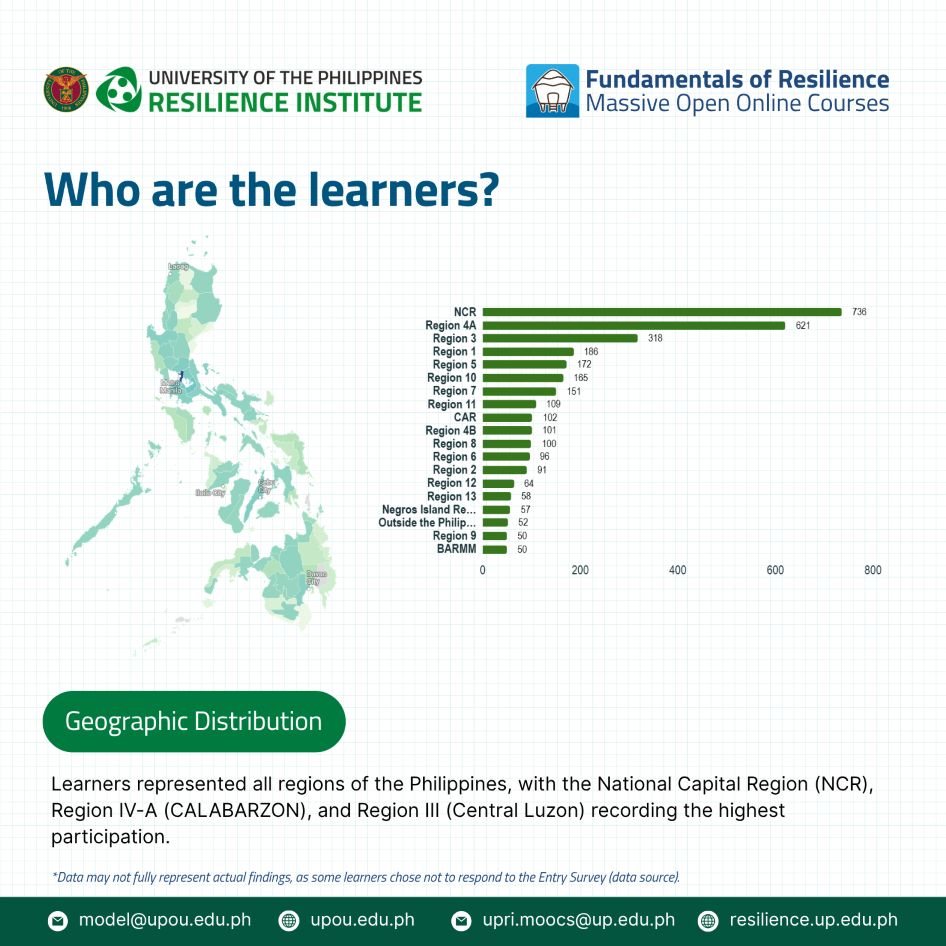
Learners represented all regions of the Philippines, with the National Capital Region (NCR), Region IV-A (CALABARZON), and Region III (Central Luzon) recording the highest participation. Consistent with previous offerings, this distribution demonstrates the nationwide reach and accessibility of the FoR MOOCs. The courses also continued to attract a notable number of learners from outside the Philippines, further reflecting their growing international reach.
b) Gender Identity
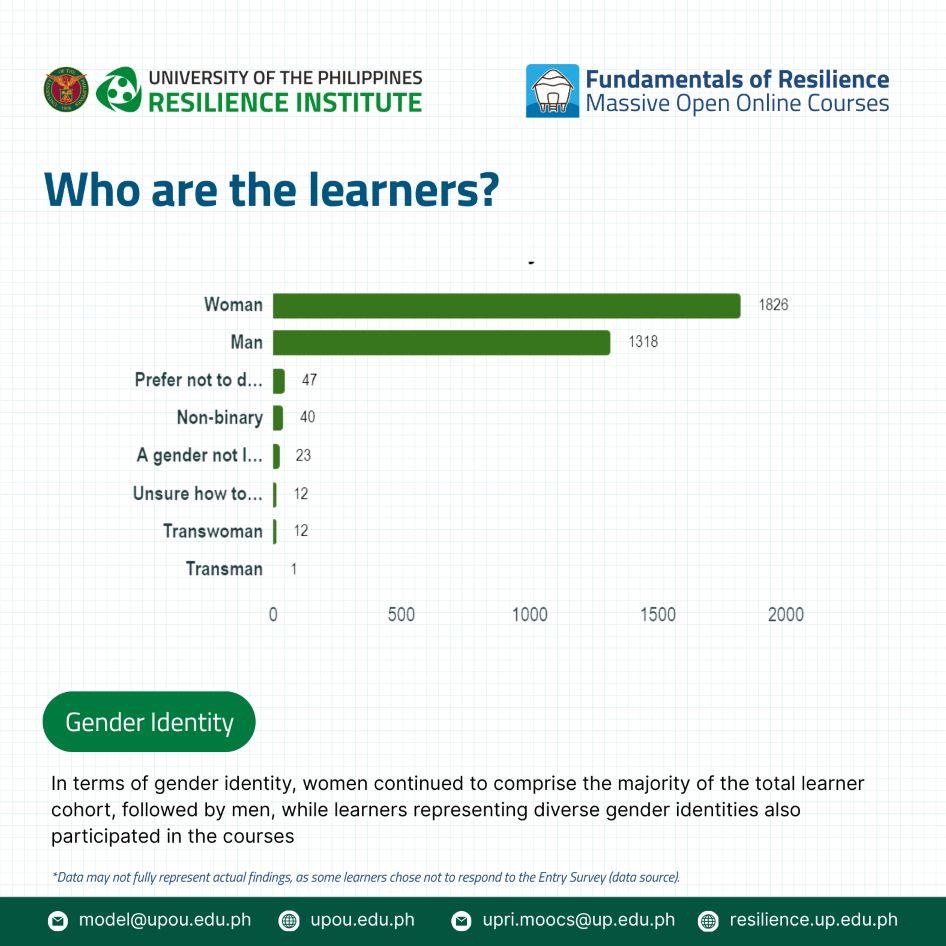
In terms of gender identity, women continued to comprise the majority of the total learner cohort, followed by men, while learners representing diverse gender identities also participated in the courses. This distribution reflects the FoR MOOCs’ continued commitment to providing an inclusive and accessible learning environment that welcomes learners from diverse backgrounds.
c) Age Group Distribution
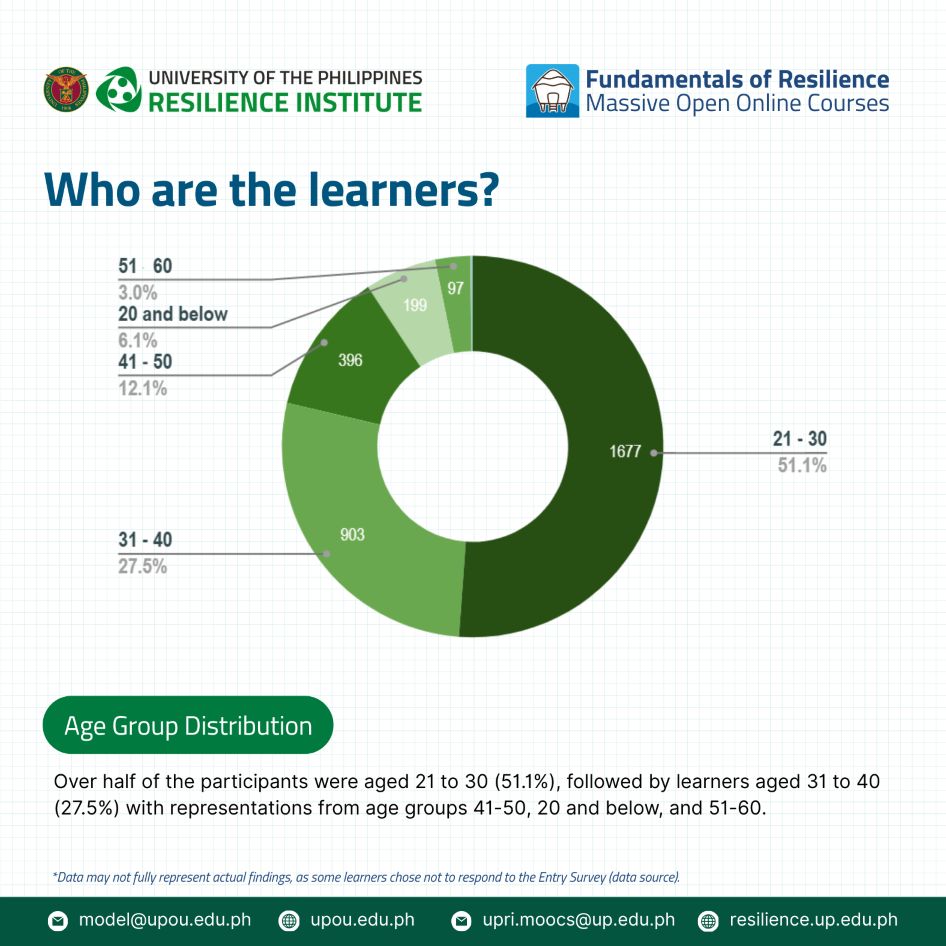
Over half of the participants were aged 21 to 30 (51.1%), followed by learners aged 31 to 40 (27.5%) with representations from age groups 41-50, 20 and below, and 51-60. This continued concentration among early and mid career individuals highlights the relevance of resilience education to those entering and advancing in their professions.
d) Years of Professional Experience
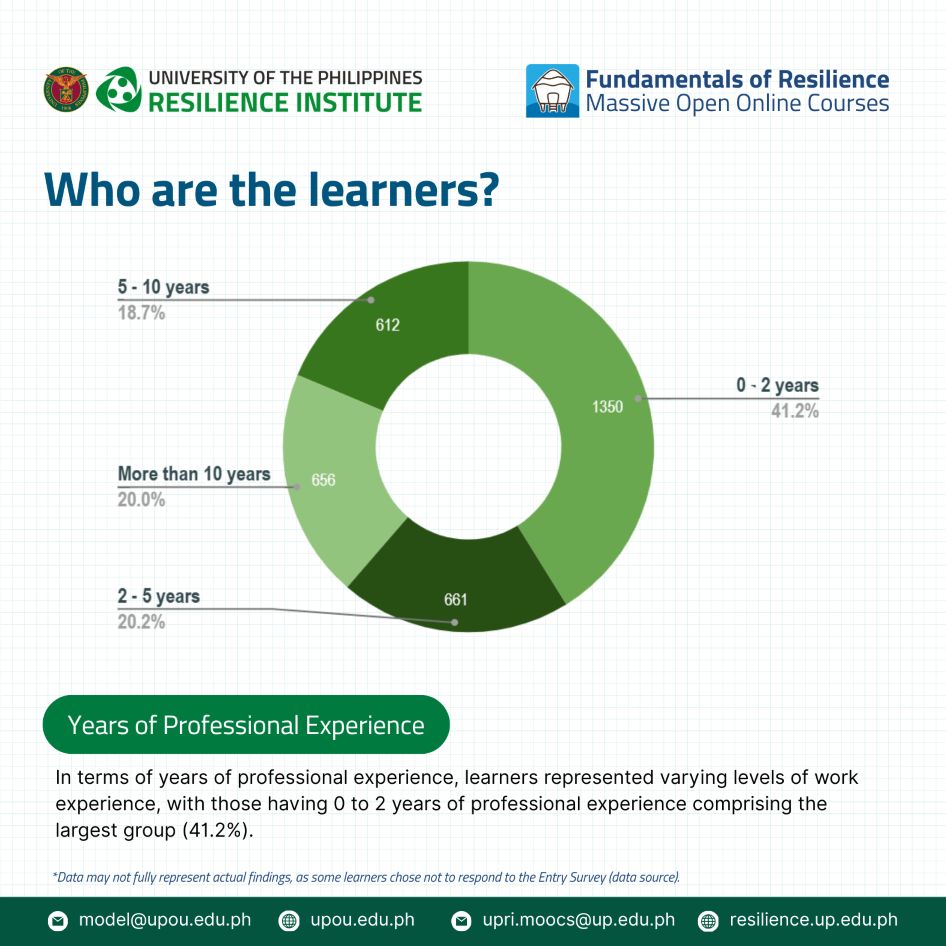
In terms of years of professional experience, learners represented varying levels of work experience, with those having 0 to 2 years of professional experience comprising the largest group (41.2%). The findings indicate that the FoR MOOCs continue to serve as an accessible learning platform for both emerging professionals and experienced practitioners, supporting learners at different stages of their careers.
e) Highest Educational Attainment
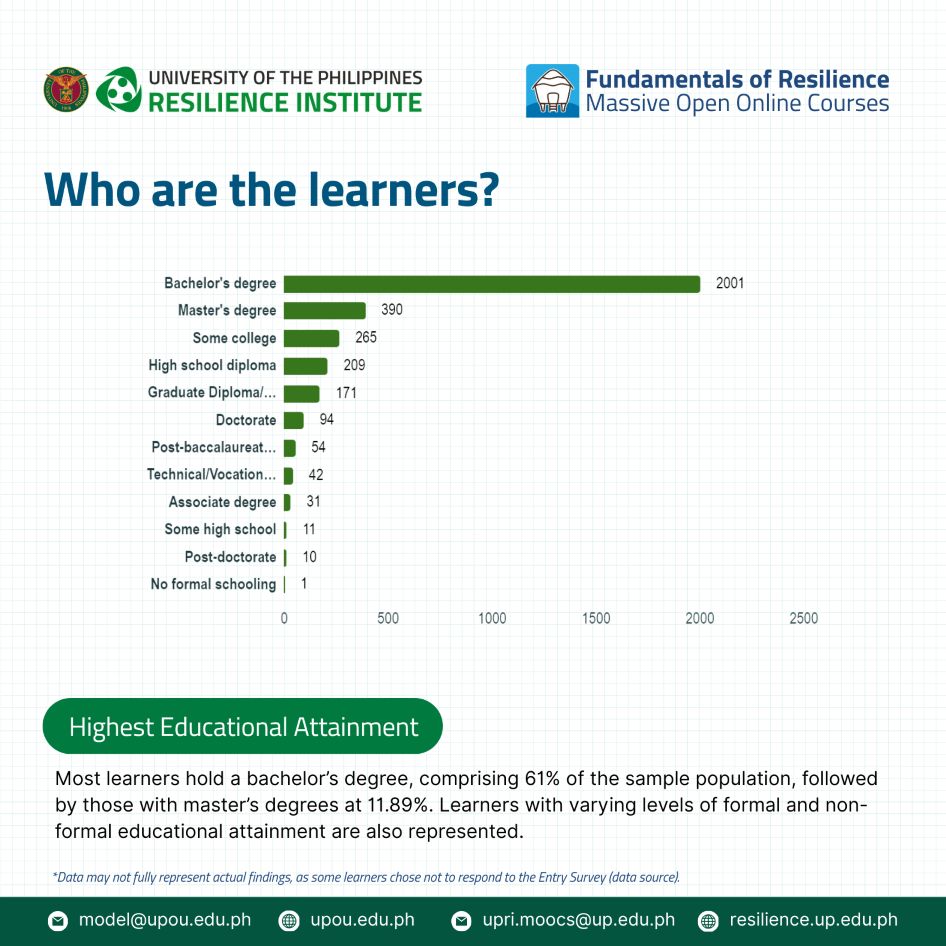
Most learners hold a bachelor’s degree, comprising 61% of the sample population, followed by those with master’s degrees at 11.89%. Learners with varying levels of formal and non-formal educational attainment are also represented. This distribution reflects the accessibility of the FoR MOOCs to learners across different levels of educational attainment. By making resilience education widely accessible, the courses reinforce the principle that knowledge in climate and disaster resilience should be available to everyone, regardless of educational background, so that all individuals have the opportunity to develop the competencies needed to prepare for hazards and disaster risk.
f) Economic Background
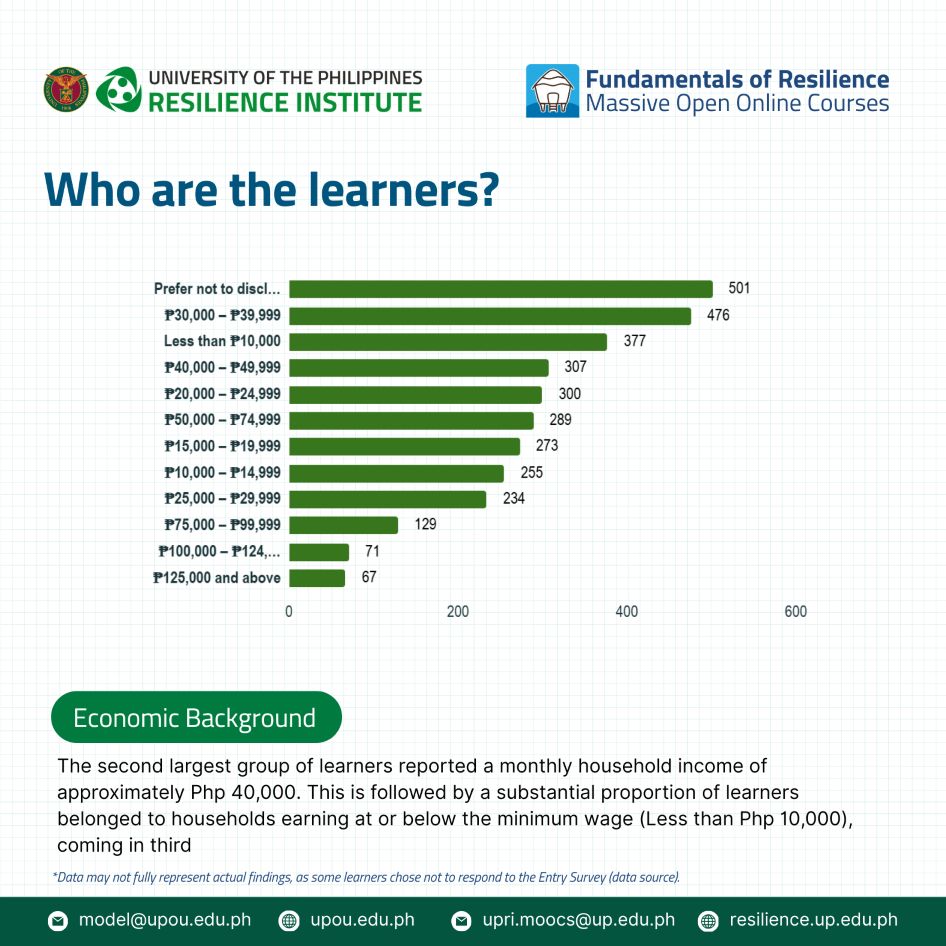
Following those who preferred not to disclose their monthly household income, the second largest group of learners reported a monthly household income of approximately Php 40,000. It is also noteworthy that a substantial proportion of learners belonged to households earning at or below the minimum wage (Less than Php 10,000), coming in third. Overall, learners represented diverse income groups, reflecting the ability of the FoR MOOCs to engage individuals from varied socioeconomic backgrounds through free and open access to resilience education.
g) Employment Status
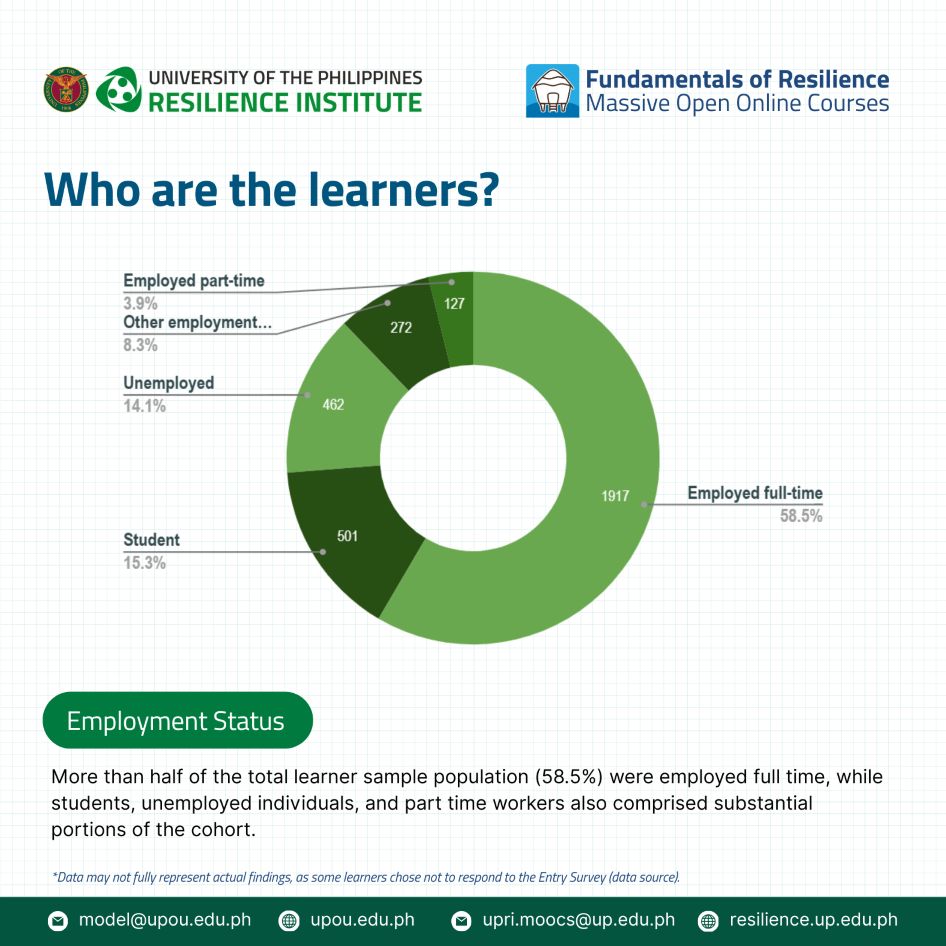
More than half of the total learner sample population (58.5%) were employed full time, while students, unemployed individuals, and part time workers also comprised substantial portions of the cohort. Consistent with previous offerings, this distribution demonstrates the flexibility of the FoR MOOCs in accommodating learners with diverse employment situations and professional commitments, enabling individuals from different walks of life to participate in resilience education.
h) Sectoral Distribution
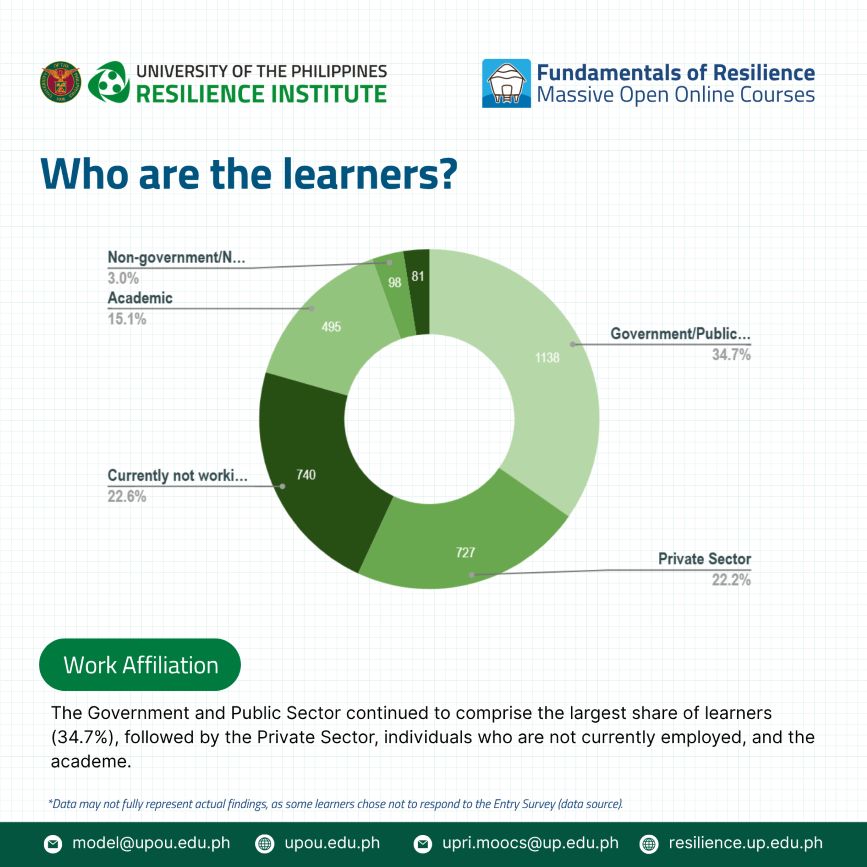
The Government and Public Sector continued to comprise the largest share of learners (34.7%), followed by the Private Sector, individuals who are not currently employed, and the academe. The sustained participation across multiple sectors highlights the continued relevance of the FoR MOOCs in advancing resilience education among government agencies, private organizations, educational institutions, and the broader public. This broad representation indicates that resilience is a shared responsibility, requiring the collective commitment of different sectors to strengthen preparedness, reduce disaster risks, and build more resilient communities.
i) Key Stakeholder Participation
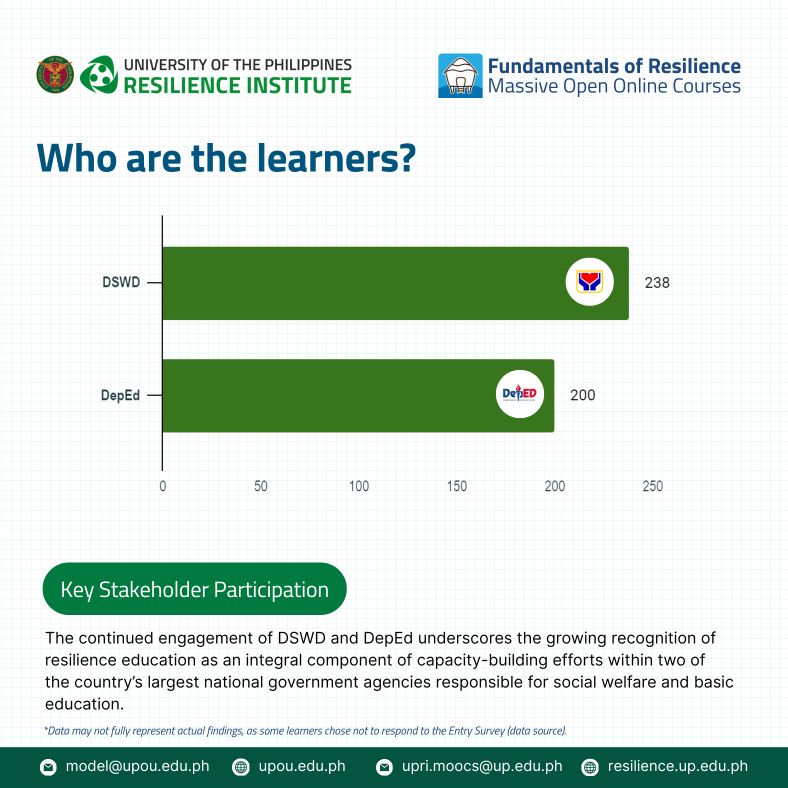
The Department of Social Welfare and Development (DSWD) and the Department of Education (DepEd) remained among the key institutional participants during the June to July 2026 offering. Their continued engagement underscores the recognition of resilience education as an integral component of capacity-building efforts within two of the country’s largest national government agencies responsible for delivering social welfare services and basic education. This sustained participation further demonstrates the continuing value of the FoR MOOCs in strengthening disaster resilience capacities and supporting institutional capacity development across the Philippine public sector.
OVERALL LEARNERS’ EXPERIENCE
Learner feedback from the June to July 2026 offering reflected a highly positive learning experience across all evaluated aspects of the courses. Based on the responses from the sample population of learners in this cohort, the FoR MOOCs obtained an overall weighted mean of 4.77 out of 5.00, corresponding to a descriptive rating of “Strongly Agree.”
Overall, the consistently high ratings indicate that learners viewed the FoR MOOCs as relevant, engaging, and well organized, reinforcing the program’s commitment to delivering quality, accessible, and learner centered resilience education.
The overwhelmingly positive evaluation of the June to July 2026 offering was further reflected in participants’ own experiences. Many learners highlighted the relevance of the course content, the flexibility of the self paced learning format, and the practical knowledge they gained for their personal, professional, and community contexts.
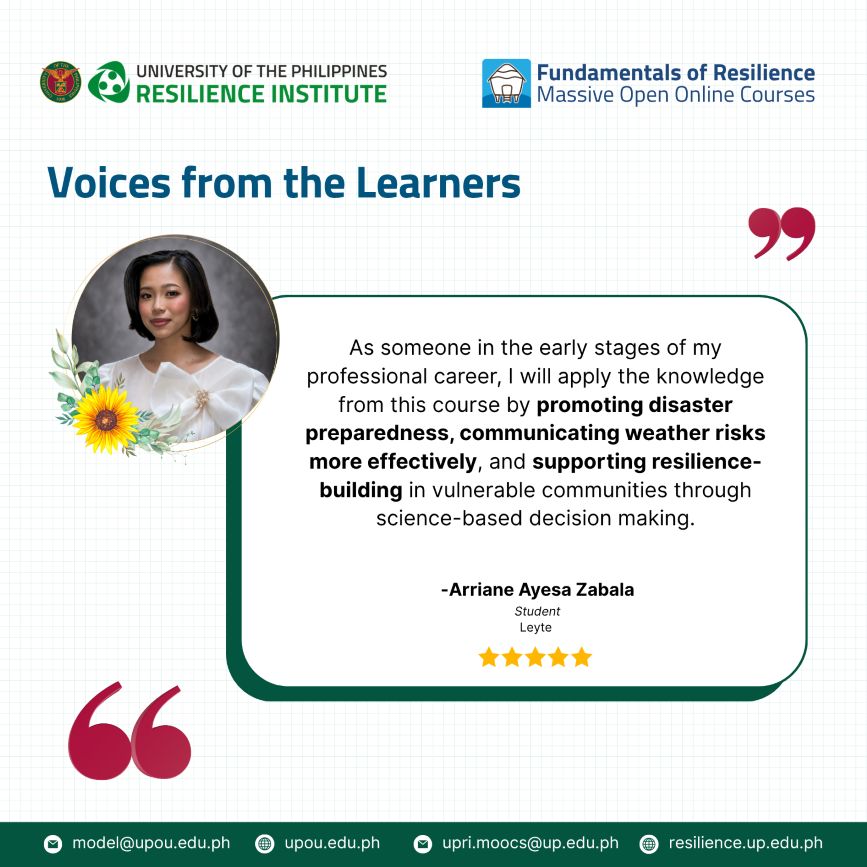
“As someone in the early stages of my professional career, I will apply the knowledge from this course by promoting disaster preparedness, communicating weather risks more effectively, and supporting resilience-building in vulnerable communities through science-based decision making.“
—Arriane Ayesa Zabala, Student, Leyte
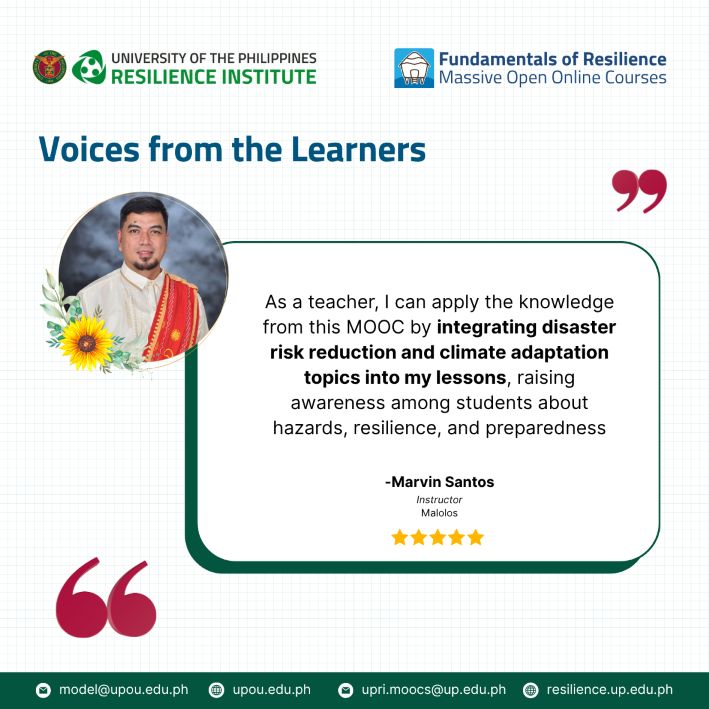
“As a teacher, I can apply the knowledge from this MOOC by integrating disaster risk reduction and climate adaptation topics into my lessons, raising awareness among students about hazards, resilience, and preparedness.“
— Marvin Santos, Instructor, Malolos
These reflections complement the survey findings by illustrating how the FoR MOOCs continue to make resilience education meaningful and accessible to learners from diverse backgrounds.
MOVING FORWARD: LEARNING RESILIENCE CONTINUES
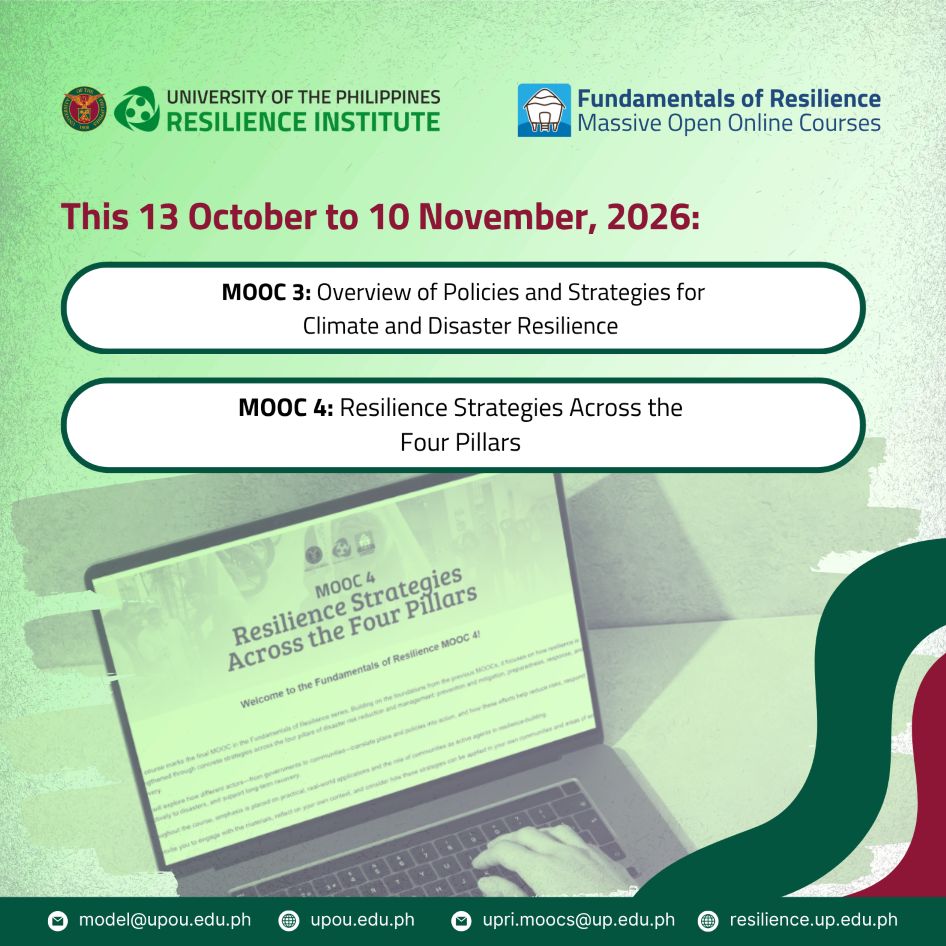
Building on the strong participation and learner engagement demonstrated during the June to July 2026 offering, the UP Resilience Institute (UPRI) and the University of the Philippines Open University (UPOU) remain committed to expanding access to resilience education through the Fundamentals of Resilience (FoR MOOCs). Learners, practitioners, and resilience advocates are encouraged to stay tuned for the second 2026 offering of MOOC 3: Overview of Policies and Strategies for Climate and Disaster Resilience and MOOC 4: Resilience Strategies Across the Four Pillars, scheduled from 13 October to 10 November 2026.
As the FoR MOOCs continue to evolve, each offering builds on the lessons and achievements of previous runs, further strengthening the program’s role as a national platform for resilience education. The upcoming courses will provide free and accessible learning opportunities that equip more Filipinos with the knowledge and competencies to understand climate and disaster resilience policies and strategies, and to apply resilience approaches across the four pillars of disaster risk reduction and management within their respective sectors and communities.
Related Links:
A Milestone in Resilience Education: MOOCs 3 and 4 Record Highest Number of Completers to Date. https://resilience.up.edu.ph/a-milestone-in-resilience-education-moocs-3-and-4-record-highest-number-of-completers-to-date/
Expanding Resilience Education: Learner Engagement in the 2026 Relaunch of FoR MOOCs 1 and 2. https://resilience.up.edu.ph/expanding-resilience-education-learner-engagement-in-the-2026-relaunch-of-for-moocs-1-and-2/
Learning Resilience Made Free, Inclusive, and Nationwide: Takeaways from the 2025 Relaunching of the Basics of Resilience MOOCs 3 and 4. https://resilience.up.edu.ph/learning-resilience-made-free-inclusive-and-nationwide-takeaways-from-the-2025-relaunching-of-the-basics-of-resilience-moocs-3-and-4/
Empowering Action Through Education: Basics of Resilience MOOCs Relaunched for NDRM 2025. https://resilience.up.edu.ph/empowering-action-through-education-basics-of-resilience-moocs-relaunched-for-ndrm-2025/
The Basics of Resilience MOOC expands its reach in early 2025! https://resilience.up.edu.ph/the-basics-of-resilience-mooc-expands-its-reach-in-early-2025/
Over 17,000 enrolled in UP’s online course on resilience. https://resilience.up.edu.ph/over-17000-enrolled-in-ups-online-course-on-resilience/
Relaunched of the Basics of Resilience: A continued program for accessible, inclusive, and multidisciplinary DRR and CCAM education. https://resilience.up.edu.ph/relaunched-of-the-basics-of-resilience-a-continued-program-for-accessible-inclusive-and-multidisciplinary-drr-and-ccam-education/
UP’s online course on resilience concludes with over 11,000 enrollees. https://resilience.up.edu.ph/ups-online-course-on-resilience-concludes-with-over-11000-enrollees/
UPRI, UPOU’s free course on Basics of Resilience kicks off with 2,100 enrollees. https://resilience.up.edu.ph/upri-upous-free-course-on-basics-of-resilience-kicks-off-with-2100-enrollees/